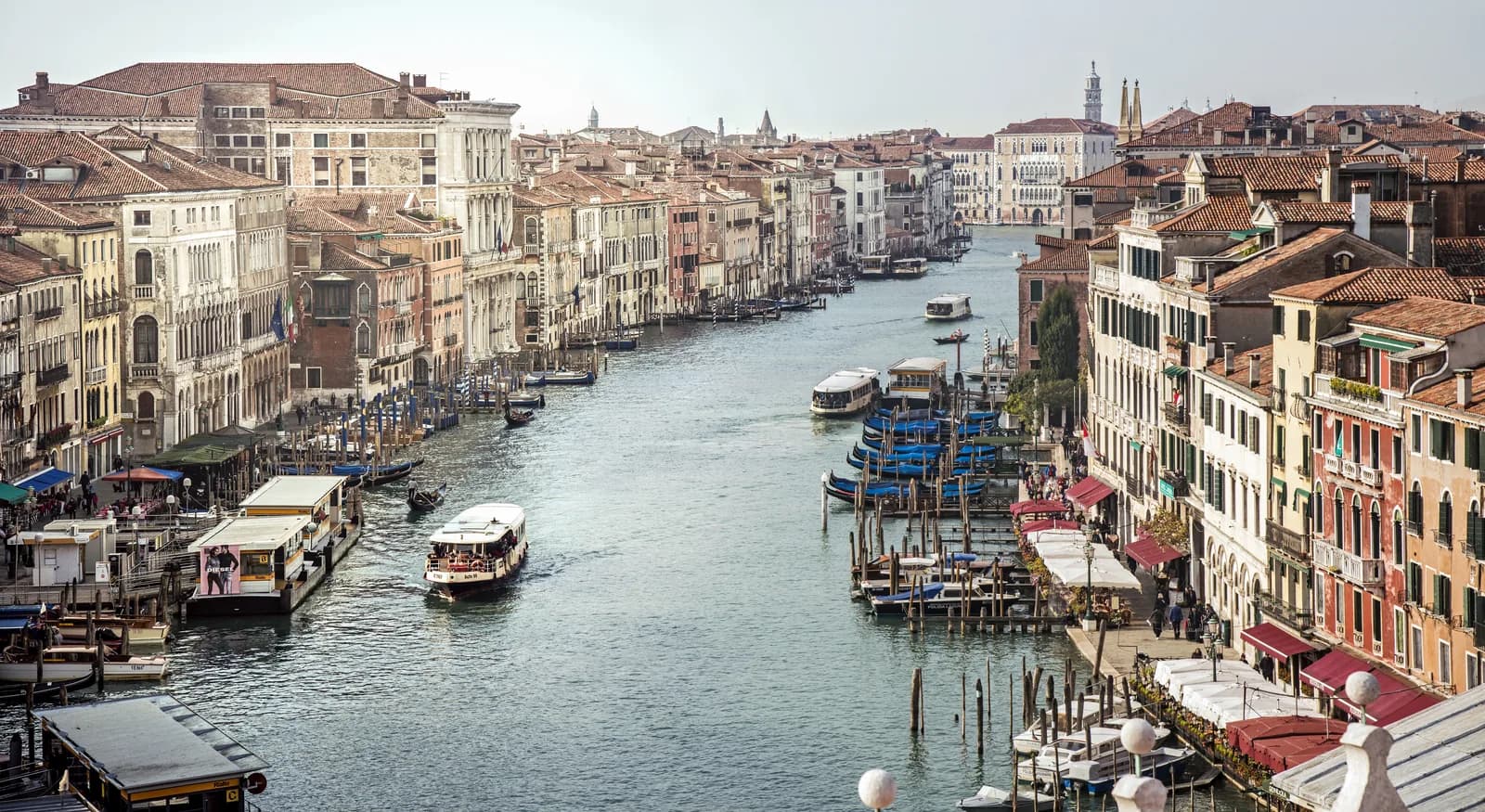
What is the best neighbourhood to stay in Venice?
Stay in Cannaregio. It is a short walk from Santa Lucia station, so you are not hauling a case over bridges for half an hour, and it is the one sestiere where ordinary people still live, which keeps the food honest and the prices sane. San Marco puts you at the door of every major sight and charges accordingly. Dorsoduro is the prettiest and has the only normal weeknight bar scene. Whatever you do, do not book Mestre on a first trip: it is on the mainland, and the whole point of Venice is being there when the day crowds are not.
Venice areas at a glance
The best areas to stay in Venice, compared for vibe, price and who each suits.
| Area | Best for | Price | In a word |
|---|---|---|---|
| Cannaregio | first timers, budget | $$ | Walk from the station, real people live here |
| San Marco | first timers, luxury | $$$ | Every sight at the door, every price too |
| Dorsoduro | romance, food | $$$ | Art museums, students, canals you can hear |
| Castello | families, budget | $$ | Biennale at one end, ordinary life at the other |
| San Polo and Santa Croce | food, budget | $$ | Rialto market one side, the bus terminal the other |
| Mestre | budget, families | $ | Cheap beds on the mainland, not in Venice |
- Free cancellation on most rooms
- No booking fee
- Prices on Trip.com
Best areas to stay in Venice
Ranked best-first, with the vibe, who it suits and an honest catch for each. Tap a filter to match an area to your trip.
Find your area - what matters most?
All 6 areas in Venice, best first.
 $$ · Mid-range
Cannaregio
Walk from the station, real people live here
Best for:First-timersBudgetFood & wineThis is the strip of Venice between the train station and the north lagoon shore, and it is the one sestiere where you still see laundry lines, kids and people carrying shopping. You can walk from Santa Lucia to most of it without a boat, which matters a lot on arrival day with a suitcase and bridge steps. The Jewish Ghetto sits here, and the long fondamente along the northern canals are where Venetians actually eat and drink in the evening. It is central enough to walk to Rialto in about 20 minutes but far enough from Piazza San Marco that the day-tripper wave never quite reaches you.
Good to know: Lista di Spagna, the main drag straight out of the station, is a poor-value tourist corridor and the rooms along it get street noise until late; walk five minutes further in before you book. The price spread here is the widest of any sestiere - the cheapest 3-star booked in the previous fortnight was $58 a night and the most expensive was $458 - so the area's budget reputation only holds if your dates are flexible.
See Cannaregio hotelsLive prices for your dates- Free cancellation on most rooms
- No booking fee
- Prices on Trip.com
 $$$ · High-end
San Marco
Every sight at the door, every price too
Best for:First-timersLuxurySightseeingRomanceThe basilica, the Doge's Palace, the Correr and the Fenice are all inside this one sestiere, so you can leave your room at eight in the morning and be first through a door. That is the whole argument for staying here and it is a real one. The cost is that between roughly 09:00 and 17:00 the streets between Rialto and the Piazza are the most crowded ground in Italy, and the restaurants along them price accordingly. Evenings and early mornings are a different city, which is the reward for sleeping here rather than visiting.
Good to know: Two real drawbacks. First, price: the ceiling here is far above the rest of the city, with the most expensive 3-star booked in the previous fortnight at $708 a night against $215 in Dorsoduro. Second, water: Piazza San Marco sits at roughly 63 cm above mean sea level and starts flooding at a tide of 82 cm, the lowest trigger in the city, against 105 cm at Rialto and 135 cm at the station square, so an autumn stay here means duckboards more often than anywhere else.
See San Marco hotelsLive prices for your dates- Free cancellation on most rooms
- No booking fee
- Prices on Trip.com
 $$$ · High-end
Dorsoduro
Art museums, students, canals you can hear
Best for:RomanceFood & wineSightseeingFirst-timersThe southern edge of the historic centre, holding the Accademia, the Peggy Guggenheim collection, the Salute church and Ca' Foscari university. The university is why this is the one part of Venice with a normal weeknight drinking scene rather than a tourist one, around Campo Santa Margherita. The Zattere promenade faces open water and gets actual sun and breeze, which is worth more in July than it sounds. It is a 10 to 15 minute walk over the Accademia bridge to San Marco, so you are close without being in it.
Good to know: The hotel stock here is small and skewed upmarket, so the floor price is high and there is little to trade down to: the cheapest 3-star booked in the previous fortnight was $87, the highest floor of the historic-centre sestieri alongside Castello. Campo Santa Margherita is also genuinely loud late on weekend nights, so a room facing it is a mistake.
See Dorsoduro hotelsLive prices for your dates- Free cancellation on most rooms
- No booking fee
- Prices on Trip.com
 $$ · Mid-range
Castello
Biennale at one end, ordinary life at the other
Best for:FamiliesBudgetFirst-timersThe largest sestiere, running east from behind San Marco to the Giardini. The western end near Riva degli Schiavoni is busy and hotel-heavy; walk 15 minutes east and you are in via Garibaldi, which has a fruit boat moored in the canal and residents queueing at it. The Arsenale and the Giardini are here, so during a Biennale year this end of town is where the art world sleeps. Good value for space, and the easiest sestiere for families because the eastern streets are wide by Venetian standards and there are actual parks.
Good to know: The 61st Art Biennale, In Minor Keys, runs 9 May to 22 November 2026 at the Giardini and Arsenale, which pushes demand and rates in eastern Castello for most of the year and fills the vaporetto line 1 stops. The cheapest 3-star booked here in the previous fortnight was $92 and the dearest $422. Also, the further east you stay the longer the walk back at night, and eastern Castello is quiet enough after 22:00 that some people find it bleak.
See Castello hotelsLive prices for your dates- Free cancellation on most rooms
- No booking fee
- Prices on Trip.com
 $$ · Mid-range
San Polo and Santa Croce
Rialto market one side, the bus terminal the other
Best for:Food & wineBudgetFirst-timersShoppingThese two small sestieri sit in the bend of the Grand Canal and between them hold the Rialto markets, the Frari church and a dense run of bacari, the stand-up wine bars where you eat cicheti at the counter. It is the most geographically central place to sleep in Venice: Rialto bridge on one side, a 10 minute walk to Piazzale Roma on the other, so you can arrive by bus or train and walk to your door. Santa Croce is the quieter and slightly scruffier half. If you want to be able to reach both San Marco and the station on foot without thinking about it, this is the spot.
Good to know: The market is a morning thing and people book here for it and then miss it: the Erbaria produce market runs Monday to Saturday roughly 07:00 to 13:00 and the Pescaria fish market Tuesday to Saturday roughly 07:30 to 13:00, closed Sunday, with fish also closed Monday. The Piazzale Roma end of Santa Croce is the least attractive corner of the historic centre, all bus ramps and car park. Cheapest 3-star booked in San Polo in the previous fortnight was $43 and the dearest $258; Santa Croce ran $86 to $320.
See San Polo and Santa Croce hotelsLive prices for your dates- Free cancellation on most rooms
- No booking fee
- Prices on Trip.com
 $ · Budget
Mestre
Cheap beds on the mainland, not in Venice
Best for:BudgetFamiliesMestre is the mainland part of the Comune di Venezia: a normal Italian commuter town with normal Italian prices, chain supermarkets, parking and a rail station 10 minutes from Venezia Santa Lucia. Nobody comes here for Mestre. People come here because a room costs a fraction of what the islands charge and they plan to commute in each day. That trade is real and the arithmetic works, but read the drawback below before you take it, because the thing you are giving up is the reason you booked Venice.
Good to know: The city itself prices Mestre as a lesser product: accommodation on the terraferma gets a 30% reduction on the Venice tourist tax, against a historic-centre 3-star rate of €3.50 per person per night in high season. Practically, the last regional train from Venezia Santa Lucia leaves around 00:15 and after that you are on the N1 or N2 night buses. Cheapest 3-star booked near Stazione di Mestre in the previous fortnight was $45 and the dearest $388, so the headline saving is not guaranteed on busy dates.
See Mestre hotelsLive prices for your dates- Free cancellation on most rooms
- No booking fee
- Prices on Trip.com
Safest area to stay in Venice
Dorsoduro, eastern Castello and the northern half of Cannaregio are the calmest places to sleep in Venice: residential, quiet after dark and busy with people who live there. Venice is one of the safest cities of its size in Europe, with no traffic and almost no violent street crime, so this is a comfort ranking rather than a warning list.
Dorsoduro is a university quarter with people about at sensible hours, well lit along the Zattere, and far enough from the San Marco crush that the streets empty out rather than churn.
Eastern Castello is where Venetians actually live, with wide streets by local standards, parks, and a fruit boat moored on via Garibaldi that residents queue at each morning.
Northern Cannaregio runs along quiet fondamente away from the station corridor, and the evening crowd there is neighbourhood rather than tourist.
The real risk to a visitor here is not crime at all, it is water and pickpockets, in that order. Acqua alta runs from roughly October to January and floods by area rather than by city: Piazza San Marco sits at about 63 cm above mean sea level and starts going under at a tide of 82 cm, against 105 cm at Rialto and 135 cm at the station square. Pickpocketing is concentrated exactly where the crowds are, on the Rialto bridge, in the Piazza and on the packed line 1 and 2 vaporetti, and it tracks the crowd rather than the neighbourhood you booked. The one genuine hazard nobody warns you about is the walk home: unlit canal edges have no railings, and Venice is a poor city to explore after a heavy evening.
Where not to stay in Venice
If this is your first time in Venice, do not stay in Mestre. It is on the mainland, it is a commuter town, and the entire case for it is a lower room rate - a case the city itself concedes by cutting the tourist tax on terraferma accommodation by 30% against the historic centre, where a 3-star pays €3.50 per person per night in high season. The problem is what the commute costs you: Venice is worth sleeping in precisely because of the two hours before the day-trippers arrive and the hours after they leave, and if you are riding a train back to a mainland hotel you buy neither. Budget 40 to 60 minutes of round trip daily on top of the €1.50 regional train each way, and remember the last train out of Venezia Santa Lucia is around 00:15, after which you are waiting for the N1 or N2 night bus. One common reason people give for choosing Mestre does not hold either: overnight guests anywhere in the Comune di Venezia, historic centre included, were always exempt from the day-tripper access fee, so staying on the mainland never dodged a charge you would otherwise have paid. If money is the binding constraint, book a cheaper sestiere or cheaper dates rather than a cheaper city - the cheapest 3-star booked in San Polo in the fortnight to 28 July 2026 was $43, below the $45 floor near Mestre station.
Getting around Venice
There are no cars anywhere in Venice. Vehicles stop at Piazzale Roma and the Tronchetto car park, and past that you walk or you take a boat, so bring a bag you can carry up and over stepped bridges. From Santa Lucia station it is about 1.6 km and 22 minutes on foot to the Rialto bridge and about 2.2 km and 32 minutes to San Marco (seat61); add time in summer, because you will queue on bridges and take at least one wrong turn. The vaporetto is the bus network and it is not cheap: a single ticket valid 75 minutes is €9.50, and passes are €25 for 24 hours, €35 for 48, €45 for 72 and €65 for seven days, each timed from first validation rather than by calendar day (actv.avmspa.it). Three rides in one day is the break-even against the 24-hour pass, so if you are staying central and walking, buy singles. From Marco Polo airport the ACTV Aerobus line 5 to Piazzale Roma is €10 and takes about 25 minutes, or Alilaguna's boat runs €18 one way and €32 return directly into the city with one hold bag included; be aware that the multi-day passes exclude airport journeys unless you buy a supplement of €7 one way or €13 return alongside the pass. Travellers aged 6 to 29 should buy the €6 Rolling Venice card at a Venezia Unica desk, which drops the 72-hour pass from €45 to €27, so €33 all in.
Where to stay in Venice: FAQ
The questions travelers ask most when choosing an area.
Plan the rest of the trip
Where to stay in other cities
Continue Planning Your Trip
Intelligent tools designed to simplify the complex.
Things to Do
Ranked attractions, tips and how to book tickets
Where to Stay
The best area to stay in each city, by neighborhood
Car Rental
Real prices, driving tips and the best routes by destination
Airport Transfers
Getting from the airport to your hotel, by price and time
All-Inclusive Guides
What all-inclusive really means, by destination
Best Time to Visit
Month-by-month weather, crowds and prices
Cheapest Places to Travel
18 destinations ranked by real daily budgets
Route Finder
Find the cheapest way to get there
Hotel Finder
Book the right hotel for your destination
AI Trip Planner
Build a day-by-day itinerary
Budget Calculator
Estimate total cost
Photo credits (6)
Photos via Wikimedia Commons, used under their respective licences.
- Cannaregio: Didier Descouens - CC BY-SA 4.0 · source
- San Marco: Zairon - Public domain · source
- Dorsoduro: Own work - CC BY 3.0 · source
- Castello: Didier Descouens - CC BY-SA 4.0 · source
- San Polo and Santa Croce: Lothar John - CC BY-SA 3.0 · source
- Mestre: Didier Descouens - CC BY 4.0 · source