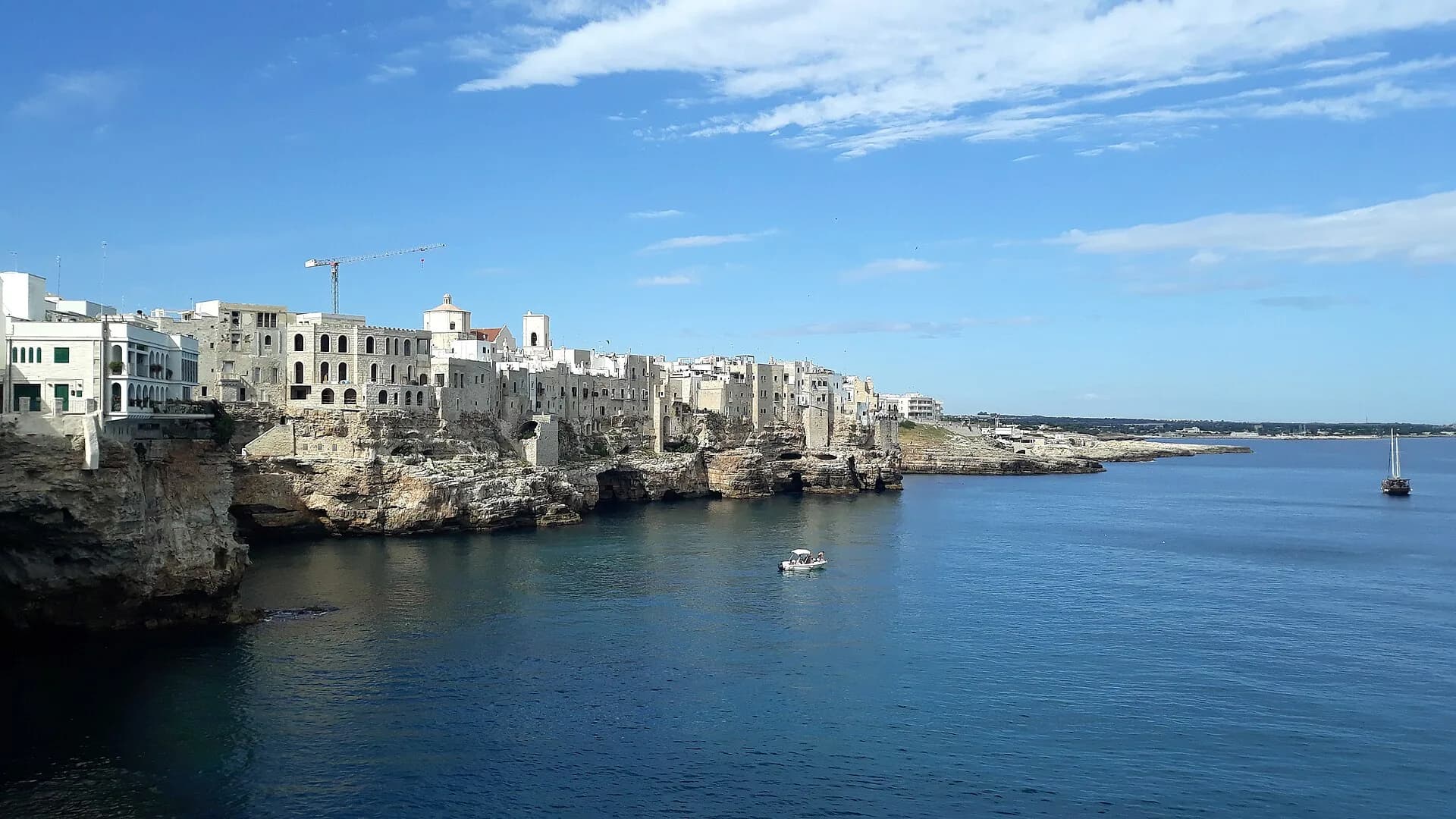
In Brief
Where should you stay in Puglia?
Stay in or near Ostuni for a first visit. It is a white hilltop town about halfway down the region, within half an hour of the Valle d'Itria countryside, the trulli towns and the Adriatic beaches, so you can reach most of northern and central Puglia without moving hotel. If you are travelling by train, base in Polignano a Mare or Monopoli instead. For the deep south and the best beaches, base in Lecce.
Key takeaways
- First visit: Ostuni or the Valle d'Itria, central enough to reach both coasts and the trulli.
- No car? Bari, Polignano a Mare, Monopoli and Lecce are the towns on the mainline railway.
- Two bases beats one. North around Ostuni, then south around Lecce, is the standard split.
- The masseria, a converted fortified farmhouse, is the local stay and worth at least a couple of nights.
Puglia towns at a glance
The best areas to stay in Puglia, compared for vibe, price and who each suits.
| Area | Best for | Price | In a word |
|---|---|---|---|
| Ostuni and around | first timers, romance | $$ | The white town on the hill, and the best all-round base |
| Valle d'Itria: Locorotondo, Cisternino, Martina Franca | food, romance | $$ | Trulli country, and the best food in the region |
| Polignano a Mare | first timers, romance | $$ | Cliff-top old town, sea caves, and a train station |
| Monopoli | budget, food | $$ | A working harbour town, quieter than its neighbour |
| Lecce and the Salento | sightseeing, nightlife | $$ | Baroque city in soft stone, and the road to two seas |
| Bari | budget, first timers | $ | The arrival city, and better than its reputation |
| Salento coast: Otranto and Gallipoli | families, nightlife | $$ | Where the beaches are, and where August happens |
- Free cancellation on most rooms
- No booking fee
- Prices on Trip.com
Best areas to stay in Puglia
Ranked best-first, with the vibe, who it suits and an honest catch for each. Tap a filter to match an area to your trip.
Find your area - what matters most?
All 7 areas in Puglia, best first.
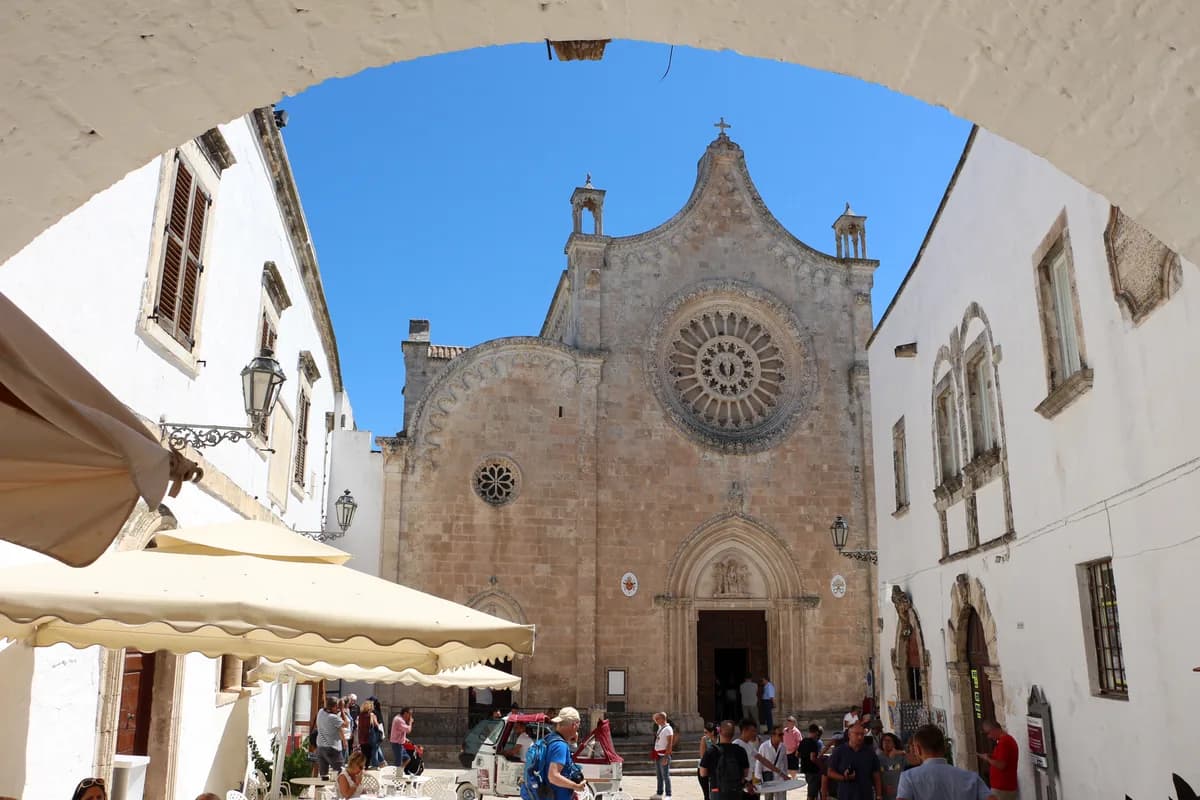
Ostuni and around
$$ · Mid-rangeThe white town on the hill, and the best all-round base
Best for:First-timersRomanceFood & wineA town of whitewashed houses stacked on a hill above the olive groves, about eight kilometres inland from the Adriatic. The old centre is a maze of lanes and staircases with a fifteenth-century cathedral at the top and views down to the sea, and the country roads around it are lined with masserie.
- Good to know
- Good to know: Central enough to reach the trulli towns, the Valle d'Itria and the coast in under forty minutes, which is why it works so well as a single base. The old town is steep and largely stepped, so pick your accommodation with your luggage in mind. The train station sits several kilometres below the town, so you need a bus or taxi.
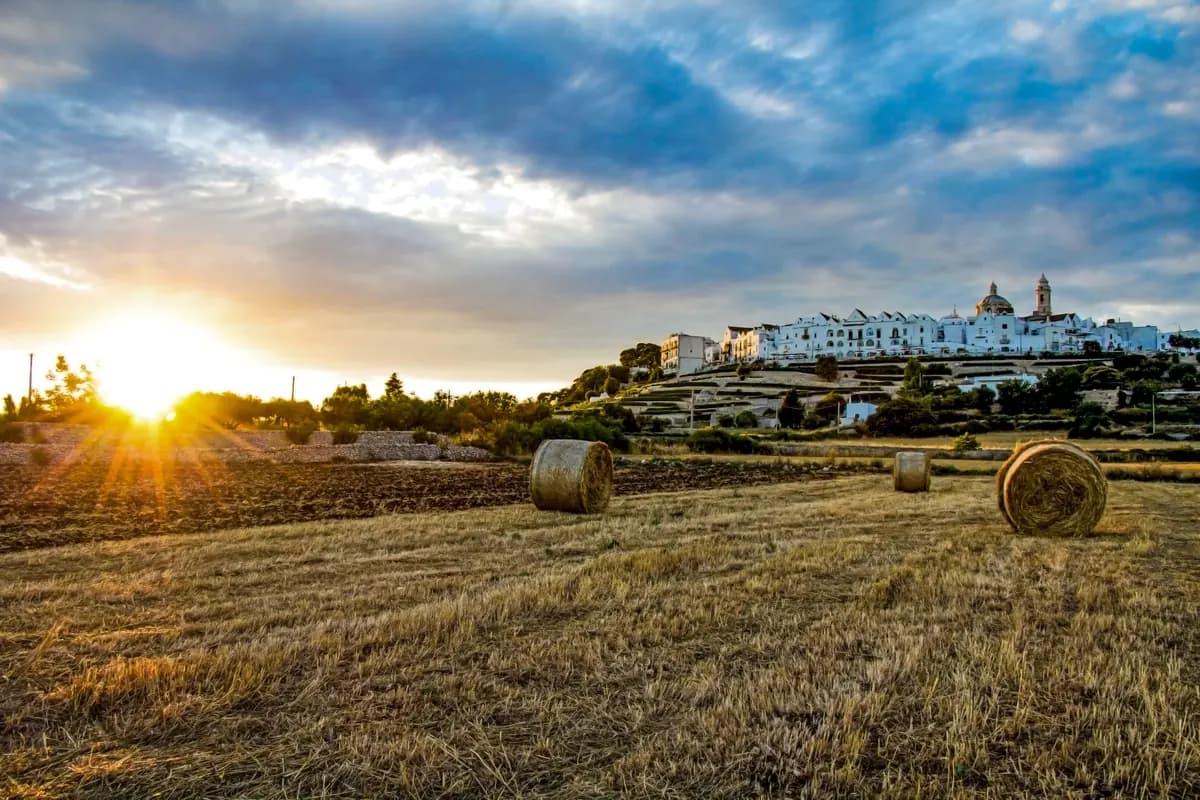
Valle d'Itria: Locorotondo, Cisternino, Martina Franca
$$ · Mid-rangeTrulli country, and the best food in the region
Best for:Food & wineRomanceLuxuryThe high inland valley scattered with conical dry-stone trulli, wrapped around three small hill towns. Locorotondo is a circle of white houses on a ridge, Cisternino is known for butcher-grills where you pick the meat and they cook it, and Martina Franca is the biggest and most baroque of the three.
- Good to know
- Good to know: The most rewarding part of Puglia to sleep in and the least practical without a car, since the local railway is slow and infrequent. This is masseria country, so it is where the converted farmhouse hotels with pools and olive groves are. Evenings are quiet and the towns are small.
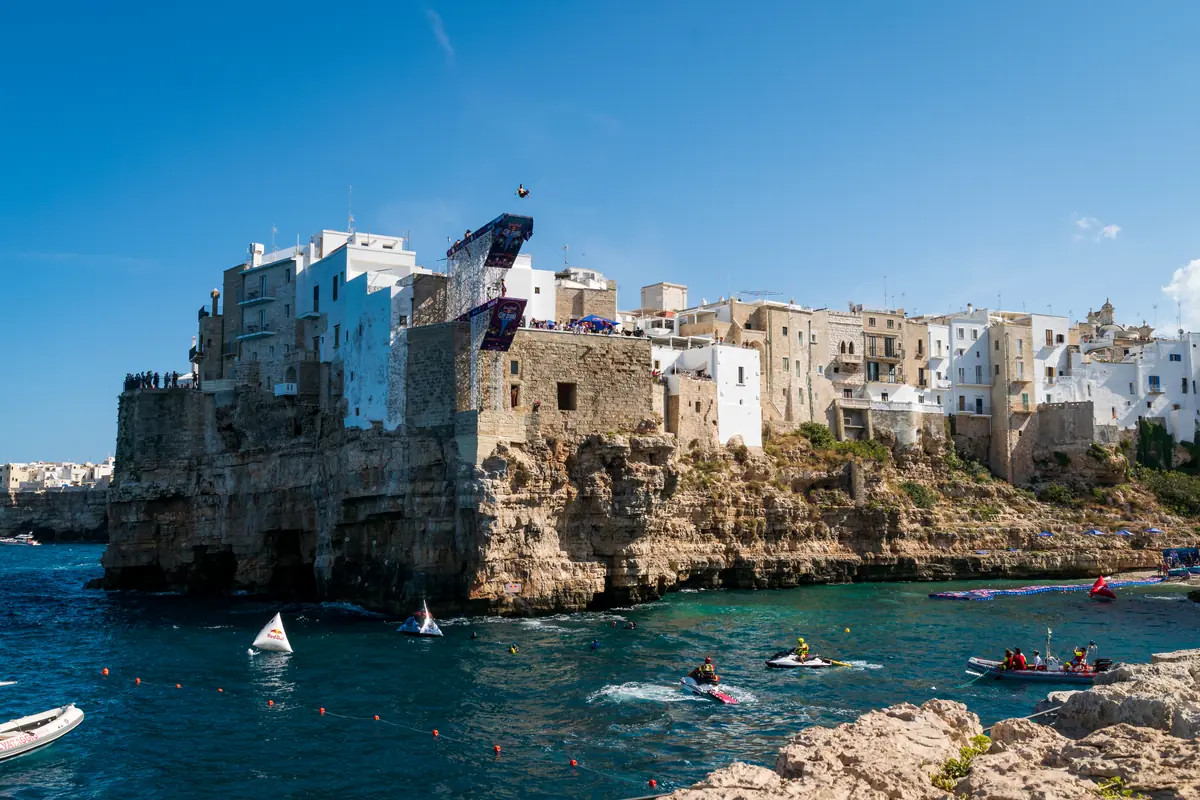
Polignano a Mare
$$ · Mid-rangeCliff-top old town, sea caves, and a train station
Best for:First-timersRomanceSightseeingA small old town built on limestone cliffs directly above the Adriatic, with a famous cove beach wedged between the rock walls and terraces looking straight down at the water. The mainline train stops here, putting Bari half an hour north and Monopoli a few minutes south.
- Good to know
- Good to know: The single best choice if you are car-free, and one of the prettiest places in the region. It is also very small and takes a lot of day visitors, so the centre is crowded from late morning through the evening in summer. The cove beach is tiny and gets uncomfortably full.
Monopoli
$$ · Mid-rangeA working harbour town, quieter than its neighbour
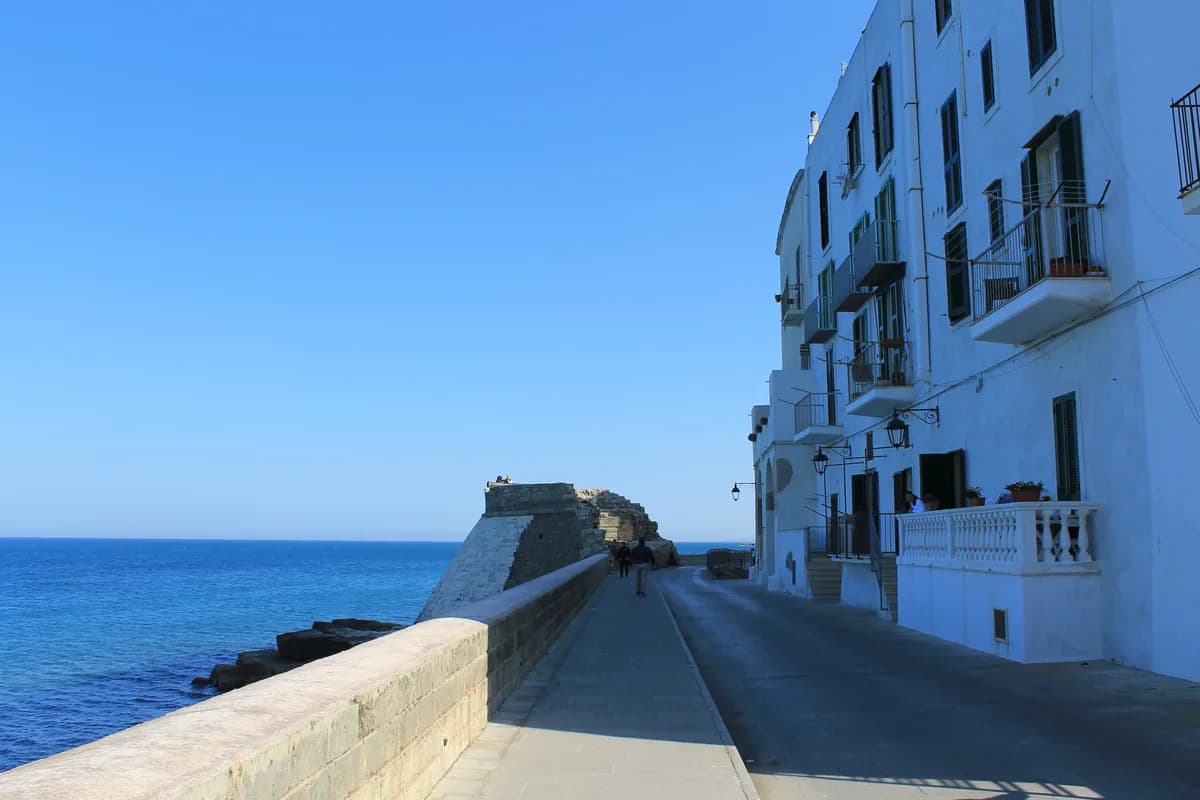
Best for:BudgetFood & wineFamiliesA proper town rather than a viewpoint, ten minutes down the coast from Polignano, with a fishing harbour full of blue boats, a walled old centre and a castle on the water. It has more restaurants, more everyday life and considerably fewer coaches than its more photographed neighbour.
- Good to know
- Good to know: The best value on this stretch of coast and also on the mainline railway, so it competes directly with Polignano and usually wins on price and calm. Less dramatic to look at. Good base for reaching the Valle d'Itria inland, though you still want a car for that.
Lecce and the Salento
$$ · Mid-rangeBaroque city in soft stone, and the road to two seas
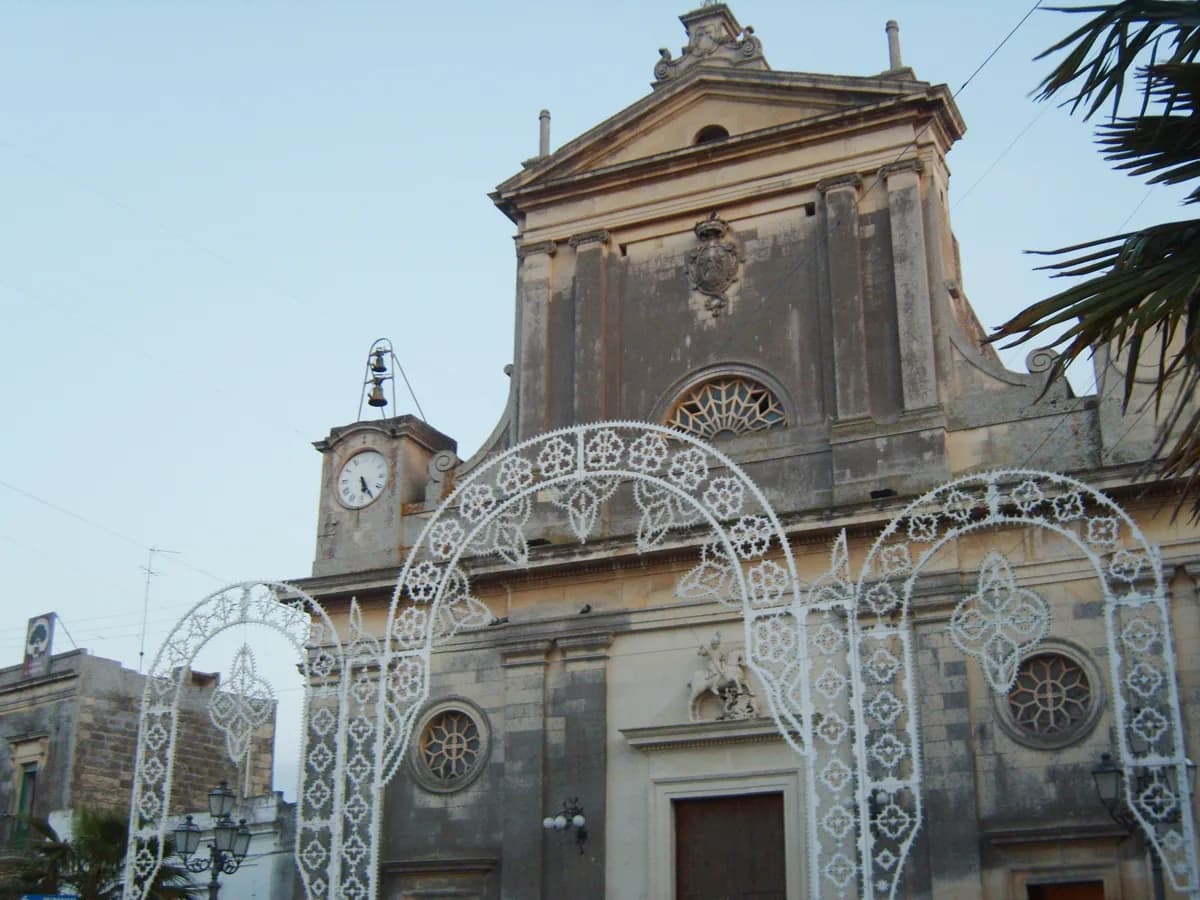
Best for:SightseeingNightlifeFood & wineThe main city of the deep south, built in a honey-coloured limestone soft enough to carve, which is why almost every facade in the centre is covered in baroque decoration. It has a Roman amphitheatre in the main square, a proper university-town evening, and both the Adriatic and Ionian coasts within about forty minutes.
- Good to know
- Good to know: The right base for the southern half of the region and the beaches people actually rave about, and it is on the mainline railway. It is not on the sea itself, so you drive or take a bus to swim. Inland Salento gets very hot in July and August.
Bari
$ · BudgetThe arrival city, and better than its reputation
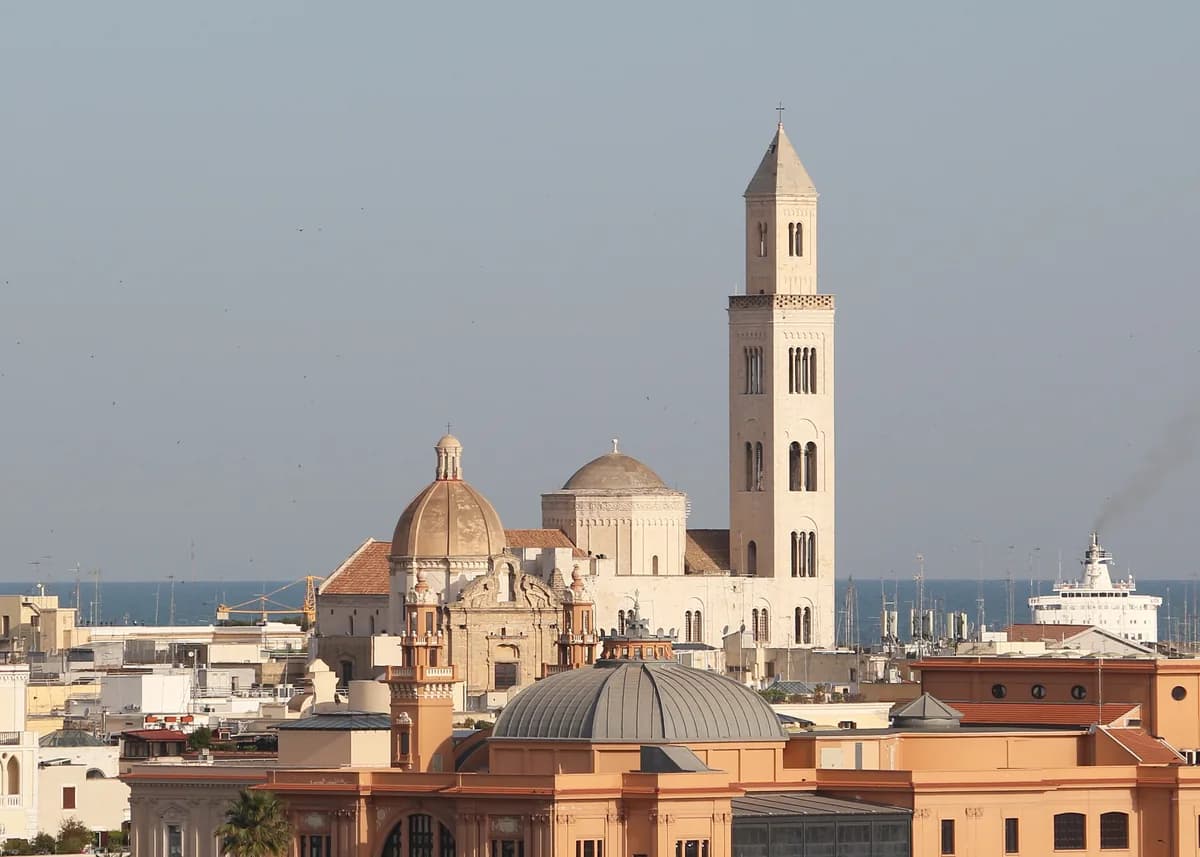
Best for:BudgetFirst-timersFood & wineThe regional capital, with the airport, the main station and the ferry port, plus a genuinely good walled old town where women make orecchiette in the street and the basilica holds the relics of Saint Nicholas. The nineteenth-century grid south of it has the shopping and most of the hotels.
- Good to know
- Good to know: Worth a night at either end of a trip rather than a week, since you will be leaving from here anyway and the old town is a pleasant surprise. Cheapest rooms in the region. Keep an eye on your bag in the old town and around the station, which is the one part of Puglia where that advice is genuinely needed.
Salento coast: Otranto and Gallipoli
$$ · Mid-rangeWhere the beaches are, and where August happens
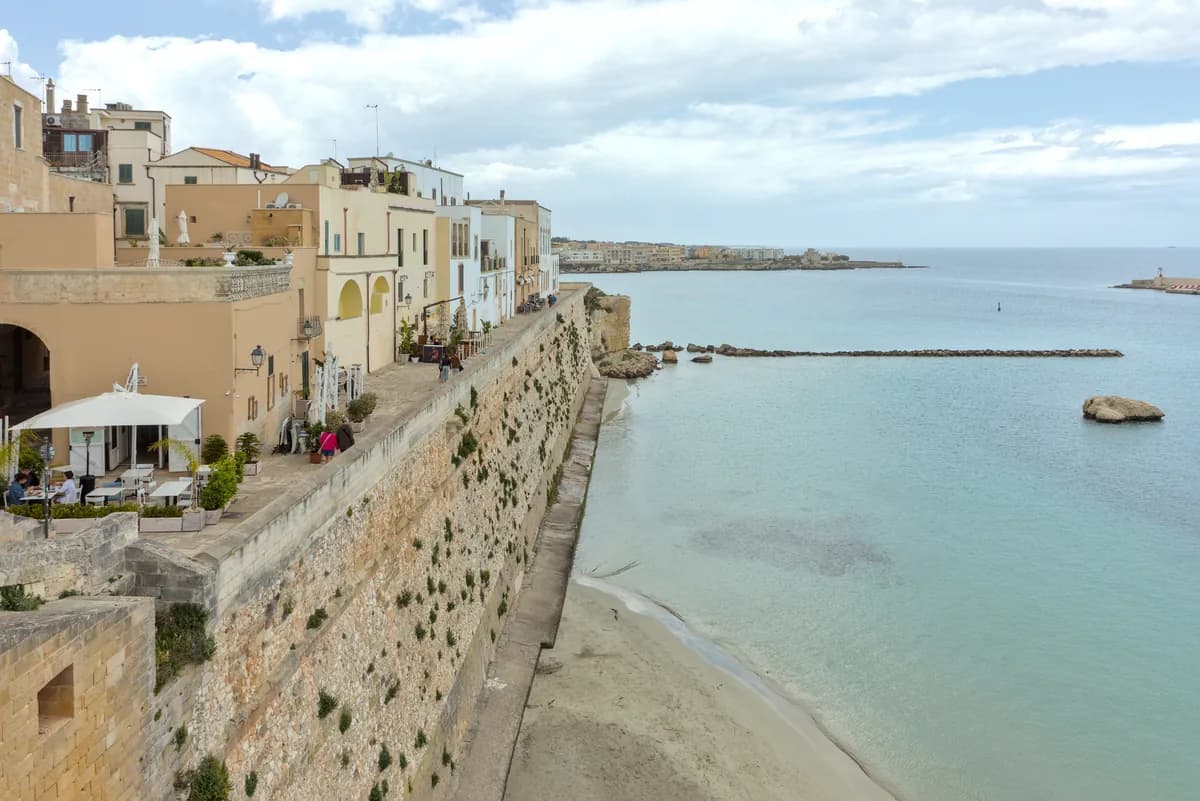
Best for:FamiliesNightlifeBudgetThe two coastal towns at the bottom of the heel, Otranto on the Adriatic with a castle and a cathedral floor mosaic, Gallipoli on the Ionian with an island old town and the flatter, warmer, shallower sea. The stretch between them holds the best swimming in Puglia.
- Good to know
- Good to know: Glorious in June and September and close to unbearable in the first three weeks of August, when the whole of Italy arrives, roads clog and prices double. Out of season much of it closes. Only base here if swimming is the main point of the trip.
Where not to stay in Puglia
Puglia is safe and rural for the most part, and the only place where ordinary city caution applies is Bari, around the station and in the quieter corners of the old town after dark. The real errors here are logistical. The biggest is picking one base and expecting to see the whole region, when Lecce to Polignano is around two hours each way and the far south is further still. Split the trip. The second is booking a masseria in the countryside without checking how far it is from a town, because many sit twenty minutes down a farm track and commit you to driving to every meal. The third is arriving in the first three weeks of August, when Italian holidays fill the coast, prices double and the Salento roads jam. And the last is confusing Puglia with Matera, which is beautiful and frequently sold as part of a Puglia trip but sits over the border in Basilicata, an hour and a half from Ostuni.
Getting around Puglia
Bari is the main airport, with Brindisi a smaller alternative further south and better placed for the Salento. The mainline railway runs down the Adriatic coast from Bari through Polignano a Mare, Monopoli, Fasano, Ostuni and Brindisi to Lecce, and it is fast and cheap, so a car-free trip along that line genuinely works. What it does not reach is the interior: the Valle d'Itria and the trulli towns are served only by a slow local narrow-gauge line with sparse timetables, and Ostuni's station sits a few kilometres below the town. If you want the countryside, the masserie or the smaller beaches, hire a car, and be aware that the historic centres are restricted traffic zones with cameras, so park outside the walls rather than driving in. Distances are longer than they look on a map and summer traffic on the coast roads is slow.
Where to stay in Puglia: FAQ
The questions travelers ask most when choosing an area.
Where to stay in other cities
Continue Planning Your Trip
Things to Do
Ranked attractions, tips and how to book tickets
Car Rental
Real prices, driving tips and the best routes by destination
Airport Transfers
Getting from the airport to your hotel, by price and time
All-Inclusive Guides
What all-inclusive really means, by destination
Best Time to Visit
Month-by-month weather, crowds and prices
Route Finder
Find the cheapest way to get there
Hotel Finder
Book the right hotel for your destination
AI Trip Planner
Build a day-by-day itinerary
Photo credits (7)
Photos via Wikimedia Commons, used under their respective licences.
- Ostuni and around: Sailko - CC BY 3.0 · source
- Valle d'Itria: Locorotondo, Cisternino, Martina Franca: Pinolor - CC BY-SA 4.0 · source
- Polignano a Mare: Frankthroughtheglass - CC BY-SA 4.0 · source
- Monopoli: Patrick Nouhailler's… - CC BY-SA 3.0 · source
- Lecce and the Salento: Freddyballo - CC BY-SA 3.0 · source
- Bari: Bernard Gagnon - CC0 · source
- Salento coast: Otranto and Gallipoli: Benjamin Smith - CC BY-SA 4.0 · source