Can you see Kyoto in 3 days?
Yes, properly, if you organise by geography and get up early. Day one is the Higashiyama temple district from a 6 am Kiyomizu-dera, day two is Arashiyama at dawn and the Golden Pavilion, day three is Fushimi Inari at sunrise and the Philosopher's Path. Almost nothing needs pre-booking; the currency here is time of day, not tickets.
The 3 days at a glance
One part of the island or city per day, so you spend your time looking at things rather than riding between them.
| Day | Area | What it covers | Paid entries | Pre-book? |
|---|---|---|---|---|
| 1 | Southern Higashiyama | Kiyomizu-dera, the preserved lanes, Gion | ~900 yen | Nothing |
| 2 | Arashiyama & the north-west | Bamboo grove, Tenryu-ji, Kinkaku-ji, Nishiki Market | ~1,300 yen | Nothing |
| 3 | Fushimi & the Philosopher's Path | Fushimi Inari at dawn, Ginkaku-ji, Nanzen-ji | ~1,000 yen | Nothing |
The striking number in this table is the last column. Kyoto's great sights do not sell out and most cost a few hundred yen or nothing, so unlike Rome or Paris there is almost nothing to book. What you cannot buy back is the morning: every day here is built to put you at the famous place at opening time, and the plan degrades gracefully if you start late, not painlessly.
Check today's Kyoto attraction pricesCompare tickets and timed entries for your datesDay 1: Southern Higashiyama, oldest Kyoto first
Kiyomizu-Gojo (Keihan) or bus stop Gojozaka
The eastern hills hold Kyoto's most famous temple and its best-preserved lanes, and they absorb the worst crowds in Japan from mid-morning. Done in this order, starting at six, you walk the whole district downhill with the crowds always arriving where you have just been.
 06:00
06:00Kiyomizu-dera
500 yenNearest station: Bus to Gojozaka, then a 10-minute uphill walk
The temple opens at 6 am, hours before the tour buses, and this is the single best crowd arbitrage in Kyoto. The great wooden stage hangs over the hillside with the city below, and at this hour you share it with joggers and monks. Admission is 500 yen. Walk up the Gojozaka slope rather than the Matsubara-dori shopping lane, which is dead this early anyway.
The catch: The 6 am start is the whole trick. Arrive at 10 and this stop takes twice as long and gives half as much.
 08:00
08:00Sannenzaka and Ninenzaka
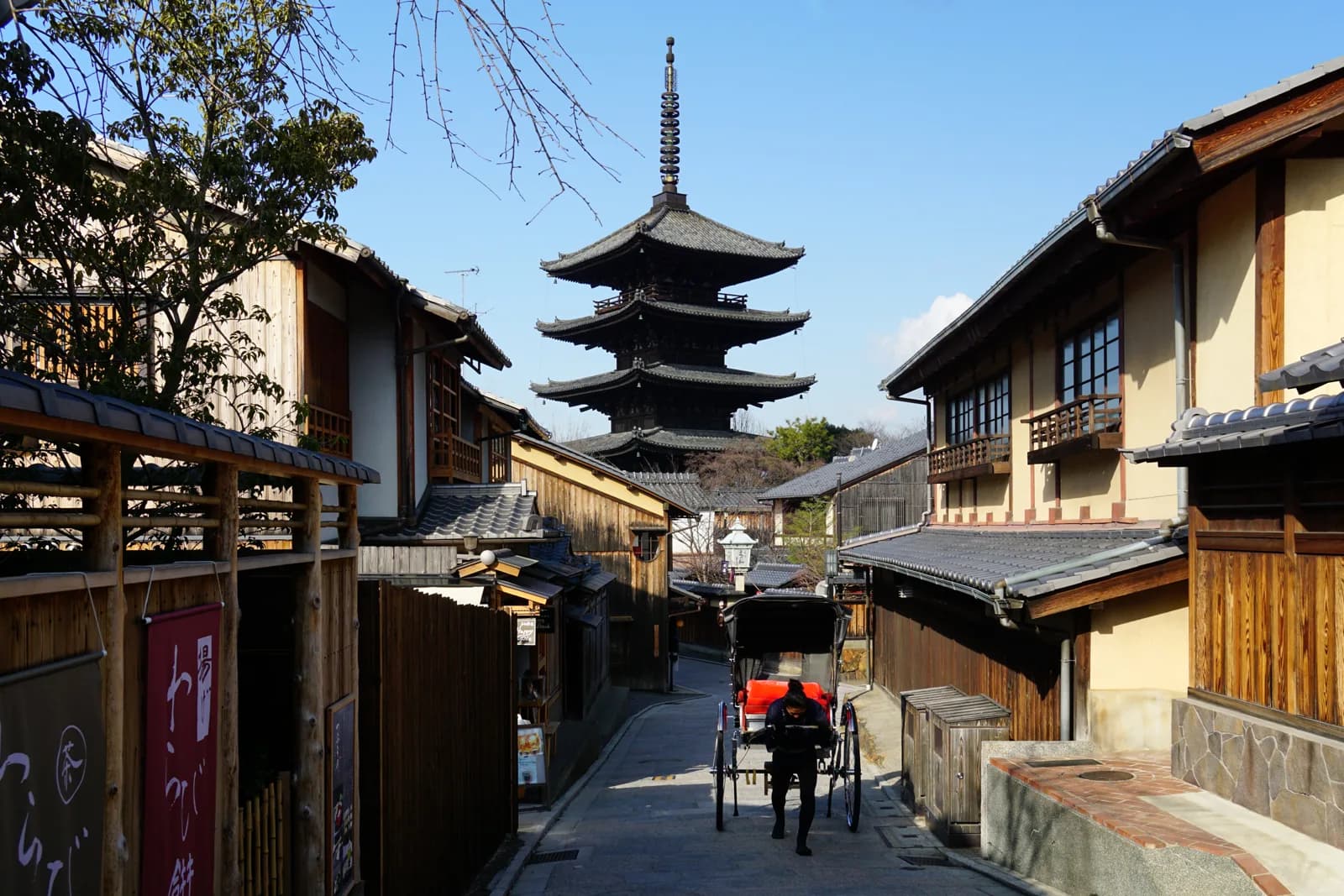
FreeThe two preserved stone lanes below the temple are the Kyoto of every photograph: wooden machiya houses, tiled roofs, a pagoda rising behind. They cost nothing and they are at their best right now, as the shops open and before the day-trippers land. Yasaka Pagoda at the bottom is the classic shot.
The catch: By 10:30 these lanes are the most crowded 400 metres in Japan. You will be gone by then.
 10:00
10:00Kodai-ji and Maruyama Park
600 yenKodai-ji is the quiet counterweight to Kiyomizu-dera: raked gravel, a bamboo stand, lacquered halls and a fraction of the visitors. Maruyama Park below it is where the city itself relaxes, and in cherry-blossom week its weeping cherry is the most famous tree in Kyoto.
The catch: It is an extra entry fee on a day that could be nearly free. Skip it if the budget is the constraint; keep it if you want one temple in peace.
 12:30
12:30Lunch and the backstreets to the Kamo River
1,000–1,500 yenEat in the lanes around Yasaka Shrine rather than on the tourist drags: the side streets hold udon and obanzai places at half the price. Then walk down to the Kamo River, where the whole city sits on the banks when the weather is kind.
 17:30
17:30Gion at dusk
FreeThe geisha district works in the evening, when the day visitors have gone and the lanterns come on. Walk Hanamikoji-dori south of Shijo, then the Shirakawa canal lane, which is the prettiest street in the city. Photography is restricted on some private lanes and the rule is enforced; the streetscape, not a chased photograph, is the point.
The catch: You may see no geiko at all. Treat any sighting as luck, not the goal, and the evening cannot disappoint you.
Skip: the rickshaw rides
The costumed rickshaw runners around the preserved lanes are charming and cost from around 4,000 yen for what is a fifteen-minute ride over ground you can walk in ten. On a district built entirely for walking, it is the weakest spend of the day.
Day 2: Arashiyama at dawn, then the Golden Pavilion
Saga-Arashiyama (JR), then bus to Kinkaku-ji
The two most photographed places in Kyoto after Fushimi Inari are on the same side of the city, and both punish lateness. The bamboo grove at seven is a cathedral; at eleven it is a corridor of phones. Do it first, give the middle of the day to Tenryu-ji and the river, and take the Golden Pavilion in the afternoon when its own crowds thin.
 07:00
07:00Arashiyama Bamboo Grove
FreeNearest station: JR Saga-Arashiyama, 15 min from Kyoto Station
The famous path through the bamboo is short, free and always open, which is exactly why the only way to have it is at dawn. Fifteen minutes on the JR Sagano line from Kyoto Station and a ten-minute walk puts you inside it while the light is still coming through in shafts. Walk it twice; it is over too quickly the first time.
The catch: It is smaller than the photographs imply. The point is the light and the quiet, and both are gone by mid-morning.
 08:30
08:30Tenryu-ji
500 yen (garden)The great Zen temple beside the grove opens at 8:30, and its Sogenchi garden, borrowing the Arashiyama hills as its backdrop, has looked like this for seven centuries. The garden ticket is 500 yen, with the buildings an optional 300 more; the garden is the reason you are here.
The catch: The garden-plus-buildings upsell is skippable. The view you came for is from the garden path, not the tatami.
 10:00
10:00Togetsukyo Bridge and the Katsura River
FreeWalk out of the temple's south gate to the river, where the wooden-decked Togetsukyo bridge crosses beneath the wooded hillside. Boats, herons and, in autumn, the best free foliage view in the city. Coffee and street food line the approach.
 13:30
13:30Kinkaku-ji
500 yenNearest station: Bus 204/205 to Kinkakuji-michi
The Golden Pavilion is exactly what it promises: a three-storey pavilion sheathed in gold leaf above a mirror pond. It is a 500 yen ticket and a one-way circuit that takes under an hour. Early afternoon is its quietest realistic window, after the morning tour groups and before the schools. Cross the city by bus or taxi from Arashiyama; allow 40 minutes.
The catch: You view it across the pond and cannot enter it. It is a twenty-minute sight inside an hour-long circuit, and it is still worth it.
 17:00
17:00Nishiki Market
Graze from a few hundred yen a stallFive covered blocks of food stalls in the centre: tofu doughnuts, grilled eel, pickles, knives. Most stalls wind down from 5 pm, so come for the tail of the day, graze, and let it hand you into the restaurant lanes of Pontocho for dinner along the river.
The catch: It is famous and it knows it: some stalls are tourist-priced. Eat where the queue is Japanese.
Skip: the Arashiyama monkey park, this trip
The monkeys are real and the hilltop view is good, but it is a steep 20-minute climb that costs the middle of a day already built around two crossings of the city. With three days, something has to give, and this is it.
Day 3: Fushimi Inari at sunrise, then the Philosopher's Path
JR Inari, then bus or Keihan north
The best sight in Kyoto is free and never closes, which is why it must be done at dawn: it belongs to whoever gets up for it. The rest of the day runs the quiet north-eastern temples at whatever pace the first climb left you, and ends on the water in the city centre.
 06:00
06:00Fushimi Inari Taisha
FreeNearest station: JR Inari, 5 min from Kyoto Station
Thousands of vermilion torii gates tunnel up the mountainside, and the shrine charges nothing and never shuts. From the JR Nara line it is two stops and five minutes from Kyoto Station to Inari, and at six you will walk long stretches of the gates alone. Climb at least to the Yotsutsuji viewpoint, about 45 minutes up, where the city opens below; the full circuit takes two to three hours.
The catch: The lower gates are a scrum by mid-morning. If you cannot do the dawn start, do the climb in the evening instead; the upper mountain is quiet at both ends of the day.
 10:30
10:30Ginkaku-ji
500 yenNearest station: Bus 5 or 17 to Ginkakuji-michi
The Silver Pavilion never got its silver, and is the better for it: a restrained villa above a garden of raked sand cones and moss, the aesthetic opposite of the morning's crowds. 500 yen, and the hillside path through the garden gives one of the best small views in the city. Cross town by Keihan line and bus; allow an hour with a coffee.
 12:30
12:30The Philosopher's Path
FreeThe canal-side walking path runs two kilometres south from Ginkaku-ji under a tunnel of cherry trees, past small temples and smaller cafes. In blossom week it is one of the most famous walks on earth; the rest of the year it is simply the calmest hour in Kyoto. Lunch at one of the cafes along the canal.
 14:30
14:30Nanzen-ji
Free (grounds)The path delivers you to Nanzen-ji's massive Sanmon gate and the unexpected brick aqueduct behind it, a Meiji-era waterway that curves through the temple grounds. The grounds are free to wander; the gate climb and sub-temples charge small fees you can skip without loss.
The catch: Temple fatigue is real by day three. If you are done, be done: the grounds and the aqueduct give the best of it in twenty minutes.
 17:00
17:00Pontocho and the Kamo River
Dinner 1,500 yen upwardEnd where the city ends its own days: the narrow lantern-lit alley of Pontocho, one restaurant wide and five hundred metres long, with the river terraces behind it in the warm months. Book nothing, walk it once end to end, and eat where it smells best.
Skip: Nijo Castle, unless you swap it in
Nijo Castle is genuinely good, with its painted Ninomaru palace and nightingale floors, and its 1,300 yen combined ticket is fair. It loses its slot here only because it sits alone in the city centre and this day's geography runs east. If shogun history beats one more garden for you, swap it for Ginkaku-ji and nobody could call it wrong.
Only have 2 days?
Two days in Kyoto works, but it stops being a version of this plan and becomes triage. The honest compression:
- Day one: Fushimi Inari at dawn, then Southern Higashiyama, Kiyomizu-dera first, lanes after, Gion at dusk. It is a long day and the best single day the city offers.
- Day two: Arashiyama at opening, Tenryu-ji, then Kinkaku-ji after lunch, Nishiki Market to finish.
- What dies: the Philosopher's Path, Ginkaku-ji and every unhurried hour. Two days sees Kyoto's sights; it does not really see Kyoto.
- Do not try to bolt Nara onto two days. It deserves its own morning, and our day-trips guide covers exactly how.
Two days covers the icons at dawn-start pace. The third day is where the city stops being a checklist, and it is the one we would fight to keep.
What 3 days actually costs
Kyoto is a cheap city to see and an expensive one to sleep in. The entries below are the real August 2026 gate prices for everything this itinerary enters; the surprise for most visitors is how small the total is.
| Kiyomizu-dera | 500 yen |
| Sannenzaka, Ninenzaka, Gion, Maruyama Park | Free |
| Kodai-ji (optional) | 600 yen |
| Arashiyama Bamboo Grove | Free |
| Tenryu-ji (garden) | 500 yen |
| Kinkaku-ji | 500 yen |
| Fushimi Inari Taisha | Free |
| Ginkaku-ji | 500 yen |
| Philosopher's Path and Nanzen-ji grounds | Free |
| Transit, 3 days of buses and trains | ~2,500 yen |
About 5,100 yen in entries and transit for three full days
Roughly 33 US dollars for every sight in a three-day plan is the quiet argument that Kyoto is a bargain. City buses charge a flat fare of around 230 yen and a combined subway-and-bus day pass is 1,100 yen; pay with an IC card and stop thinking about it. What is not cheap is the bed: Kyoto hotels are the priciest in the region, which is why the where-to-stay call below matters more than any ticket.
Where to stay for this itinerary
Base yourself around Kawaramachi and the Kamo River, or in the lanes between there and Gion. Every day in this plan starts with an early train or bus and ends in the centre, so what you are buying with a central room is the 6 am starts that make the whole itinerary work, plus Pontocho and Nishiki on foot at night. The Kyoto Station area is the practical second choice: better for luggage, the airport train and the dawn runs to Fushimi Inari and Arashiyama, at the cost of evening atmosphere. Our full where-to-stay guide rates every district; our Osaka pages cover the budget play of sleeping there and commuting in.
Central Kyoto rooms are the most expensive in the Kansai region, and in the cherry-blossom and autumn weeks they double and sell out months out. If the rate stings, the honest alternatives are the station area or Osaka, not a room an hour up the bus network.
- Free cancellation on most rooms
- No booking fee
- Prices on Trip.com
Kyoto in 3 days: FAQ
The questions people ask most when planning this trip.
Plan the rest of the trip
Continue Planning Your Trip
Intelligent tools designed to simplify the complex.
Things to Do
Ranked attractions, tips and how to book tickets
Where to Stay
The best area to stay in each city, by neighborhood
Car Rental
Real prices, driving tips and the best routes by destination
Airport Transfers
Getting from the airport to your hotel, by price and time
All-Inclusive Guides
What all-inclusive really means, by destination
Best Time to Visit
Month-by-month weather, crowds and prices
Cheapest Places to Travel
18 destinations ranked by real daily budgets
Route Finder
Find the cheapest way to get there
Hotel Finder
Book the right hotel for your destination
AI Trip Planner
Build a day-by-day itinerary
Budget Calculator
Estimate total cost
Photo credits (15)
Photos via Wikimedia Commons, used under their respective licences.
- Kiyomizu-dera: Martin Falbisoner - CC BY-SA 4.0 · source
- Sannenzaka and Ninenzaka: Domenico Convertini - CC BY-SA 2.0 · source
- Kodai-ji and Maruyama Park: Qwert1234 - Public domain · source
- Lunch and the backstreets to the Kamo River: Daderot - CC0 · source
- Gion at dusk: Kanchi1979 - CC BY-SA 4.0 · source
- Arashiyama Bamboo Grove: dconvertini - CC BY-SA 2.0 · source
- Tenryu-ji: ttshr1970 - CC BY 3.0 · source
- Togetsukyo Bridge and the Katsura River: Basile Morin - CC BY-SA 4.0 · source
- Kinkaku-ji: Jaycangel - CC BY-SA 3.0 · source
- Nishiki Market: Joli Rumi - CC BY-SA 4.0 · source
- Fushimi Inari Taisha: Jakub Hałun - CC BY 4.0 · source
- Ginkaku-ji: Daderot - CC BY-SA 3.0 · source
- The Philosopher's Path: shankar s. - CC BY 2.0 · source
- Nanzen-ji: ttshr1970 - CC BY 3.0 · source
- Pontocho and the Kamo River: Sergiy Galyonkin - CC BY-SA 2.0 · source