What are the best Caribbean cruise ports?
The best Caribbean cruise ports are Grand Cayman for Stingray City and Seven Mile Beach, Cozumel for the Caribbean's best snorkelling and Mayan ruins, St Thomas for beaches and the Skyride, St Maarten for two countries and Maho Beach, and San Juan for a genuinely historic old town you can walk into. Grand Cayman tenders, so get ashore early. The most overrated stops are the duty-free shopping ports where the beach is a taxi ride away.
- Free cancellation on most rooms
- No booking fee
- Prices on Trip.com
The best Caribbean cruise ports, ranked
Ranked by what one port day is genuinely worth. The pattern to notice: the ports that rank highest have something you cannot get on the ship or at the next island, and the ones that rank lowest sell duty-free watches.
1. Grand Cayman
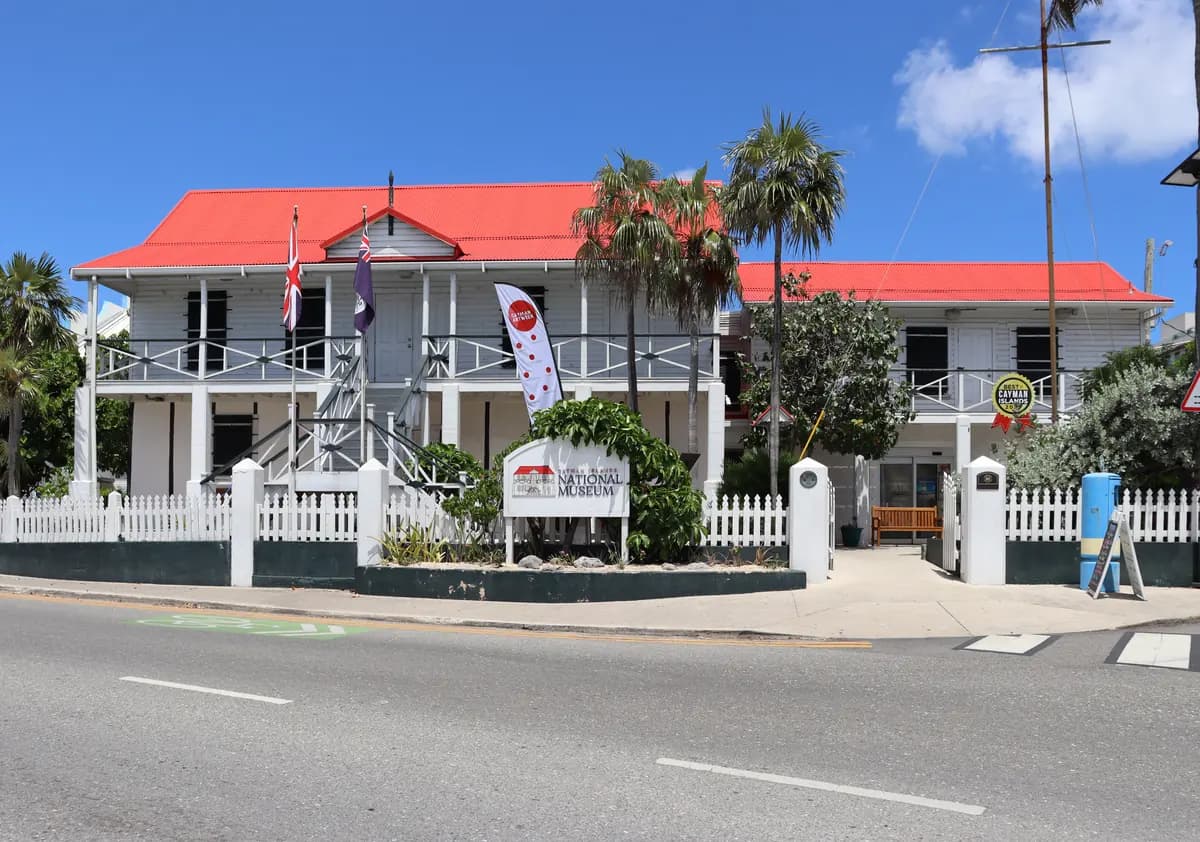
Cayman IslandsTender portThe best excursion in the Caribbean, but it tenders.
Stingray City is a sandbar in the middle of the North Sound where you stand in waist-deep, clear water surrounded by wild southern stingrays that have gathered here for generations. There is nothing else like it in the region. Seven Mile Beach is also genuinely excellent rather than merely fine, and it is a short taxi from the pier.
Book it right: There is no cruise pier, so ships anchor and tender, and Grand Cayman is the port most often cancelled outright when the swell is up. Get on an early tender. Book Stingray City ahead because it sells out, and pick a smaller boat - the big catamarans arrive at the sandbar together and it gets crowded fast.
Typical time in port: Usually 7am - 4pm
Book Grand Cayman excursions- Free cancellation on most rooms
- No booking fee
- Prices on Trip.com
2. Cozumel
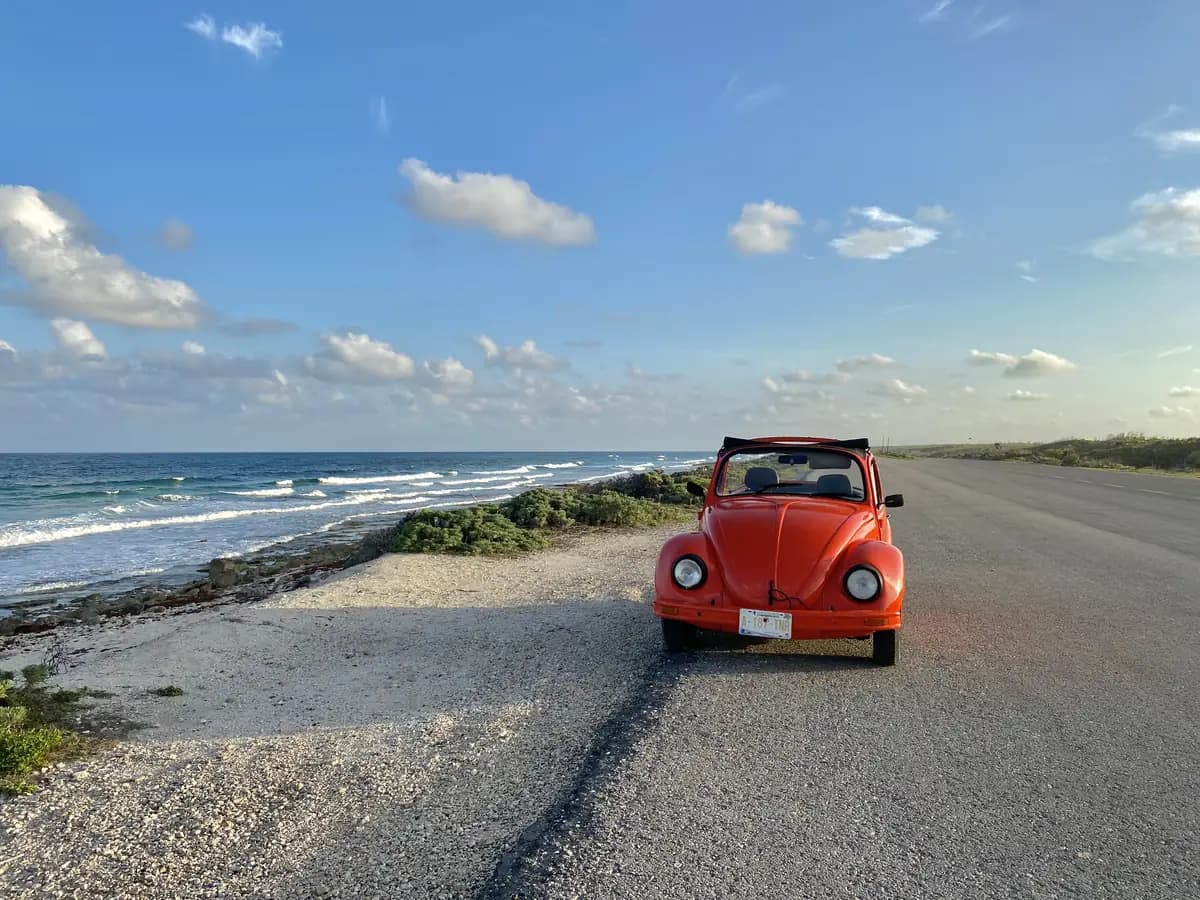
MexicoThe best water in the Caribbean, and the best value ashore.
Cozumel sits on the Mesoamerican Reef, the second-largest barrier reef in the world, and the snorkelling and diving here are the finest in the region by a distance. It is also the cheapest port for food and drink, and a ferry plus short drive reaches the Mayan ruins at Tulum on the mainland.
Book it right: Book a reef snorkel or dive rather than the shopping strip by the pier, which is the least interesting part of the island. Tulum is a long day - roughly two hours each way with the ferry - so only attempt it as an organised trip with a guaranteed return. Chankanaab and Palancar are the reliable beach-and-reef options closer in.
Typical time in port: Usually 8am - 6pm
Book Cozumel excursions- Free cancellation on most rooms
- No booking fee
- Prices on Trip.com
3. San Juan
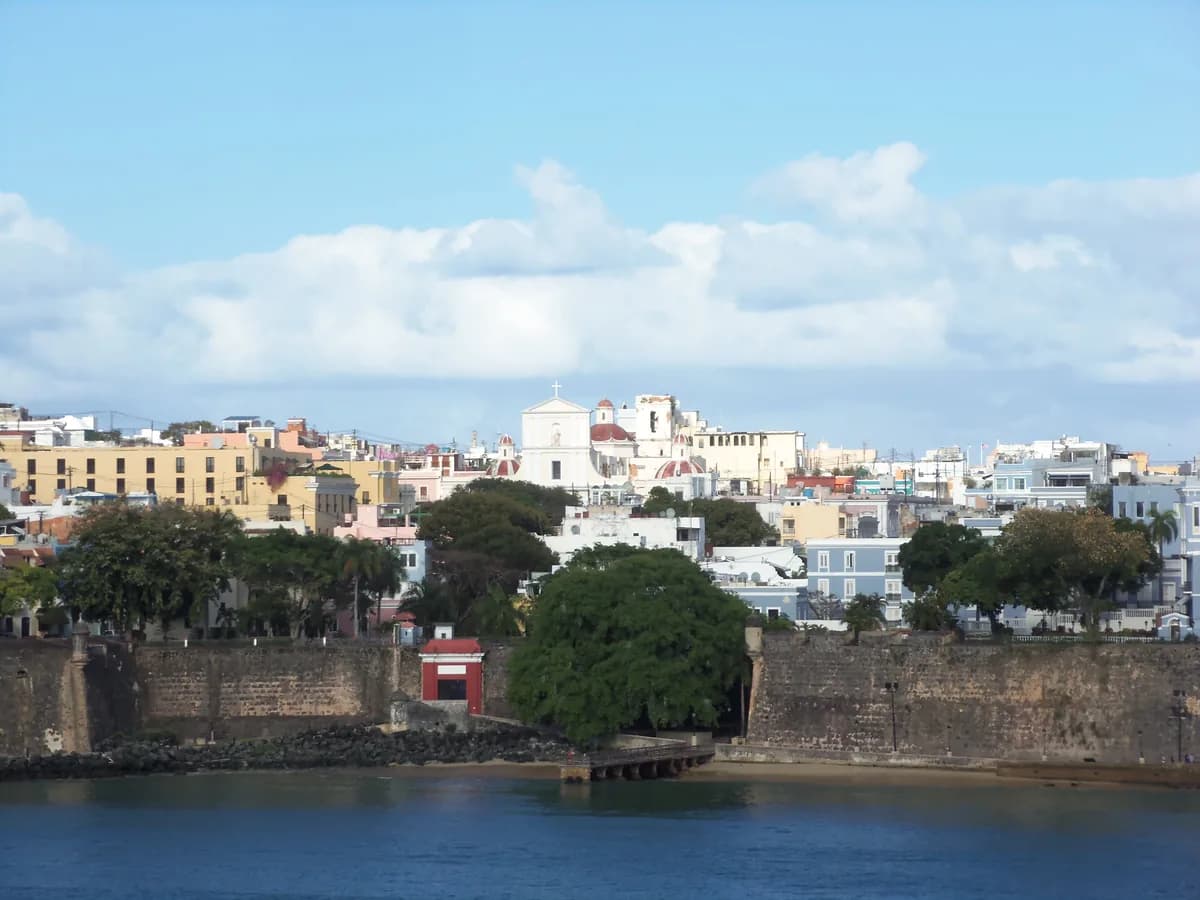
Puerto RicoThe only port with a real city at the pier. No tour needed.
Ships dock right at Old San Juan, a UNESCO-listed Spanish colonial quarter of blue cobblestones, pastel townhouses and two vast seaside fortresses. You step off the ship into 500 years of history, which no other Caribbean port offers. El Morro and Castillo San Cristobal are both walkable and cheap to enter.
Book it right: Walk it. This is the one port where paying for a tour is close to pointless unless you want the rainforest. Do El Morro first thing before the heat, then the old town streets and a lunch of mofongo. If your call is an overnight, the bioluminescent bay trips are the excursion worth booking.
Typical time in port: Often a full day; embarkation port for many sailings
Book San Juan excursionsBest time to visit Puerto Rico- Free cancellation on most rooms
- No booking fee
- Prices on Trip.com

4. St Maarten / Sint Maarten
Dutch and French CaribbeanTwo countries, one island, and the beach with the planes.
The island is split between the Netherlands and France, and you can cross the border on foot or by bus for two quite different lunches. Maho Beach sits at the end of the airport runway where aircraft land directly overhead, which is a genuine spectacle. Philipsburg's Great Bay beach is a walk from the pier.
Book it right: Check the arrivals board for Maho Beach before committing a taxi fare - the big jets are what people come for and they are infrequent. Marigot on the French side has the better market and food. The pier is about 1.5km from Philipsburg, with a water taxi or a pleasant walk along the boardwalk.
Typical time in port: Usually 8am - 5pm
Book St Maarten / Sint Maarten excursions- Free cancellation on most rooms
- No booking fee
- Prices on Trip.com
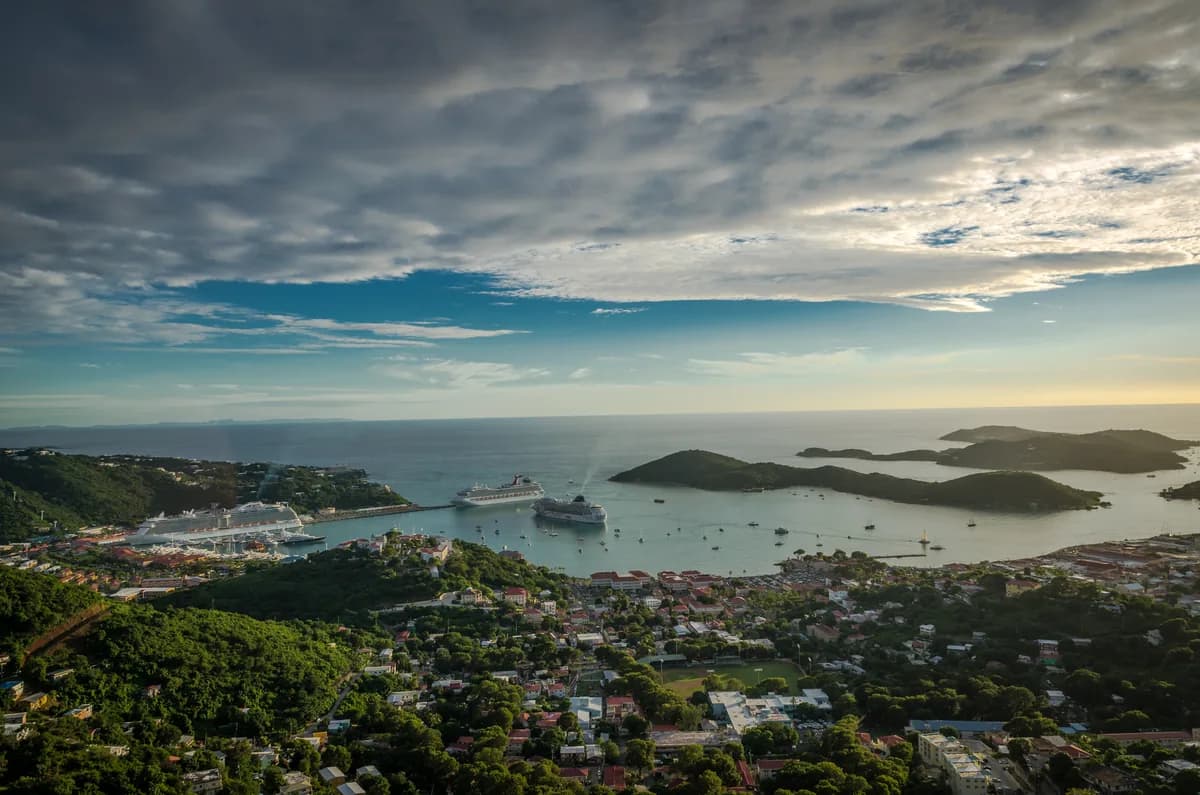
5. St Thomas
US Virgin IslandsThe best beach in the region, and the busiest port.
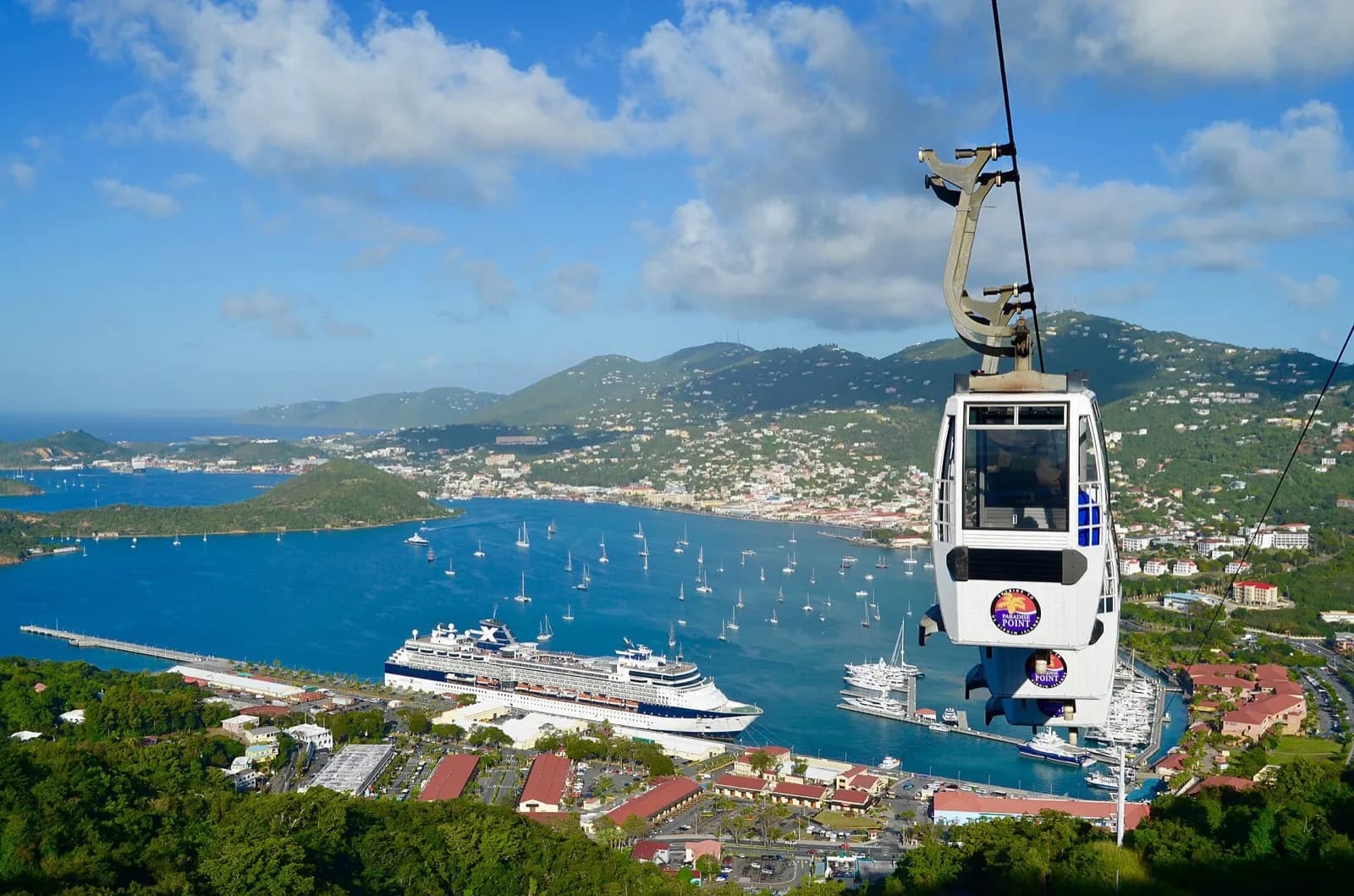
Magens Bay is regularly rated among the world's finest beaches and is a 20-minute drive from the dock. The Skyride gondola lifts you 200 metres above Charlotte Amalie for the classic harbour view, and a short ferry reaches St John, where two-thirds of the island is national park and the beaches are better still.
Book it right: St Thomas takes multiple large ships a day and Charlotte Amalie's duty-free strip is a crush - do not spend your day there. Take a taxi straight to Magens Bay early, or better, take the ferry to St John and Trunk Bay. Book any ferry-based trip through a reputable operator so the timing is guaranteed.
Typical time in port: Usually 8am - 5pm
Book St Thomas excursions- Free cancellation on most rooms
- No booking fee
- Prices on Trip.com
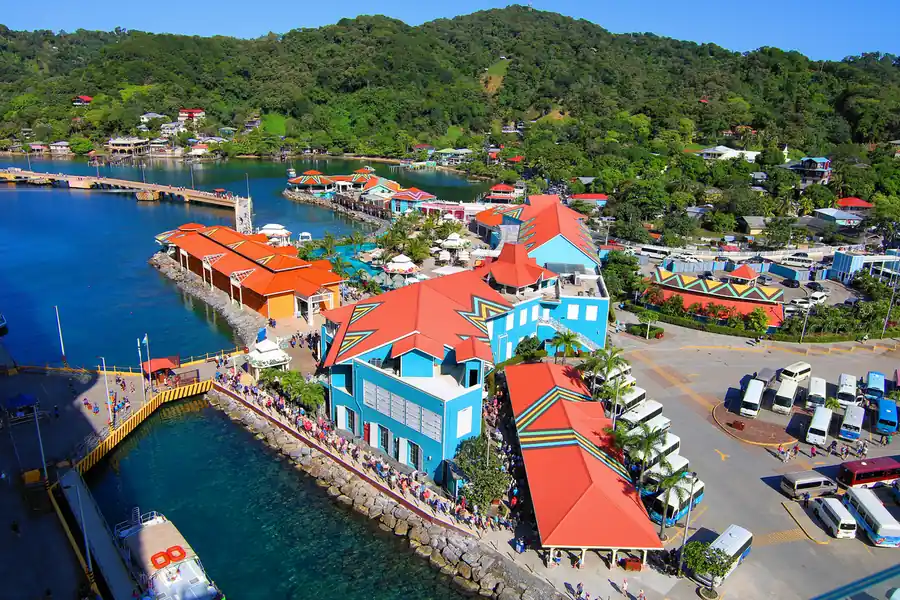
6. Roatan
HondurasSuperb reef, and the port you should not wander far from alone.
Another stop on the Mesoamerican Reef, with excellent snorkelling and diving straight off the beach at West Bay, plus zipline courses through the hills. The water clarity rivals Cozumel and the beaches are quieter.
Book it right: This is one of the few Caribbean ports where sticking to organised excursions or reputable operators genuinely matters, rather than exploring independently. Book a West Bay beach or reef trip and enjoy it. The cruise terminals themselves are secure and self-contained if you would rather stay close.
Typical time in port: Usually 9am - 5pm
Book Roatan excursions- Free cancellation on most rooms
- No booking fee
- Prices on Trip.com
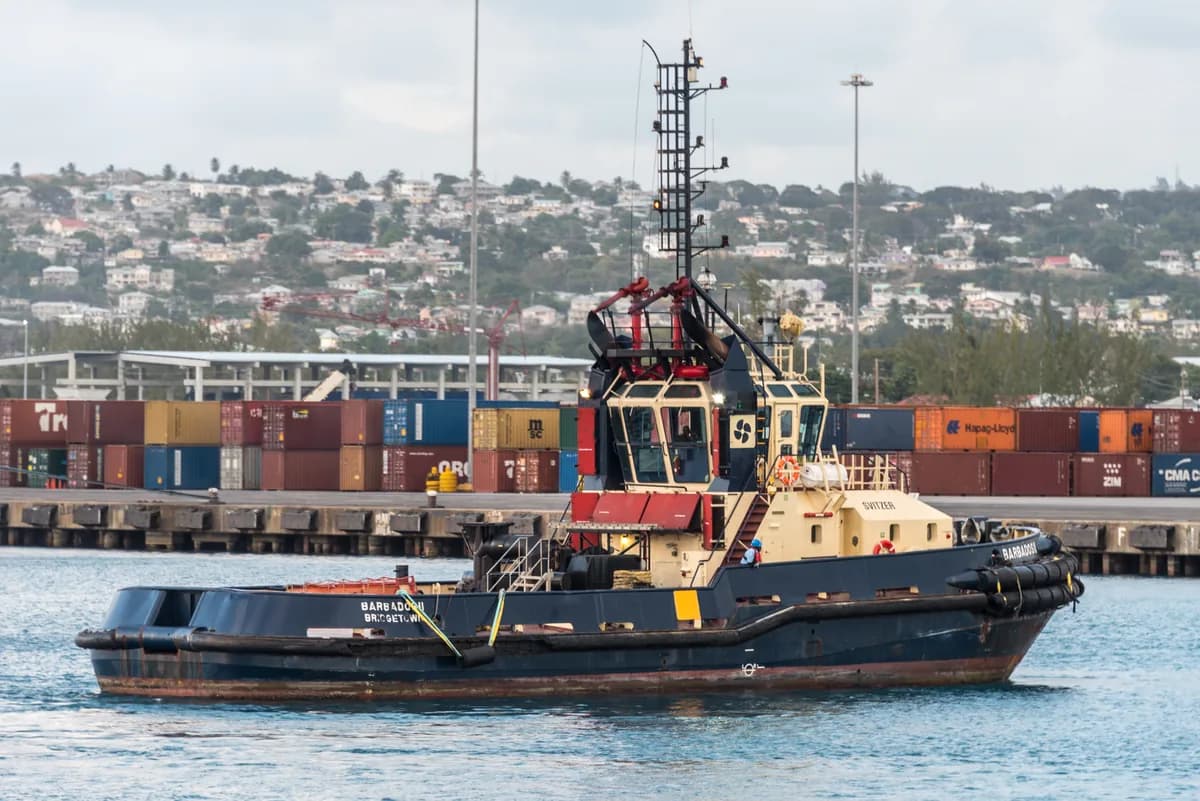
7. Barbados
BarbadosUnderrated. Rum, turtles and calm west-coast water.
Swimming with sea turtles in the clear shallow water off the west coast is the standout, and it is reliable rather than a lottery. Barbados also has the oldest rum distilleries in the world, a genuinely good food scene, and Bathsheba's wild Atlantic coast on the far side for a different landscape.
Book it right: The port is in Bridgetown, about 1.5km from the centre with a shuttle. Catamaran trips that combine turtle swimming with a shipwreck snorkel are the best-value half day on the island. The west coast is calm and swimmable; the east coast is dramatic but has strong currents and is for looking, not swimming.
Typical time in port: Usually 8am - 5pm
Book Barbados excursions- Free cancellation on most rooms
- No booking fee
- Prices on Trip.com
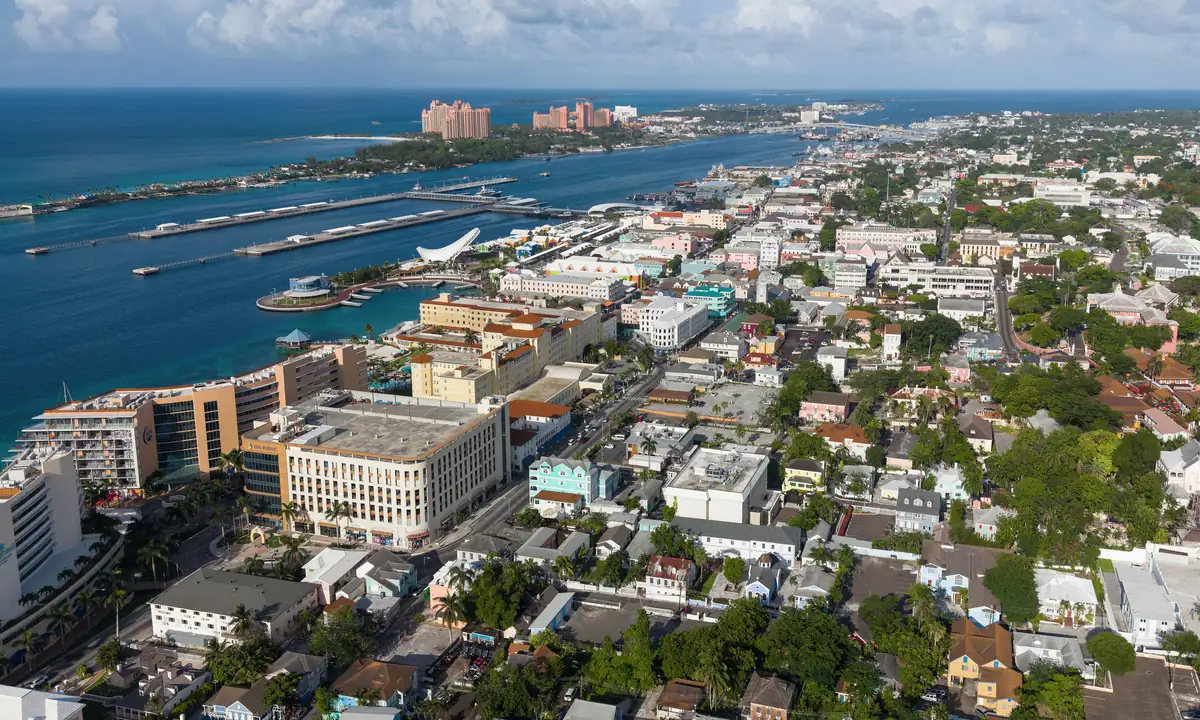
8. Nassau
BahamasOverrated. Convenient, crowded and mostly a shopping strip.
Nassau is on almost every short Bahamas and eastern Caribbean itinerary because it is close to Florida, and it takes an enormous number of passengers a day. The straw market and duty-free strip by the pier are the least appealing few hundred metres in the Caribbean, though Fort Charlotte and the Queen's Staircase are pleasant and cheap.
Book it right: Get away from the pier or go to a beach. Junkanoo Beach is walkable; Cable Beach is a short drive and much better. Paradise Island's Atlantis water park sells day passes that are expensive but genuinely good for families. If your itinerary also includes a private island, save your money here and spend it there.
Typical time in port: Usually 8am - 5pm
Book Nassau excursions- Free cancellation on most rooms
- No booking fee
- Prices on Trip.com
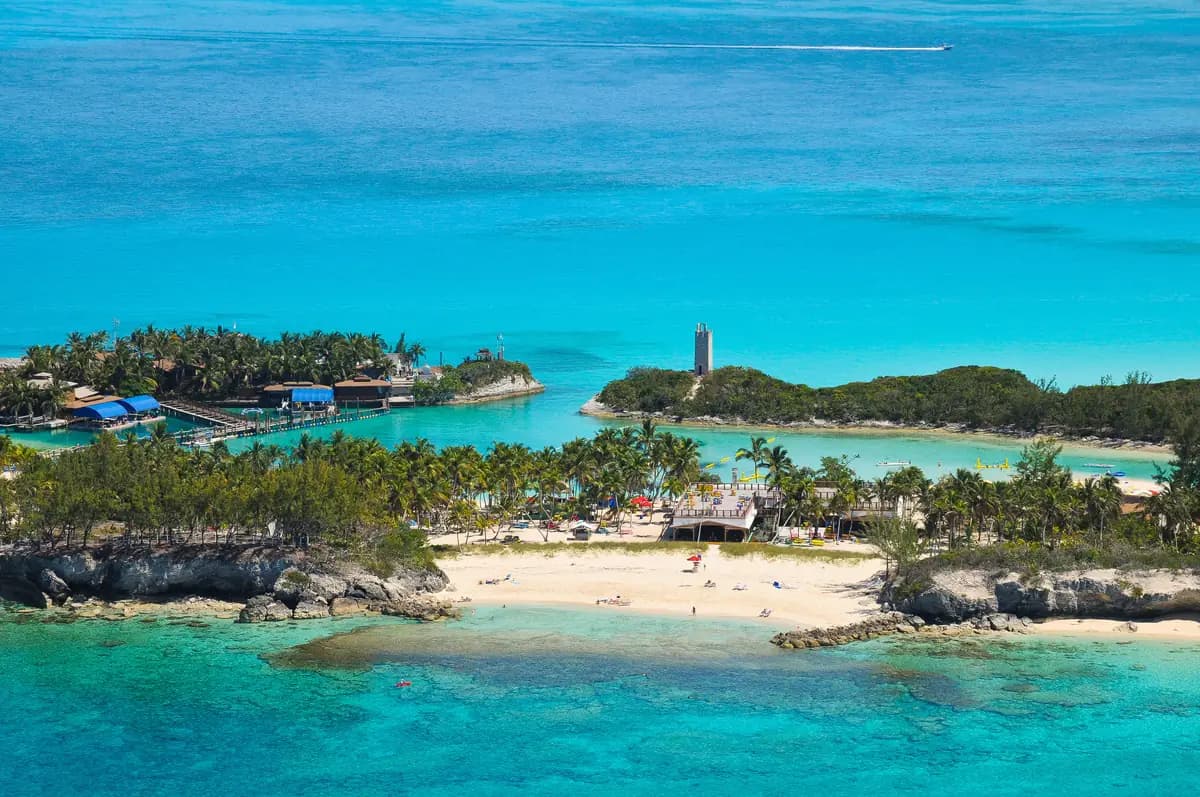
9. Private islands (Bahamas)
BahamasTender portEasy, controlled and genuinely relaxing. Extras cost.
Most lines own or lease a private beach destination in the Bahamas, and they are exactly what they look like: a clean, well-run beach day with loungers, a buffet included in your fare and calm water. As a low-effort day it works well, particularly with children.
Book it right: The beach, the food and the basic loungers are included, and that is the good part. Everything else - cabanas, jet skis, floating parks, some excursions - carries a fee that adds up quickly. Walk further along the beach than the first stretch and it thins out dramatically. Rough weather cancels these stops, since most involve tendering.
Book Private islands (Bahamas) excursions- Free cancellation on most rooms
- No booking fee
- Prices on Trip.com
Best time for a Caribbean cruise
The Caribbean sails year-round, which makes the season question about weather risk and price rather than availability.
| Period | Weather | Price and crowds |
|---|---|---|
| Dec - Apr | Dry season, warm, low humidity | Peak fares and busiest ports. Christmas and spring break are the most expensive weeks of the year. |
| May - early Jun | Warm, occasional showers | Excellent value shoulder window before hurricane season builds. One of the best times to sail. |
| Jun - Nov | Hurricane season, hot and humid | The cheapest fares of the year. Storms are rare on any given sailing but itineraries can be changed at short notice. |
| Sept - Oct | Peak storm risk | The absolute lowest prices. Take flexible fares and travel insurance, and expect possible itinerary changes. |
What to wear on a Caribbean cruise
Days are hot and humid year-round, so light, quick-drying clothing, swimwear you can wear under a cover-up, and a hat are the basics. Reef-safe sun cream matters here in practice as well as principle - several Caribbean destinations restrict the chemical sunscreens that damage coral, and you will be snorkelling over reef in Cozumel, Roatan and Barbados.
Water shoes are the item people wish they had packed. Several of the best beaches and reef entries are rocky or have sea urchins, and a cheap pair saves the day. Bring a dry bag or waterproof phone case for boat trips, because you will be getting wet more than on any other cruise region.
On board, evenings are smart-casual with one or two formal nights on a seven-night sailing. Ships are heavily air-conditioned, so a light layer for dinner and the theatre is worth having even when it is 30°C outside.
- check_circleReef-safe sun cream - some islands restrict the chemical kind, and you will be over coral.
- check_circleWater shoes for rocky beach and reef entries.
- check_circleA dry bag or waterproof phone case for catamaran and snorkel trips.
- check_circleA light layer for heavily air-conditioned evenings on board.
Caribbean shore excursions: what is worth booking
The Caribbean rewards a simple rule: book the things you cannot do anywhere else, and walk to the things you can. Stingray City in Grand Cayman, reef snorkelling in Cozumel or Roatan, and turtle swimming in Barbados are all genuinely distinctive and worth paying for. A beach day, a shopping strip and a rum punch are available at every stop and rarely justify a paid excursion.
Booking independently generally costs less and puts you in smaller groups, and in most Caribbean ports the taxi ranks are organised and the distances short, so it is low risk. The exceptions are the tender ports - Grand Cayman and the private islands - where getting back is weather-dependent, and long-distance trips like Tulum from Cozumel, where a guaranteed return matters more than the saving.
One booking note specific to this region: hurricane season sailings can have itineraries changed at short notice, so avoid paying for non-refundable independent excursions months ahead between June and November. Book those closer in, once the itinerary looks settled.
- check_circleBook what is unique: Stingray City, reef snorkelling, turtle swims.
- check_circleSkip paid excursions for generic beach and shopping days - a taxi does it cheaper.
- check_circleUse ship excursions for tender ports and long inland trips like Tulum.
- check_circleIn hurricane season, book independent tours late in case the itinerary changes.
Eastern, western or southern Caribbean?
Eastern itineraries typically run to St Thomas, St Maarten, San Juan and the Bahamas. They have the best beaches and the shortest sailing distances, which means more time in port and less at sea, and they suit first-timers.
Western itineraries head for Cozumel, Grand Cayman, Jamaica, Roatan and Belize. This is the route for snorkelling, diving and Mayan ruins, with more variety ashore and generally better value on food and excursions.
Southern itineraries reach Barbados, Aruba, St Lucia, Grenada and the Grenadines. They sail from ports further south, involve longer distances and more sea days, and reach the least crowded, most distinctive islands. If you have done the eastern route and found it samey, the southern Caribbean is the answer.
Frequently asked questions
- Free cancellation on most rooms
- No booking fee
- Prices on Trip.com
More cruise guides
Mediterranean cruise ports
The best Mediterranean cruise ports - Barcelona, Rome, Santorini, Dubrovnik and more. Which need a tour, which are walkable, tender ports to watch, and what to wear.
Cheapest time to cruise
The cheapest time to cruise, month by month, when cruise prices drop, how much to tip, how much cash to bring, and the booking moves that cut hundreds off a sailing.
Photo credits (9)
Photos via Wikimedia Commons, used under their respective licences.
- Grand Cayman: Coolcaesar - CC BY 4.0 · source
- Cozumel: Sharon Hahn Darlin - CC BY 2.0 · source
- San Juan: Farragutful - CC BY-SA 3.0 · source
- St Maarten / Sint Maarten: Jonathan Palombo - CC BY 2.0 · source
- St Thomas: Sunil Pereira - CC BY-SA 3.0 · source
- Roatan: Larry D. Moore - CC BY 4.0 · source
- Barbados: Gordon Leggett - CC BY 4.0 · source
- Nassau: Quintin Soloviev - CC BY 4.0 · source
- Private islands (Bahamas): SallySwims - CC BY-SA 4.0 · source
Continue Planning Your Trip
Intelligent tools designed to simplify the complex.
Things to Do
Ranked attractions, tips and how to book tickets
Where to Stay
The best area to stay in each city, by neighborhood
Car Rental
Real prices, driving tips and the best routes by destination
Airport Transfers
Getting from the airport to your hotel, by price and time
All-Inclusive Guides
What all-inclusive really means, by destination
Best Time to Visit
Month-by-month weather, crowds and prices
Cheapest Places to Travel
18 destinations ranked by real daily budgets
Route Finder
Find the cheapest way to get there
Hotel Finder
Book the right hotel for your destination
AI Trip Planner
Build a day-by-day itinerary
Budget Calculator
Estimate total cost