
In Brief
What is the best area to stay in New York with family?
The Upper West Side if the museums are the trip, with the natural history museum and the Children's Museum of Manhattan both inside an eight-minute walk. Lower Manhattan and Battery Park City if you have a pushchair, because it is the strongest area here for step-free access and the harbour is the neighbourhood rather than a day out. Brooklyn Heights and DUMBO look ideal and have the worst accessibility of any area on this page, which catches exactly the families who choose it.
Key takeaways
- Up to three children under 44 inches ride free with one fare-paying adult, and adults pay $3
- The B and C line through the Upper West Side is step-free at zero stations
- Brooklyn Heights and DUMBO has one accessible station in five, and neither DUMBO station is one
- MTA's own dataset has three accessibility states, not two, so check before you rely on a station
New York areas at a glance
The best areas to stay in New York, compared for vibe, price and who each suits.
| Area | Best for | Price | In a word |
|---|---|---|---|
| Upper West Side | families, sightseeing | $$$ | Two children's museums inside an eight-minute walk |
| Lower Manhattan and Battery Park City | families, sightseeing | $$$ | The best step-free access in the city, and the harbour as your park |
| Upper East Side | families, sightseeing | $$$ | A fully step-free subway line, and nothing open in the evening |
| Brooklyn Heights and DUMBO | families, food | $$ | The best playgrounds in the city, and one accessible station in five |
| Midtown East and Murray Hill | families, budget | $$ | Quieter than the west side, cheaper for it, and empty at weekends |
| Long Island City | families, budget | $$ | Bigger rooms, lower rates, and a river crossing at each end of the day |
| Midtown West and Times Square | families, first timers | $$$ | Everything is close and nothing is restful |
- Free cancellation on most rooms
- No booking fee
- Prices on Trip.com
Best areas to stay in New York
Ranked best-first, with the vibe, who it suits and an honest catch for each. Tap a filter to match an area to your trip.
Find your area - what matters most?
All 7 areas in New York, best first.
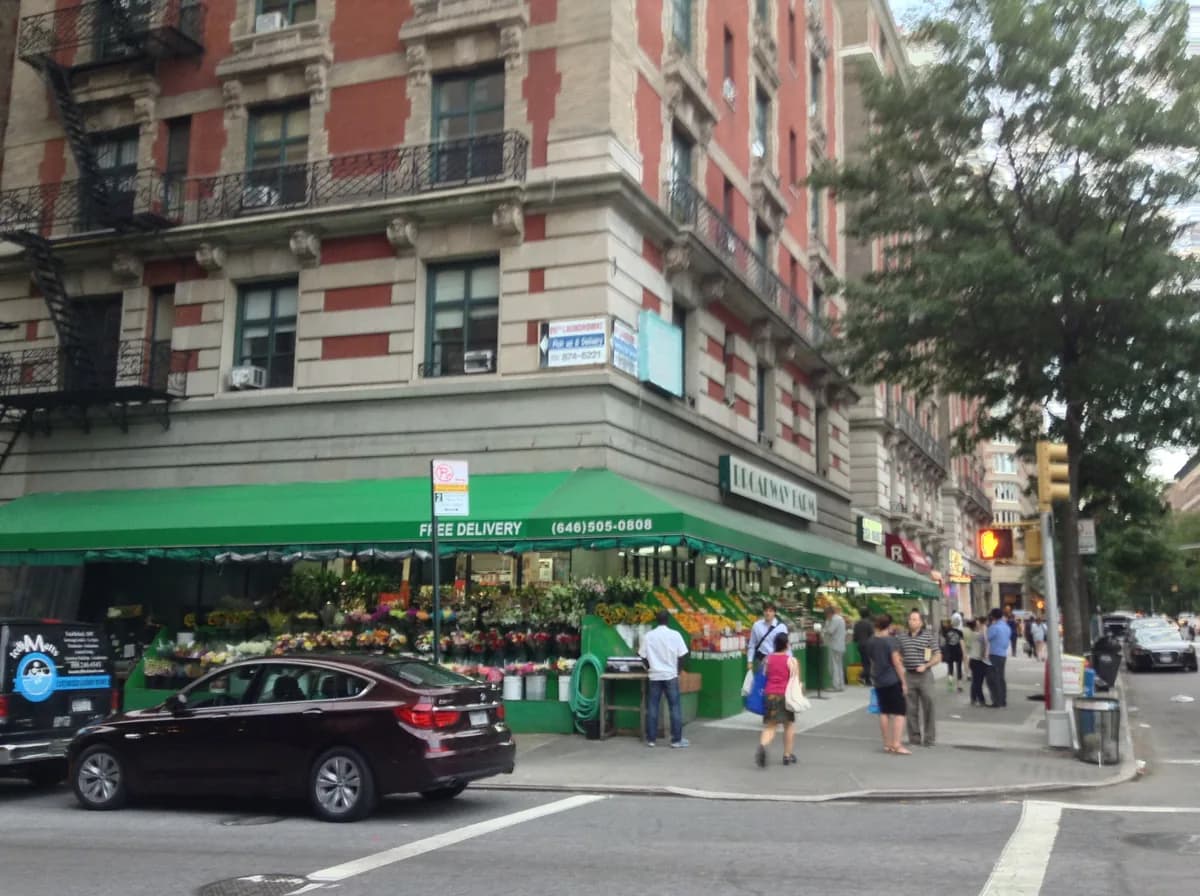
Upper West Side
$$$ · High-endTwo children's museums inside an eight-minute walk
Best for:FamiliesSightseeingFood & wineA residential grid of pre-war apartment buildings, food shops and playgrounds between Central Park and Riverside Park, with the American Museum of Natural History and the Children's Museum of Manhattan both inside an eight-minute walk. It is the one part of Manhattan that reads as a neighbourhood where people live rather than a district people visit.
- Good to know
- Good to know: The accessibility gap is worse than a map suggests: a family with a pushchair heading to the natural history museum by subway cannot use the station named after it, because the B and C line is step-free at zero stations. Use the 1, 2 or 3 on Broadway instead, where 66th, 72nd and 96th are all accessible.
Lower Manhattan and Battery Park City
$$$ · High-endThe best step-free access in the city, and the harbour as your park
Best for:FamiliesSightseeingFirst-timersThe strongest area here for step-free access and the only one where the harbour is the neighbourhood rather than a day trip. Battery Park City is planned residential with a continuous riverside esplanade, playgrounds along it and no through traffic, which is rare in Manhattan. One World Observatory is a measured four minutes and the Staten Island Ferry, still free, is close enough to do on a whim.
- Good to know
- Good to know: Everything uptown is genuinely far on foot: the natural history museum is a measured 116 minutes away and Central Park Zoo 100, so the whole Central Park half of a New York trip becomes a subway journey rather than a walk.
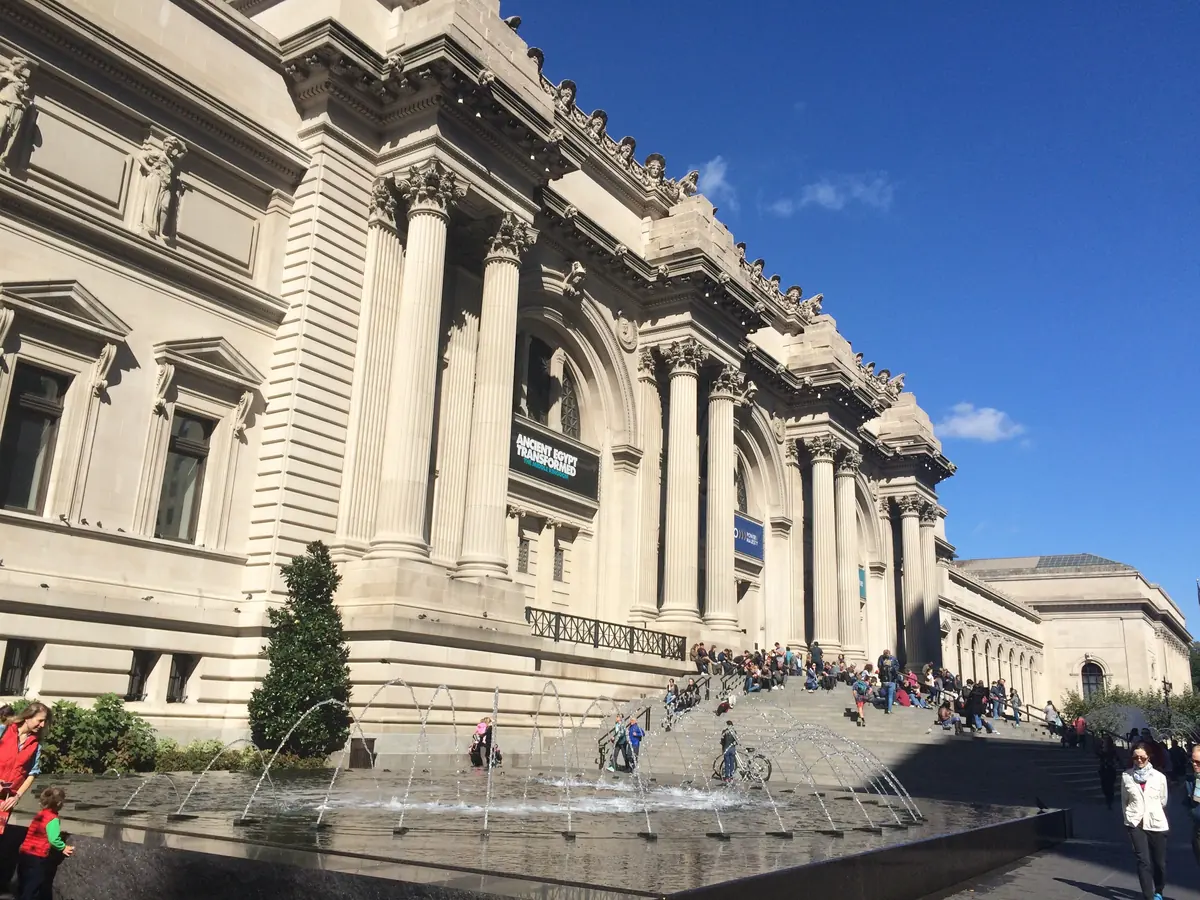
Upper East Side
$$$ · High-endA fully step-free subway line, and nothing open in the evening
Best for:FamiliesSightseeingQuieter and more residential than people expect. Central Park is the local park, the zoo is a measured 25 minutes on foot and the carousel 28, and the Second Avenue Q line is step-free at every one of its stations, which is the single best accessibility fact in this research.
- Good to know
- Good to know: There is genuinely nothing to do here in the evening, which cuts both ways with children. The Q is excellent and the 6 is crowded, slow and mostly inaccessible, so a hotel a block from the wrong line is a different holiday from one beside the right line.
Brooklyn Heights and DUMBO
$$ · Mid-rangeThe best playgrounds in the city, and one accessible station in five
Best for:FamiliesFood & wineSightseeingBrownstone streets, the Promenade with the Manhattan skyline across the water, and Brooklyn Bridge Park running down to the river with the best public playgrounds in New York City in it. The Pier 6 playground is a measured ten minutes and Jane's Carousel seventeen. On paper it is the obvious family choice.
- Good to know
- Good to know: The accessibility problem is the headline and it lands on precisely the families who pick this area. Only Borough Hall is step-free; Clark Street, High Street and York Street are not, so neither DUMBO station is usable with a pushchair. The walk down from Brooklyn Heights to DUMBO is steep and cobbled in places.
Midtown East and Murray Hill
$$ · Mid-rangeQuieter than the west side, cheaper for it, and empty at weekends
Best for:FamiliesBudgetFirst-timersQuieter than the west side by a wide margin and reliably cheaper. Murray Hill is low-rise brownstone blocks and small restaurants that empty at the weekend when the office population goes home, which is exactly when a family is there. Grand Central is walkable and step-free on all three of its line groups.
- Good to know
- Good to know: The step-free gap around Murray Hill itself is real, and the walk up to Grand Central with a tired child adds ten to fifteen minutes to every journey. Times Square is a measured 21 minutes on foot and Central Park Zoo 36.
Long Island City
$$ · Mid-rangeBigger rooms, lower rates, and a river crossing at each end of the day
Best for:FamiliesBudgetNew-build towers on the Queens waterfront one stop from Midtown, where rooms are bigger and cheaper than anything comparable in Manhattan. The accessible-station cluster is genuinely good, with Court Square, Queens Plaza, Queensboro Plaza and 21st Street-Queensbridge all step-free.
- Good to know
- Good to know: There is very little to do on foot and the streets between the towers are wide, windy and dull with children. Every day starts and ends with a river crossing, and Central Park Zoo is a measured 56 minutes away.
Midtown West and Times Square
$$$ · High-endEverything is close and nothing is restful
Best for:FamiliesFirst-timersNightlifeThe densest transit node in North America wrapped around a permanently crowded plaza. Nothing about it is restful and everything is close: the Intrepid is a measured 20 minutes on foot, the Central Park carousel 22, and Times Square-42nd Street is step-free on every line group that serves it.
- Good to know
- Good to know: It is loud at every hour, the pavements around the plaza are genuinely hard to push a buggy through in the evening, and the costumed characters who work the plaza solicit money after a photograph, which is worth telling children before rather than after.
Where not to stay in New York
Check the station, not the neighbourhood. MTA's own subway dataset defines three accessibility states rather than two, so a station can be partly accessible in a way that does not help a pushchair, and the pattern does not follow the map. The B and C line is step-free at zero stations, including 81st Street-Museum of Natural History, so the Upper West Side's headline attraction cannot be reached step-free by the line named after it. Brooklyn Heights and DUMBO has one accessible station in five and neither DUMBO station is among them, which is the single biggest mismatch in this research between how family-friendly an area looks and how it works with wheels. And on arrival, AirTrain JFK has its own child rule that is not the subway rule: children under five ride free, and a family should ask for the group fare, where the first rider pays full and additional riders pay roughly half.
Getting around New York
The subway rule is generous and worth planning around: up to three children under 44 inches ride free with one fare-paying adult, and the base fare is $3 for most riders, so a family of four with two small children often pays two fares rather than four. Two things are changing or catch people out. MTA has published that MetroCard and cash will both stop being accepted during 2026 without naming the date yet, so arrive expecting to tap a card or phone. And the airport is priced separately: AirTrain JFK is free between terminals and charged only at the two connection stations, with under-fives free and a group fare that is the cheapest way for a family to reach the city. AirTrain Newark is free between terminals and charged only if you do not already hold an NJ Transit or Amtrak ticket. Both AirTrains are fully step-free, which the subway frequently is not.
Where to stay in New York: FAQ
The questions travelers ask most when choosing an area.
Where to stay in other cities
Continue Planning Your Trip
Things to Do
Ranked attractions, tips and how to book tickets
Car Rental
Real prices, driving tips and the best routes by destination
Airport Transfers
Getting from the airport to your hotel, by price and time
All-Inclusive Guides
What all-inclusive really means, by destination
Best Time to Visit
Month-by-month weather, crowds and prices
Route Finder
Find the cheapest way to get there
Hotel Finder
Book the right hotel for your destination
AI Trip Planner
Build a day-by-day itinerary
Photo credits (2)
Photos via Wikimedia Commons, used under their respective licences.
- Upper West Side: kajikawa - CC BY 3.0 · source
- Upper East Side: Paulo JC Nogueira - CC BY-SA 3.0 · source