In Brief
What is the best area to stay in Dubrovnik?
Stay inside the Old Town walls if the budget allows and you can handle stairs, because the early mornings and late evenings, when the day trippers and cruise passengers have gone, are the whole reason to come. If that is too expensive or too physical, Lapad is where most visitors sleep: a beach, a promenade, and city buses to the Pile Gate in 15 to 25 minutes. Gruz is the cheapest central option and puts you next to the ferry and bus stations, which matters if you are moving on to Split or the islands.
Key takeaways
- Best overall: inside the walls, for the dawn and evening hours nobody else gets.
- Best value with a beach: Lapad, on buses 2, 4, 5 and 9 to the Pile Gate.
- Cheapest and best connected: Gruz, next to the ferry, catamaran and bus stations.
- Nothing rolls inside the walls: it is pedestrian, stepped, and no taxi reaches your door.
Dubrovnik neighborhoods at a glance
The best areas to stay in Dubrovnik, compared for vibe, price and who each suits.
| Area | Best for | Price | In a word |
|---|---|---|---|
| Old Town (inside the walls) | first timers, sightseeing | $$$ | Yours at dawn, not at eleven |
| Ploce | luxury, romance | $$$ | Five-star hillside above the Banje rocks |
| Lapad | families, budget | $$ | Beach, buses, and rooms you can book |
| Babin Kuk | families, luxury | $$ | Resort hotels, long beach, thin on restaurants |
| Gruz | budget, food | $ | Ferry port, fish market, no walls |
| Zaton and Orasac | budget, families | $ | Quiet bays, cheap rooms, three buses daily |
- Free cancellation on most rooms
- No booking fee
- Prices on Trip.com
Best areas to stay in Dubrovnik
Ranked best-first, with the vibe, who it suits and an honest catch for each. Tap a filter to match an area to your trip.
Find your area - what matters most?
All 6 areas in Dubrovnik, best first.
Old Town (inside the walls)
$$$ · High-endYours at dawn, not at eleven
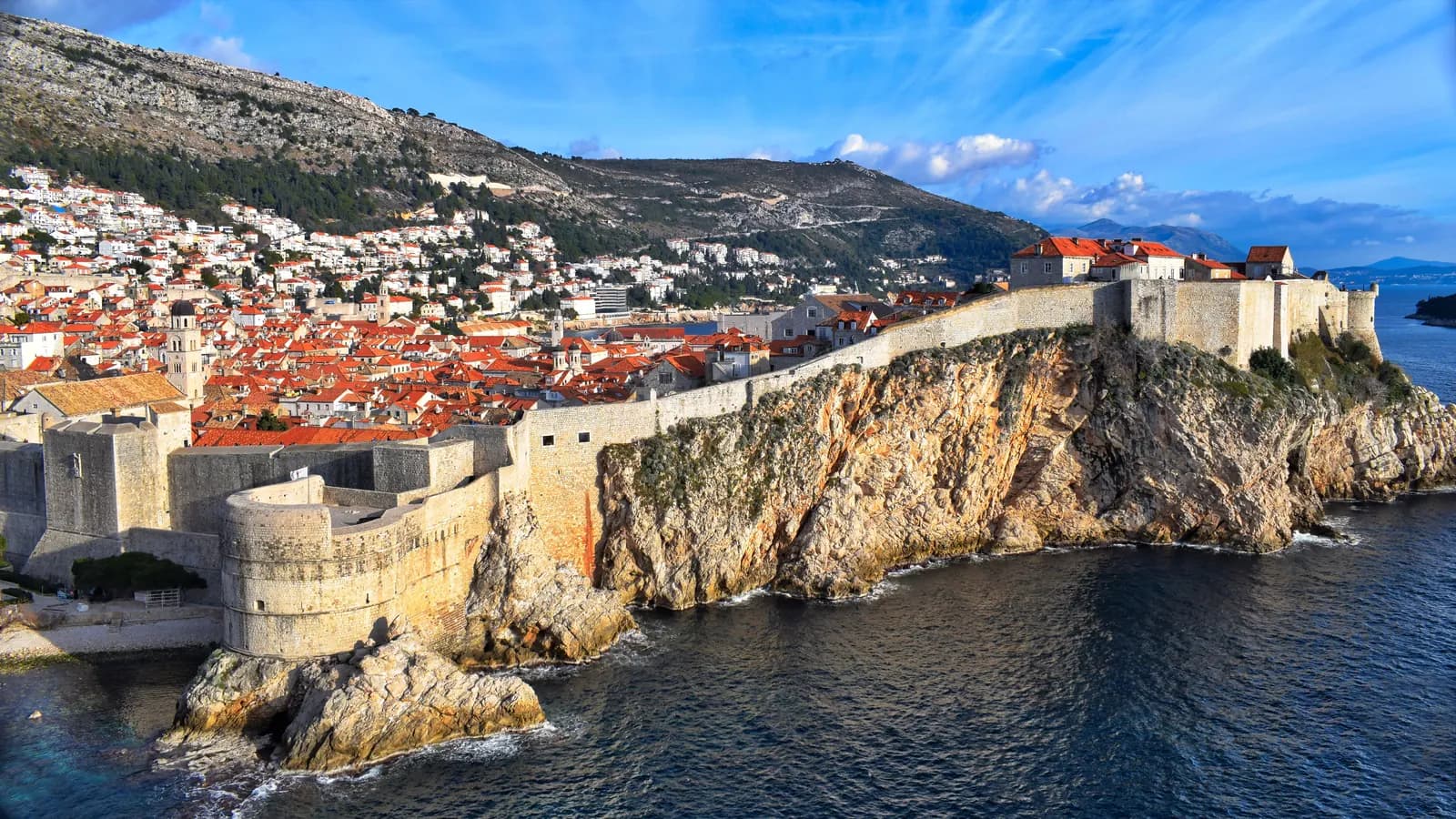
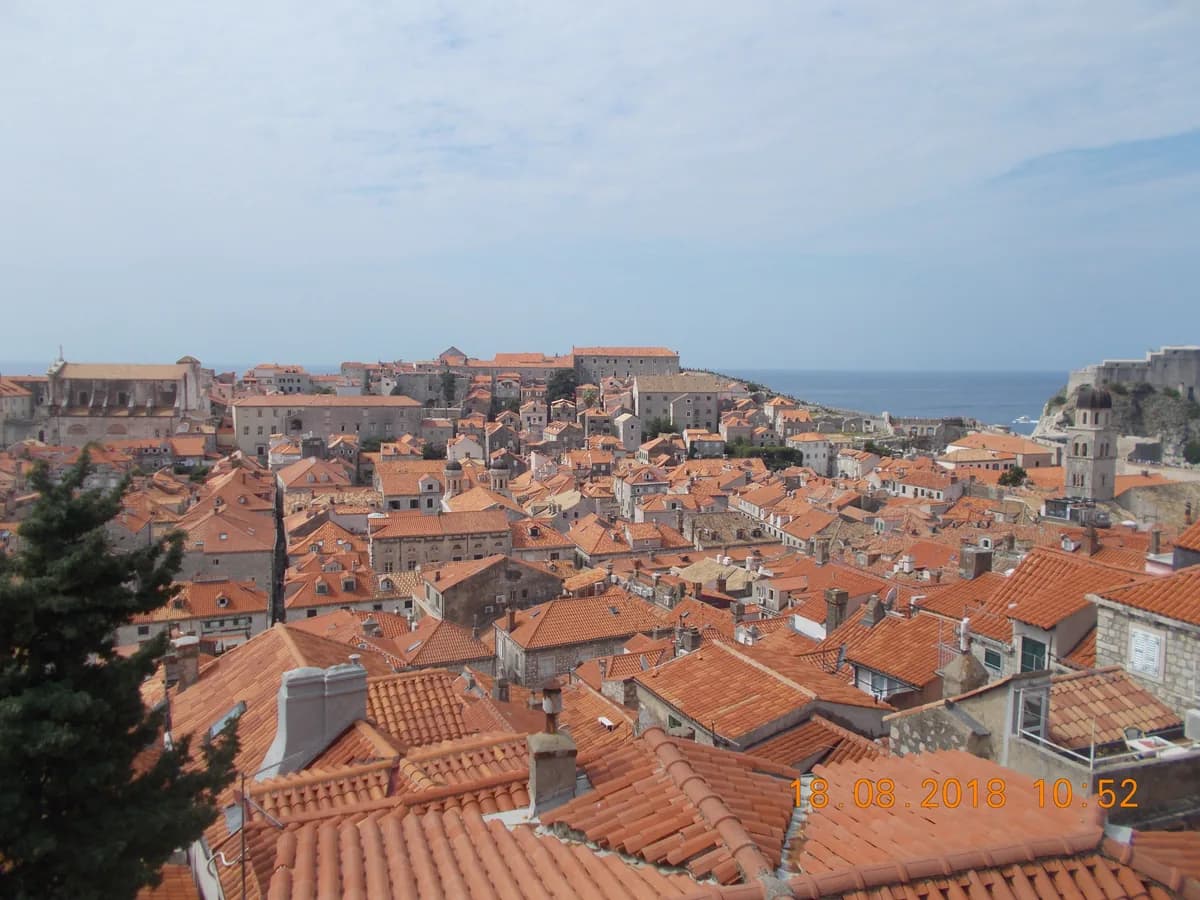
Best for:First-timersSightseeingRomanceFood & wineThis is the thing you came for, and for a few hours a day you get it almost to yourself. Stradun at 7am is empty stone; by late morning the day-trip and ship crowds arrive and you queue to move through the side lanes. Sleeping inside means you walk out into the good hours twice a day instead of busing in for the bad ones. It is also loud until late, hot in August, and built almost entirely of steps.
- Good to know
- Good to know: Nothing rolls here. The quarter is fully pedestrian, most apartments sit two to five flights up stone stairs with no lift, and no taxi can reach your door, so you carry your bags in from Pile or Ploce Gate. In 2023 the city floated a fine of around EUR 265 for dragging wheeled cases over the stone as part of Respect the City; the tourist board later said no ban and no fine would actually be introduced, so treat this as a practical problem rather than a legal one. On price, private apartments run EUR 150-200 a night in July and August per croatiaunscripted.com, or EUR 200-350 per bookiscout.com, and the very few hotels start around EUR 550. Note that the apartment band overlaps a four-star in Lapad, so inside the walls is not automatically the expensive choice.
Ploce
$$$ · High-endFive-star hillside above the Banje rocks
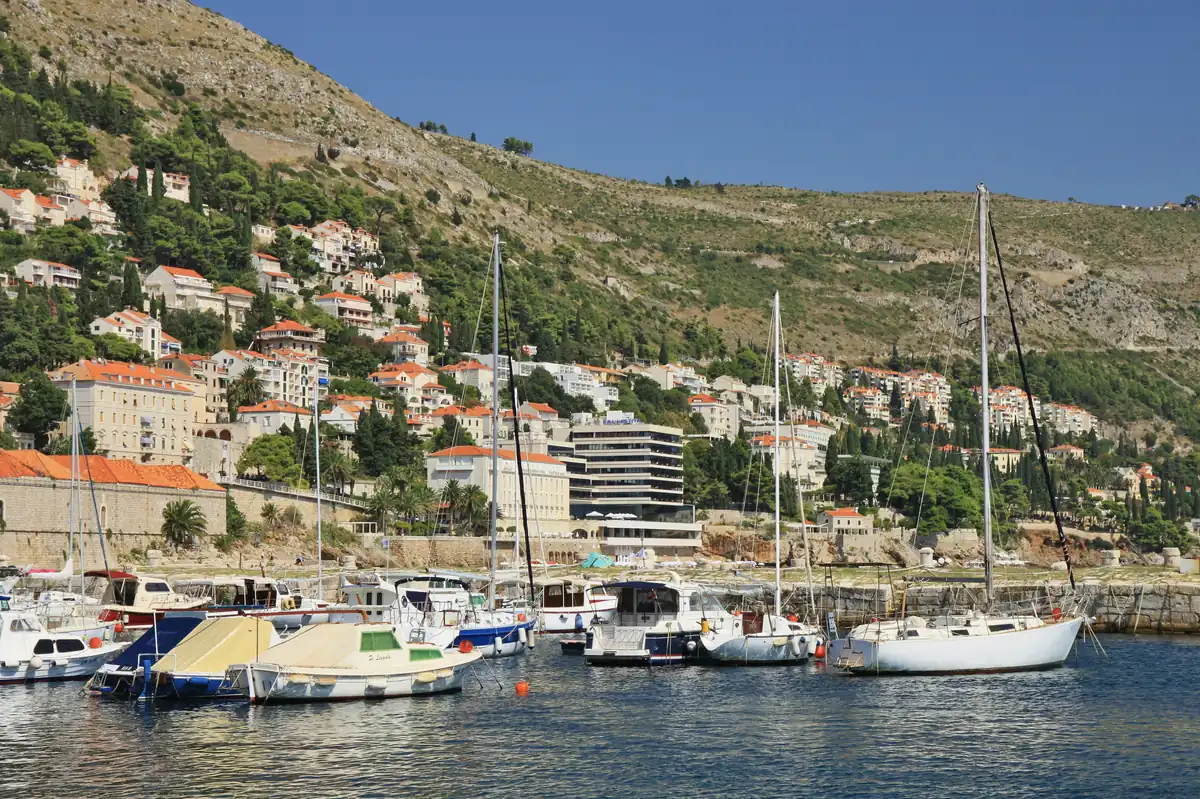
Best for:LuxuryRomanceFirst-timersPloce is the strip of coast immediately east of the walls and it is almost entirely five-star. Croatiatraveller.com counts four luxury hotels on the slope, each with its own rocky beach, and notes there is very little private accommodation because the ground rises too steeply to build on. You walk down Frana Supila and into the Ploce Gate in about ten minutes, which is also where the airport bus stops, and the cable car base station is close by. Nights are quiet because there is nothing here except hotels.
- Good to know
- Good to know: There is no cheap end of Ploce, and the walk home is uphill every time. Five-star rooms within 500m of the Old Town run EUR 350-800+ a night per bookiscout.com. Price-tracker data on kayak.com for one five-star on Frana Supila shows a July average of USD 956 a night against USD 668 in November, with the cheapest room booked in a recent two-week window at USD 667 and the most expensive at USD 1,653. Sea views add at least 20 percent on top per croatiaunscripted.com. Also check the address before you book: listing sites index both this Dubrovnik neighbourhood and a separate port town called Ploce under the same name.
Lapad
$$ · Mid-rangeBeach, buses, and rooms you can book
Best for:FamiliesBudgetFirst-timersLapad is where most visitors actually sleep: a green peninsula roughly 3-4km west of the walls, with the city's largest beach and a pedestrian promenade of ordinary restaurants and bakeries. City buses 2, 4, 5 and 9 run to Pile Gate. You are trading the empty-street mornings for a room with space in it, a beach you can walk to, and food that costs what food costs.
- Good to know
- Good to know: You will be on the bus every day, 15-25 minutes each way, so an Old Town evening means catching the last bus back or paying for a taxi. On price, bookiscout.com gives four-star hotels at EUR 200-320 in high season and private apartments at EUR 150-250; a second bookiscout page puts 3-4 star hotels on the peninsula at EUR 150-300 and apartments at EUR 100-200. That overlaps the Old Town apartment band, so Lapad buys you space and a beach rather than a lower bill.
Babin Kuk
$$ · Mid-rangeResort hotels, long beach, thin on restaurants
Best for:FamiliesLuxuryRomanceBabin Kuk is the far tip of the Lapad peninsula and it is effectively a hotel estate. Croatiatraveller.com counts five five-star hotels, three four-stars and two three-stars, plus Copacabana, the longest beach in Dubrovnik. There are few roads and almost no through traffic, which is the real reason it works for families with small children. Bus 6 runs to Pile Gate every 10-15 minutes and takes 20-25 minutes.
- Good to know
- Good to know: Almost nothing out here is not a hotel. Croatiatraveller.com describes few residences and even fewer restaurants and cafes, so most evenings you either eat in your hotel or get on a bus, and private accommodation is limited. There is no airport bus stop on the peninsula either: the Platanus shuttle stops at Ploce Gate and Gruz, so you get off and change to bus 6. Expect EUR 100-200 for an apartment and EUR 150-300 for a 3-4 star hotel on this peninsula per bookiscout.com.
Gruz
$ · BudgetFerry port, fish market, no walls
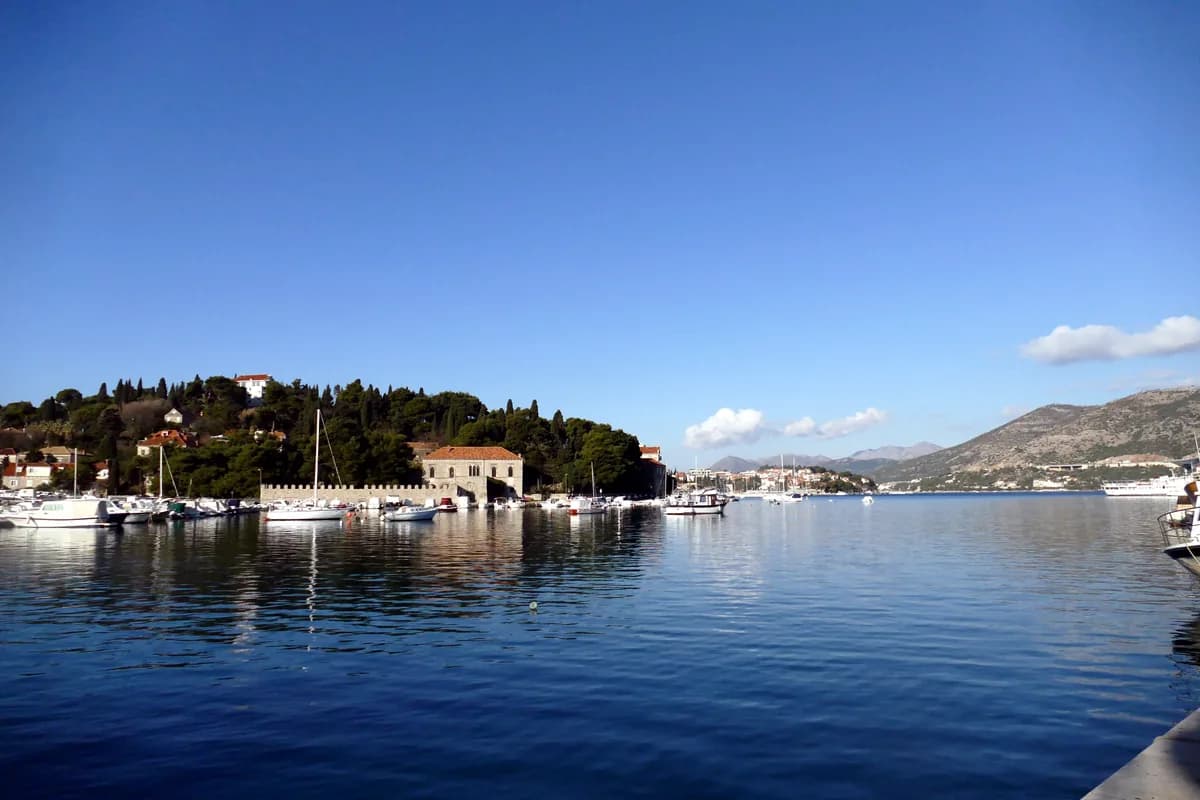
Best for:BudgetFood & wineGruz is the working half of the city: the main bus station, the ferry and catamaran berths, the cruise terminal, the morning fish and produce market, and the large supermarkets. It looks nothing like the postcard and sits roughly 2.5-3.5km from Pile Gate. If your trip is built around island day trips or the boat to Split, you sleep a few minutes from the gangway instead of booking a 6am taxi. Buses 1A, 1B, 3 and 8 connect it to Pile.
- Good to know
- Good to know: This is a genuinely different holiday from the one inside the walls, and cruise days happen on your doorstep. MedCruise reported on 22 July 2026 that 461 cruise calls and 661,094 cruise passengers are scheduled for Dubrovnik in 2026, with more than 60,000 of those embarking or disembarking at Gruz across 14 ships. On price, private accommodation runs about EUR 100-130 a night for two in peak season per croatiaunscripted.com, and hostel dorms EUR 35-70 per bookiscout.com. The same croatiaunscripted page puts dinner for two at EUR 35-50 in Gruz against EUR 50-60 in the Old Town.
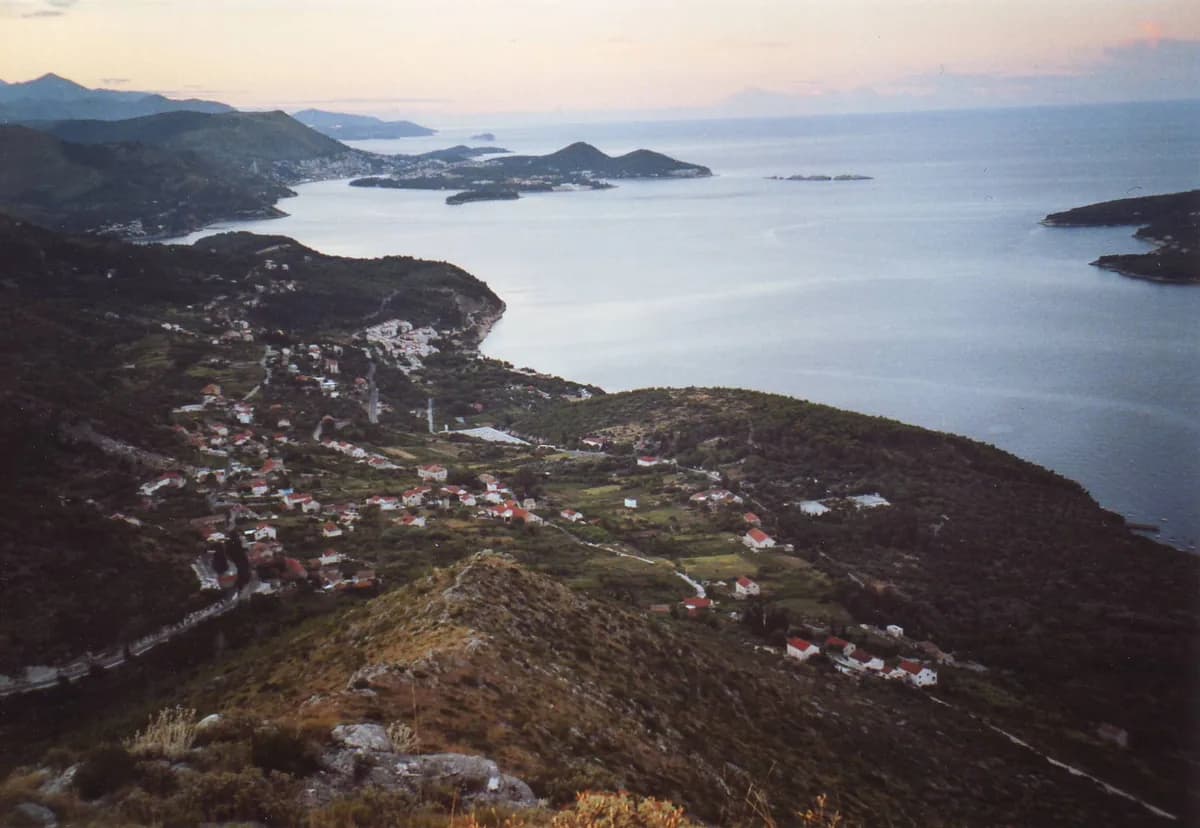
Zaton and Orasac
$ · BudgetQuiet bays, cheap rooms, three buses daily
Best for:BudgetFamiliesRomanceZaton sits in a sheltered bay about 8km northwest of Dubrovnik and Orasac is a few kilometres further at around 11km. These are villages: stone houses, a couple of konobas, swimming off rocks and jetties, and one large resort at Orasac. Prices fall hard the moment you leave the city boundary. It is a good base for a slow week with a car and a poor one for a first three-night trip without.
- Good to know
- Good to know: The bus service is the catch and it is worse than people expect. Libertas suburban line 15 leaves Dubrovnik for Orasac three times a day at 10:45, 15:15 and 20:30, takes about 25 minutes, and does not run on Sundays or holidays; line 12 adds around eight runs each way but only between 1 June and 30 September. Whole apartments in Zaton list at EUR 39-70 a night on direct-croatia.com. Prices seen on adriatic.hr for Orasac (EUR 12-54) appear to be per person and discounted rather than per unit, so they are not used here.
Where not to stay in Dubrovnik
Do not book Zaton or Orasac for a first visit unless you are hiring a car. The rooms are genuinely cheap, with whole apartments listed from EUR 39 a night on direct-croatia.com against EUR 150-250 for a Lapad apartment, but the public bus is Libertas line 15, which leaves Dubrovnik just three times a day at 10:45, 15:15 and 20:30 and does not run on Sundays or holidays; the extra departures on line 12 exist only from 1 June to 30 September. Taxis in and out will eat the saving within about three days, and you lose the two windows that make Dubrovnik worth the trip, which are the Old Town before roughly 10am and after the ships leave in the evening. The second thing to avoid is booking on the name alone: listing sites index both the Ploce neighbourhood of Dubrovnik and a separate port town called Ploce, and they are not the same place, so check the street address before you pay. Same warning for anything sold as Dubrovnik that turns out to be in Mlini, Srebreno or Cavtat down the coast.
Getting around Dubrovnik
The airport bus is run by Platanus and costs EUR 10 one way or EUR 15 for an open return valid 15 days, with under-6s free; it does not run to a clock, but leaves roughly 30 minutes after every flight arrival, 24 hours a day, reaching the Ploce Gate in about 30 minutes and Gruz bus station in about 35. That matters for where you stay, because those are the only two stops: if you are booked in Lapad or Babin Kuk you get off at one of them and change to a city bus. A taxi from the airport runs EUR 40-50 and Uber or Bolt around EUR 25-30 per croatiaunscripted.com. City buses are run by Libertas and its official price list gives EUR 1.73 for a one-hour ticket bought at a kiosk, EUR 2.50 from the driver, EUR 5.31 for a day ticket, EUR 11.95 for three days and EUR 21.24 for 20 rides; several 2026 guides still quote EUR 1.99 from the driver, which the operator's own page contradicts, so carry EUR 2.50. Lines 1A, 1B, 3 and 8 serve Gruz, lines 2, 4, 5 and 9 serve Lapad, and line 6 runs Babin Kuk to Pile Gate every 10-15 minutes. One thing to get straight before you arrive: Pile Gate on the west side is where nearly every city bus terminates, the Ploce Gate on the east side is where the airport bus stops, and both the main bus station and the ferry port are in Gruz, about 2.5-3.5km from the walls, not in the Old Town.
Where to stay in Dubrovnik: FAQ
The questions travelers ask most when choosing an area.
Where to stay in other cities
Continue Planning Your Trip
Things to Do
Ranked attractions, tips and how to book tickets
Car Rental
Real prices, driving tips and the best routes by destination
Airport Transfers
Getting from the airport to your hotel, by price and time
All-Inclusive Guides
What all-inclusive really means, by destination
Best Time to Visit
Month-by-month weather, crowds and prices
Route Finder
Find the cheapest way to get there
Hotel Finder
Book the right hotel for your destination
AI Trip Planner
Build a day-by-day itinerary
Photo credits (4)
Photos via Wikimedia Commons, used under their respective licences.
- Old Town (inside the walls): Rudolph.A.furtado - CC0 · source
- Ploce: Hons084 - CC BY-SA 4.0 · source
- Gruz: donald judge - CC BY 2.0 · source
- Zaton and Orasac: Wikimedia Commons contributor - CC BY-SA 3.0 · source