
In Brief
What are the best day trips from Hanoi?
Ninh Binh is the best and the easiest: about two and a quarter hours by train, then a rowed boat through the karst at Tam Coc or Trang An. Ha Long Bay is possible in a day at 2.5 to 3 hours each way by expressway, and better overnight. The Perfume Pagoda and Duong Lam are the quieter classics. Sapa, which everyone asks about, is 320 km away and not a day trip, and the timetables below show why.
Key takeaways
- Ninh Binh: 9 daily trains, 2h08 to 2h16, soft seats from about 103,000 VND
- Trang An boat 250,000 VND for 2.5 to 3 hours; Tam Coc boat 150,000 VND for about 2 hours
- Ha Long Bay is 2.5 to 3 hours each way by expressway; there is no practical train
- Sapa needs an overnight: 5.5 to 6.5 hours by bus, or 8 to 9 hours by night train plus shuttle
The 10 best day trips, ranked
Ordered by how well they repay a full day - factoring travel time, what you can actually see, and how easy they are without a car.
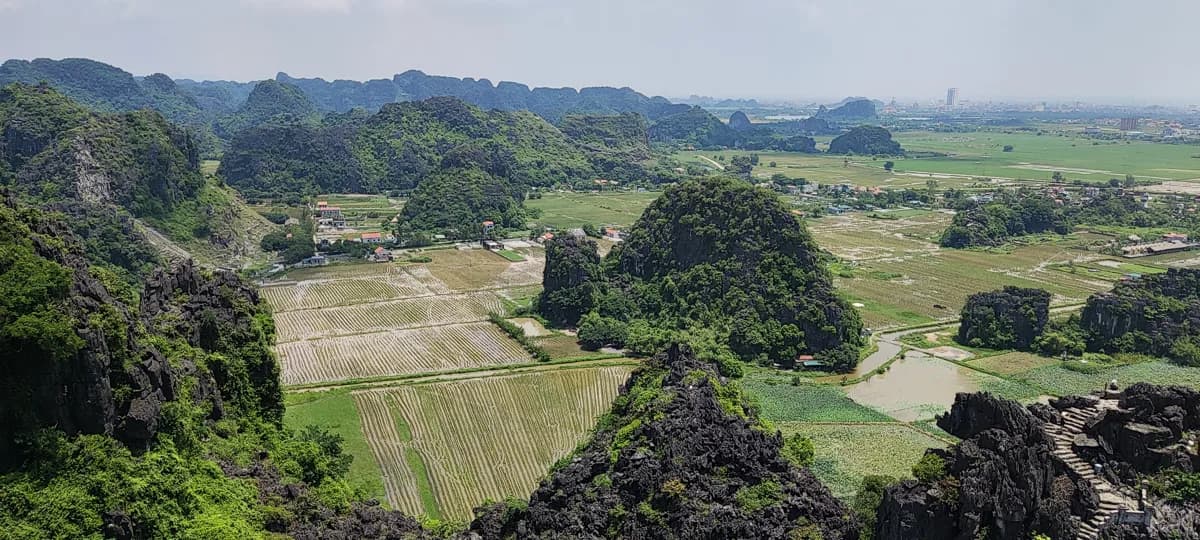
95 km south · ~2h10 each way by train
Ninh Binh
Karst, caves and a rowed boat
Limestone karst rising out of rice paddies, threaded by rivers you travel in a sampan rowed, often with the oarswoman's feet, through caves and between the towers. Trang An is the UNESCO-listed complex, 250,000 VND for a 2.5 to 3 hour circuit running 07:00 to 17:00; Tam Coc is shorter and more famous at 150,000 VND for about two hours. Climb the 500 steps at Hang Mua afterwards for the view over the whole scene. This is the best single day out of Hanoi and it is not close.
- Getting there
- Getting there: Nine daily trains run from Hanoi station to Ninh Binh, scheduled at 2 hours 08 to 2 hours 16 depending on the service, with soft seats from about 103,000 VND and sleeper berths to about 350,000 VND if you fancy lying down for two hours. From Ninh Binh station it is a short taxi or Grab to the boat wharves at Tam Coc or Trang An. Buses and limousine vans also run constantly and take about the same time door to door.

160 km east · ~2.5-3 h each way by road
Ha Long Bay
The famous bay, at day-trip speed
Nearly two thousand limestone islands rising out of the Gulf of Tonkin, and one of the sights of Asia. The honest advice is that a day trip buys you roughly five hours on the water for five to six hours on a bus, which is a fair trade if a day is all you have, and a poor imitation of the overnight cruise, which is what the bay is actually for. If you can spare the night, spare it; if not, the day version is still worth having.
- Getting there
- Getting there: The expressway has cut the drive to about 2.5 to 3 hours each way, which is what makes a day trip possible at all; there is no practical train. Day tours from the Old Quarter bundle the transfer with a four-to-six-hour cruise, lunch, a cave visit and kayaking. Going independently means a bus to Ha Long city and joining a boat there, which saves little and organises less.

60 km southwest · ~2 h each way by road
The Perfume Pagoda
A river, a mountain and a sacred cave
A complex of pagodas and shrines built into a limestone mountain, reached by one of the loveliest short boat journeys in the north. The cave itself, a cathedral-sized grotto with its shrine in the mouth, is the point. Go on a weekday outside the spring festival months, when the site swallows pilgrims by the tens of thousands and the queue for the cable car becomes the day.
- Getting there
- Getting there: About two hours' drive to the My Duc wharves, then a metal rowing boat up the Yen stream for an hour between the karst, then a steep climb or a cable car up to the Huong Tich cave sanctuary. There is no rail option, so it is a tour or a hired car with driver, and tours handle the boat and cable-car tickets, which removes the negotiation.
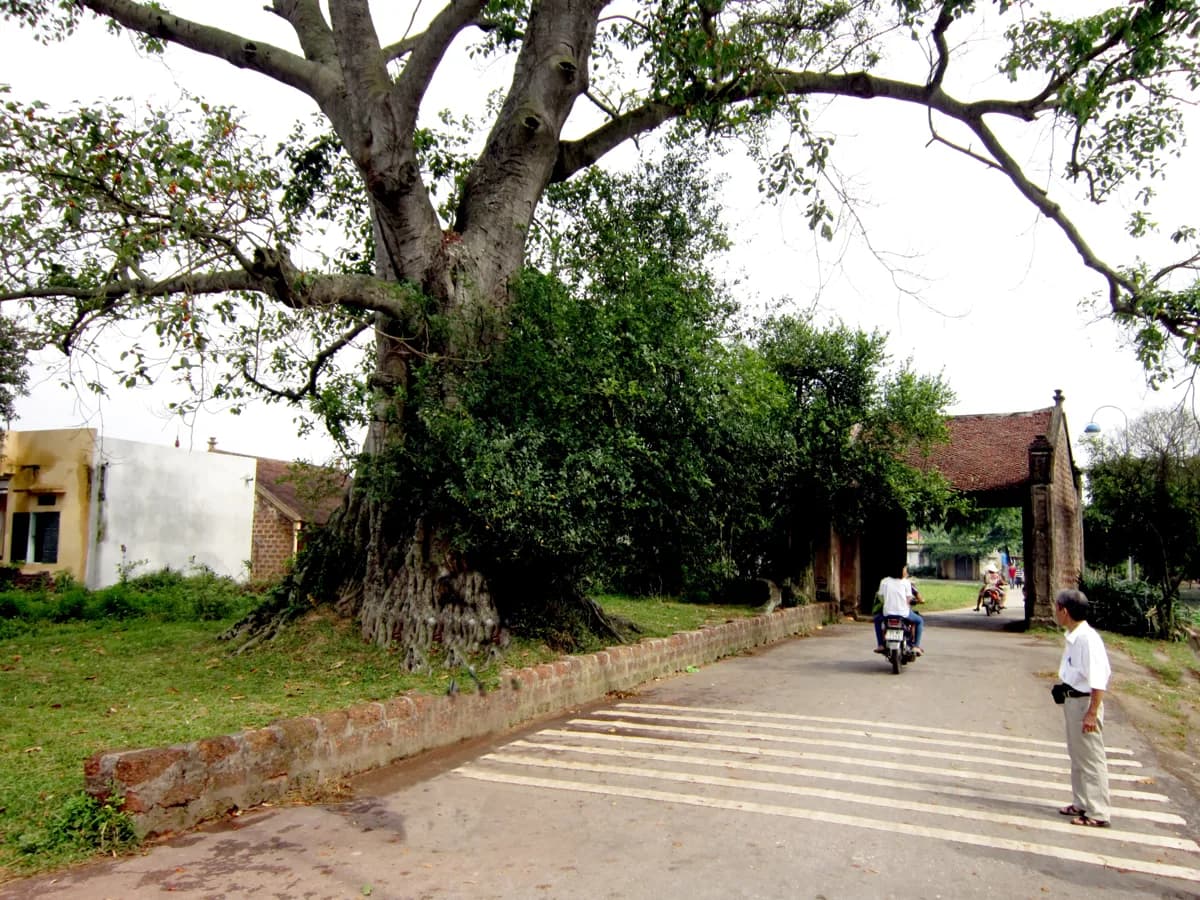
50 km west · ~1.5 h each way by road
Duong Lam
The old delta, still inhabited
One of the oldest villages in the Red River delta, with laterite-brick houses up to four hundred years old, banyan-shaded gates, communal houses and two ancestral temples of Vietnamese kings. It is what the delta looked like before concrete, kept alive by the families still living in it. An easy, gentle half day, best on a bicycle between the hamlets.
- Getting there
- Getting there: About ninety minutes by car or tour bus, or a public bus to Son Tay and a short taxi. It pairs naturally with Ba Vi or the Thay and Tay Phuong pagodas on the same side of the city, and a hired car with driver for the day covers two of them comfortably.
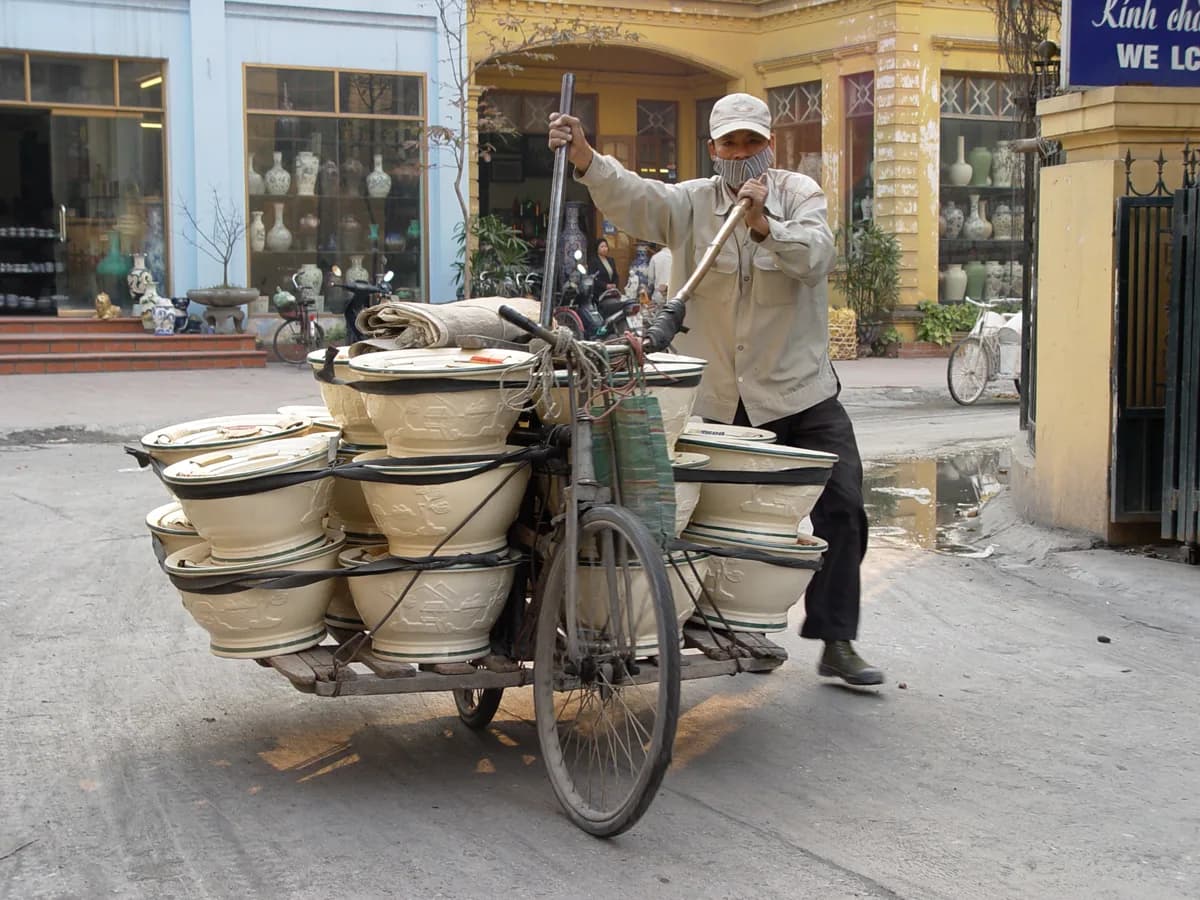
13 km southeast · ~30-40 min each way
Bat Trang
Ceramics, kilns and a short hop
The ceramics village that has supplied Hanoi for seven centuries, now a maze of kilns, workshops and showrooms where you can watch throwing and glazing and then lose an hour in the market. The pottery museum's swirling architecture is the modern landmark. It is unashamedly commercial and better for it: this is a working craft village, not a preserved one.
- Getting there
- Getting there: The closest trip on this page: a taxi or Grab across the Red River takes half an hour, and a city bus does it for pennies. It is a half day rather than a full one, and it combines with an afternoon back in the Old Quarter rather than displacing one.
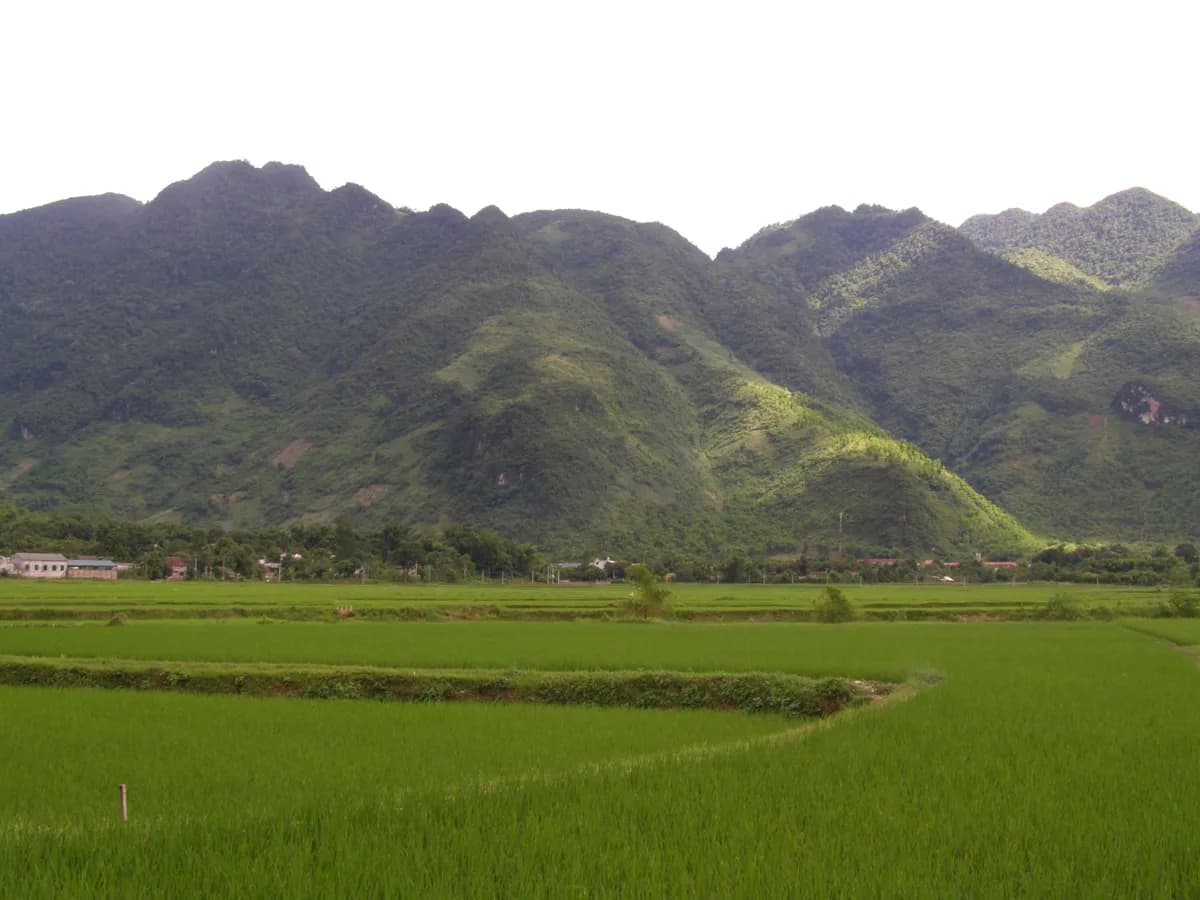
140 km southwest · ~3.5 h each way by road
Mai Chau
Stilt houses and valley rice fields
A green valley floor of rice fields walled by mountains, dotted with the stilt-house villages of the White Thai. The scene from the pass is the north's rice-terrace postcard without the Sapa journey, and the valley is flat, quiet and made for cycling between hamlets. If the choice is a brutal Sapa day trip or a civilised Mai Chau one, this is the answer.
- Getting there
- Getting there: About three and a half hours by road into the hills of Hoa Binh, over the Thung Khe pass with its white limestone cuttings. Buses and limousine vans run from Hanoi, and tours bundle lunch in a stilt house with a cycle around the valley. It is the longest sensible day on this list, and it is better as an overnight in a village homestay.
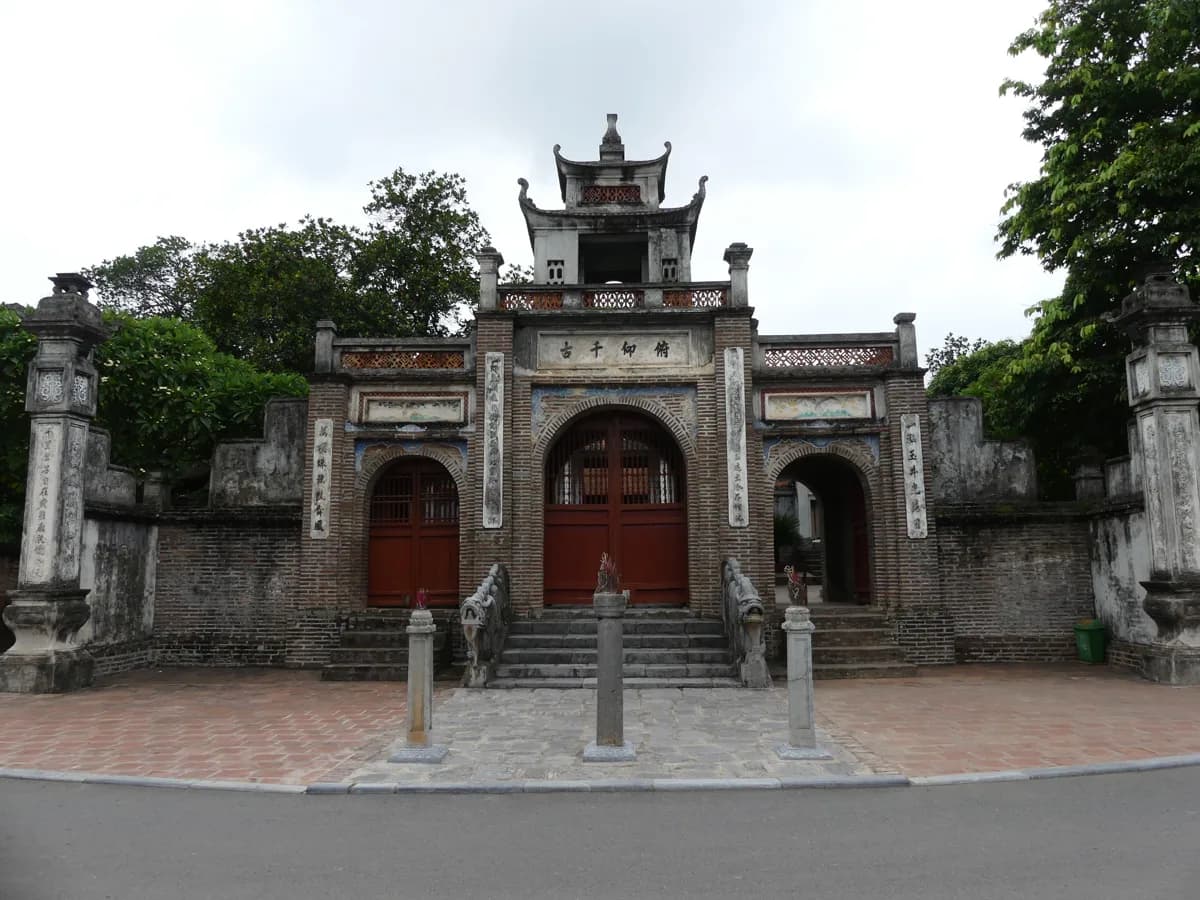
20 km northeast · ~45 min each way
Co Loa Citadel
The oldest story in Vietnam, without the crowds
The oldest citadel in Vietnam, the spiral earthworks of King An Duong Vuong's capital from the third century BC, with his temple, the well of the Trong Thuy legend, and stretches of the old ramparts still readable in the fields. Almost no foreign visitors come, which is half the reason to. Bring the legend with you, because the site rewards knowing the story of the magic crossbow and the betrayal that ended the kingdom.
- Getting there
- Getting there: A forty-five-minute taxi or Grab, or a city bus from Long Bien. It is a half-day trip at most, and the site is spread out enough that keeping the car for the loop between the temple, the ramparts and the well is worth the little it costs.

150 km east · ~4 h each way, bus and ferry
Cat Ba and Lan Ha Bay
Ha Long's scenery, minus the flotilla
Lan Ha Bay is Ha Long's southern neighbour: the same drowned karst with a fraction of the boats, plus beaches, a floating village and kayak lagoons. Cat Ba island behind it has a national park and a real town. If Ha Long's traffic worries you, this is the quieter answer, and if you have two days, an overnight here beats a Ha Long day trip comprehensively.
- Getting there
- Getting there: Bus-and-ferry combinations from Hanoi take about four hours each way to Cat Ba town, which is why this is the trip on this page we would move to an overnight rather than force into a day. Day cruises into Lan Ha Bay leave from the island; some Ha Long day tours now route into Lan Ha instead, which is the day-trip version worth having.

60 km west · ~1.5-2 h each way by road
Ba Vi National Park
A sacred mountain in the mist
The three-peaked mountain west of Hanoi, sacred to the mountain god Tan Vien, with a cloud forest, the shell of a French hill station lost in the trees, and temple steps to the summit shrines of Uncle Ho and the god. In the right mist it is one of the most atmospheric places within reach of the city; in the wrong cloud you will see fifty metres. Check the weather and go for the forest as much as the view.
- Getting there
- Getting there: Ninety minutes to two hours by car or motorbike; there is no rail and buses only reach the town below, so this is a drive. The park road winds up the mountain to trailheads for the summit temples, and it combines with Duong Lam on the way out or back.
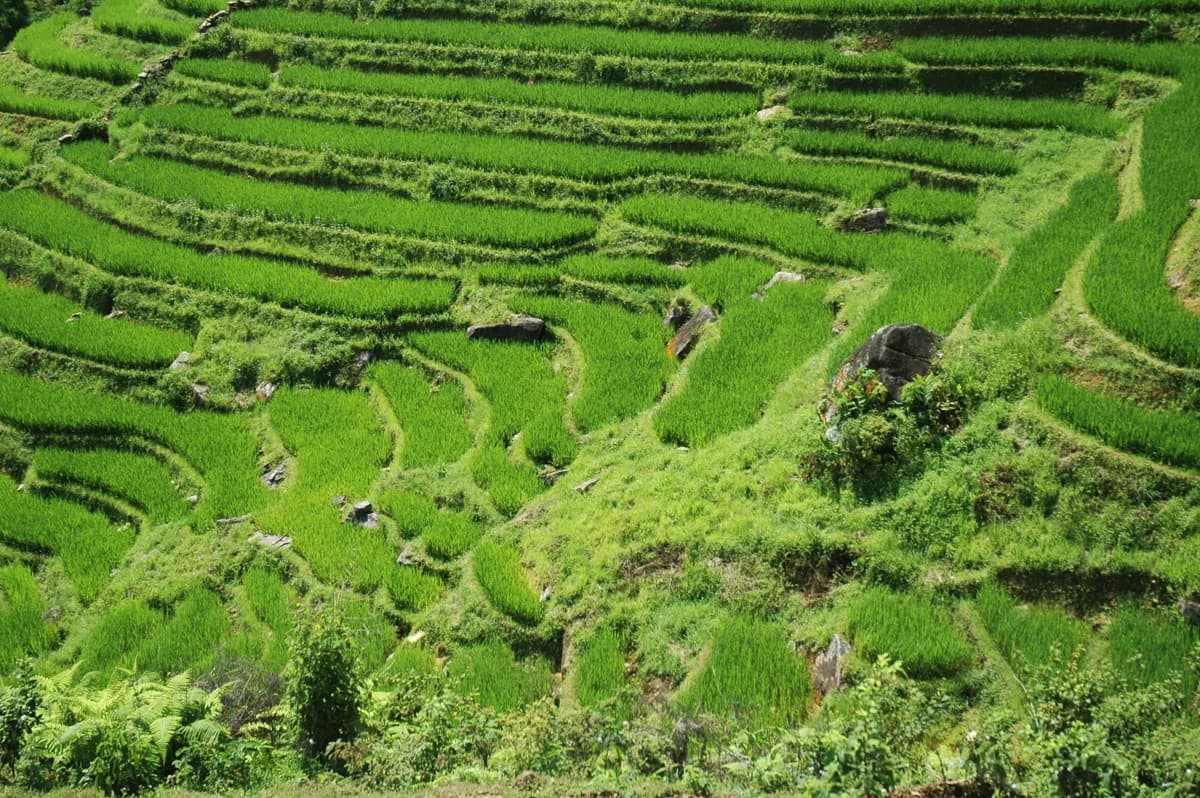
320 km northwest. Not a day trip. · 5.5-6.5 h by bus, 8-9 h by train, each way
Sapa
Two nights in the terraces, not one long day
The rice terraces of the Muong Hoa valley and the markets of the northern hills are genuinely worth the journey. They are worth it over two or three days, with at least one night in the mountains. What they are not is a day trip, however many tour listings imply otherwise.
- Getting there
- Getting there: By bus or limousine van, 5.5 to 6.5 hours each way on the expressway. By rail, the night trains SP1 and SP3 leave Hanoi at 21:35 and 22:00 and reach Lao Cai around 05:30 and 06:10, and Lao Cai is not Sapa: the town is 35 km further up the mountain, a 45-to-60-minute shuttle. Read the spotlight below before booking anything, because the arithmetic decides this one.
How to get to Sapa from Hanoi, and why it is not a day trip
Sapa is the most-asked journey out of Hanoi and the answer needs numbers rather than opinions. The town sits 320 km northwest, up a mountain, and there are two real ways to get there. Here is the arithmetic, so you can see for yourself why every version of a Sapa day trip fails.
- The bus is the fast option. Sleeper buses and limousine vans run the expressway in 5.5 to 6.5 hours each way, with departures through the day and overnight services timed to arrive around sunrise. It is the cheapest and quickest route, and the mountain final stretch is winding enough that the back seats earn their reputation.
- The train does not go to Sapa. The night trains SP1 and SP3 leave Hanoi at 21:35 and 22:00 and arrive at Lao Cai, on the Chinese border, at about 05:30 and 06:10, a 320 km run of roughly eight hours. Sapa is 35 km further up the mountain, a 45-to-60-minute shuttle or taxi. Total, eight to nine hours each way.
- Now the day-trip arithmetic. By bus, eleven to thirteen hours of travelling buys you perhaps four hours in the mountains, most of it in the town rather than the terraces. By train there is no day version at all, because the trains run overnight in both directions. Either way you would see the terraces at midday, in the flattest light, through the fatigue of a pre-dawn start.
- What we would do instead: take the night train or an early bus out, spend two nights, and walk the Muong Hoa valley on the full day between them. The terraces are a landscape you walk in, not a viewpoint you photograph, and the villages below the town, Lao Chai, Ta Van and Giang Ta Chai, are the point of the trip.
- One honest caveat about Sapa itself: the town has built up hard, and the centre is now hotels and construction. The magic is in the valley below it and the hills beyond it, which is one more reason a rushed visit disappoints and a walking visit does not.
- Timing matters more than transport. The terraces are filled with water and mirror-like in May and June, green through July and August, and gold in September before the harvest. In deep winter Sapa is cold, frequently fogged in, and occasionally icy, and the terraces are bare earth.
- If you cannot spare the nights, Mai Chau is the substitute: three and a half hours each way, a valley floor of rice fields and stilt houses, and a day trip that actually works as one. Ninh Binh gives you the karst drama with even less travel. Both are on this page.
Day trips from Hanoi: FAQ
The questions travelers ask most when planning day trips from here.
Every trip on this page starts in Hanoi
Each of these is a day out and back, so the thing that decides the whole trip is where you sleep between them and how far that is from the station. These go into the detail:
- Free cancellation on most rooms
- No booking fee
- Prices on Trip.com
Continue Planning Your Trip
Things to Do
Ranked attractions, tips and how to book tickets
Where to Stay
The best area to stay in each city, by neighborhood
Car Rental
Real prices, driving tips and the best routes by destination
Airport Transfers
Getting from the airport to your hotel, by price and time
All-Inclusive Guides
What all-inclusive really means, by destination
Best Time to Visit
Month-by-month weather, crowds and prices
Route Finder
Find the cheapest way to get there
Hotel Finder
Book the right hotel for your destination
AI Trip Planner
Build a day-by-day itinerary
Photo credits (10)
Photos via Wikimedia Commons, used under their respective licences.
- Ninh Binh: Shyamal - CC BY-SA 4.0 · source
- Ha Long Bay: Vyacheslav Argenberg - CC BY 4.0 · source
- The Perfume Pagoda: Richard Mortel from Riyadh, Saudi Arabia - CC BY 2.0 · source
- Duong Lam: Bùi Thụy Đào Nguyên - CC BY-SA 3.0 · source
- Bat Trang: Steven C. Price - CC BY-SA 4.0 · source
- Mai Chau: RG72 - CC BY-SA 4.0 · source
- Co Loa Citadel: Julez A. - CC BY-SA 4.0 · source
- Cat Ba and Lan Ha Bay: Christophe95 - CC BY-SA 4.0 · source
- Ba Vi National Park: Steven C. Price - CC BY-SA 4.0 · source
- Sapa: Alphab.fr - CC BY 2.0 · source