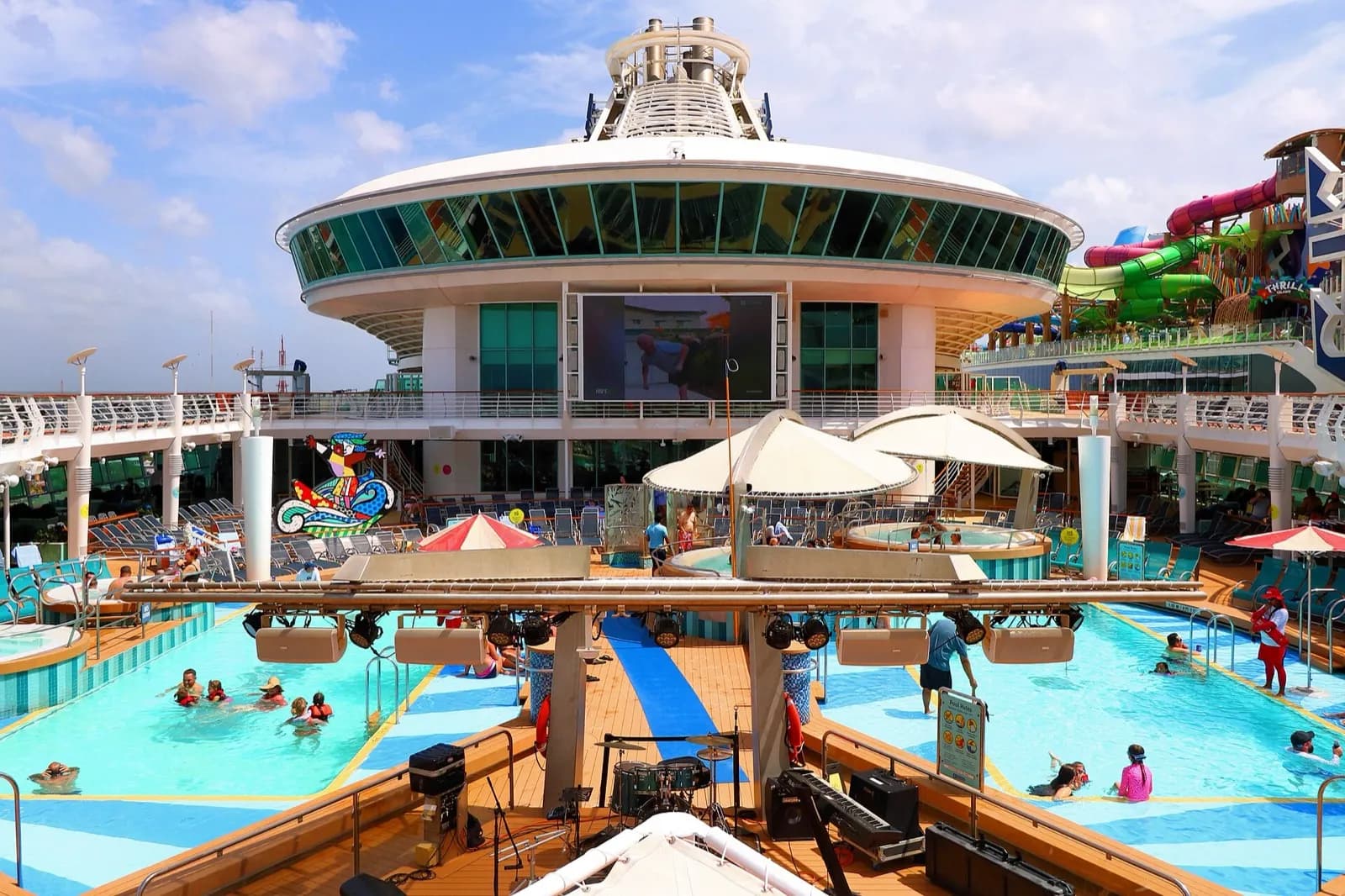
What should you expect on your first cruise?
Expect a staggered boarding time, a wait for your luggage, and a mandatory safety drill within 24 hours of sailing. Bring a carry-on with medication, swimwear and a change of clothes because checked bags can take hours to reach your cabin. Meals, entertainment and the pools are included; drinks, wifi, speciality restaurants and excursions are not, and gratuities are added automatically per person per night.
- Free cancellation on most rooms
- No booking fee
- Prices on Trip.com
Your first day on a cruise, hour by hour
Embarkation day has a shape, and knowing it removes most of the stress. Times vary by line and ship, but the sequence is consistent.
| When | What happens | What to do |
|---|---|---|
| Before you travel | Online check-in opens | Check in as early as it opens and pick the earliest boarding slot you want. Print or download the boarding pass and luggage tags. |
| Arrival at the port | Drop luggage, clear security | Porters take checked bags at the kerb - tip them. Keep medication, documents and valuables with you, never in checked bags. |
| Boarding | Staggered by assigned time | Go straight to your cabin if it is ready, then explore. Do not queue at the buffet at 12.30 with everyone else. |
| First few hours | Cabin ready, luggage in transit | This is why you need a day bag. Bags can arrive any time up to dinner. Book speciality dining and spa now if you have not. |
| Before sailing | Mandatory muster drill | Required by maritime law within 24 hours. On most lines you watch a safety video in the app then check in at your muster station. |
| Evening | Sail away, first dinner | Main dining is included. Dress code on the first night is usually casual - formal nights come later in the sailing. |
Cruise etiquette: the unwritten rules
The one that causes the most friction is deck chairs. Leaving a towel on a lounger to reserve it while you go elsewhere for two hours is against the rules on most ships, and crew increasingly clear unattended chairs. Take the chair when you want to use it.
Elevators fill fast on a big ship. If you are going one or two decks, take the stairs - you will often be quicker and the people with mobility problems will thank you. In the buffet, use the hand sanitiser stations at the entrance every time; norovirus outbreaks on ships spread through exactly that gap in habit.
Be on time for the ship, not for the tour. All-aboard is usually 30 to 60 minutes before departure, and the ship genuinely will sail without you if you booked an independent excursion that ran late. Set your phone to ship time, which does not always match the port's local time, and check the daily programme for the day's all-aboard.
- check_circleDo not reserve deck chairs with towels - crew clear unattended loungers on most lines.
- check_circleUse the hand sanitiser at every buffet entrance, every time.
- check_circleSet your phone to ship time, which can differ from local port time.
- check_circleBe back on board 30 to 60 minutes before departure, earlier if the tour was independent.
How to avoid seasickness on a cruise
Most people on a modern cruise ship feel nothing at all. Ships are large and carry stabilisers, and the sheltered routes - the Caribbean, the Inside Passage, the Mediterranean in summer - are usually calm. The routes that move are open-ocean crossings, the Bay of Biscay, the Drake Passage to Antarctica and the North Sea in shoulder season.
If you are prone to motion sickness, cabin choice does most of the work. A midship cabin on a lower deck moves least, because it sits closest to the ship's centre of gravity; a forward cabin high up moves most. That single decision matters more than any remedy.
Beyond that: take medication before you feel unwell rather than after, because it works poorly once nausea starts. Fresh air and a look at the horizon settle things faster than lying in an inside cabin. Ginger, acupressure bands and over-the-counter tablets all help some people, and the ship's medical centre carries remedies if you are caught out - at a price.
- check_circleBook a midship cabin on a lower deck if you are prone to motion sickness.
- check_circleTake any medication before sailing, not once you feel unwell.
- check_circleGo on deck and look at the horizon - fresh air beats lying down in an inside cabin.
What not to bring on a cruise
Every cruise line bans a similar list of items and will confiscate them at security, sometimes without returning them until the end of the sailing. Extension leads and power strips with surge protection are the ones that catch people out most often - they are a fire risk on a ship's electrical system, and only non-surge, cruise-approved versions are allowed. Irons, travel steamers, kettles and hotplates are banned outright on almost every line.
Alcohol policies vary but are stricter than people expect. Most lines allow a bottle or two of wine per cabin at embarkation, sometimes with a corkage fee, and prohibit spirits and beer entirely. Attempting to smuggle alcohol is the most common reason luggage gets pulled aside.
Also leave behind: candles and anything with a flame, drones on many lines, and hoverboards. Bring less clothing than you think and more than one power adapter of the right type, plus a small torch for finding things in a dark inside cabin.
- check_circleBanned almost everywhere: surge-protected power strips, irons, steamers, kettles, candles, hoverboards.
- check_circleAlcohol is limited - usually a bottle or two of wine per cabin, no spirits or beer.
- check_circleDrones are prohibited on many lines and confiscated at security.
What to wear on a cruise
Daytime on any cruise is casual: shorts, swimwear by the pool, comfortable shoes for port days. The only rule most ships enforce during the day is no swimwear in the dining rooms, and a cover-up is expected between the pool and anywhere else.
Evenings split into three levels depending on the line. Casual nights are the norm and mean smart-casual - trousers or a dress, no beachwear. Most seven-night sailings include one or two formal or gala nights, where the main dining room expects a suit or cocktail dress, though the buffet stays casual for anyone who would rather skip it. Some lines have dropped formal nights entirely, so check yours before packing a dinner jacket you will not use.
The practical packing advice is to bring less than you think. Cabins are small, storage is limited, and laundry services exist on board. One smart outfit, a few casual evening changes, swimwear, and proper walking shoes for port days will cover a standard week.
Frequently asked questions
- Free cancellation on most rooms
- No booking fee
- Prices on Trip.com
More cruise guides
Cheapest time to cruise
The cheapest time to cruise, month by month, when cruise prices drop, how much to tip, how much cash to bring, and the booking moves that cut hundreds off a sailing.
Alaska cruise ports
The best Alaska cruise ports ranked - Juneau, Skagway, Ketchikan, Sitka and Glacier Bay. What to book in each, what sells out, the Alaska cruise season and what to pack.
Continue Planning Your Trip
Intelligent tools designed to simplify the complex.
Things to Do
Ranked attractions, tips and how to book tickets
Where to Stay
The best area to stay in each city, by neighborhood
Car Rental
Real prices, driving tips and the best routes by destination
Airport Transfers
Getting from the airport to your hotel, by price and time
All-Inclusive Guides
What all-inclusive really means, by destination
Best Time to Visit
Month-by-month weather, crowds and prices
Cheapest Places to Travel
18 destinations ranked by real daily budgets
Route Finder
Find the cheapest way to get there
Hotel Finder
Book the right hotel for your destination
AI Trip Planner
Build a day-by-day itinerary
Budget Calculator
Estimate total cost