In Brief
Is it worth renting a car in Corsica?
Yes - it's close to mandatory. Buses are sparse, the single narrow-gauge train misses most of the coast, and everything worth seeing sits on a mountain or corniche road. Rates start around $36/day and rise steeply for August, so book early. Take the smallest car you can live with: the D-roads are often a lane and a half wide, and meeting oncoming traffic is a daily event. You drive on the right, manuals are the norm, and you can also bring a rental from mainland France by ferry if the contract allows it - check before you book.
Key takeaways
- From about $36/day - book months ahead for July-August.
- Take a small car: many roads are a lane and a half wide with rock on one side and a drop on the other.
- You drive on the right; manuals are standard, so book an automatic early.
- Buses and the train cover little - without a car you'll see a fraction of the island.
$36/day
economy class, before extras
- Free cancellation on most cars
- Compare every supplier at once
How much does car rental cost in Corsica?
Rough daily prices by car type. Rates rise in peak season - book early for the best deal.
| Car type | Price / day | Good to know |
|---|---|---|
| Small manual | $36-70/day | The right car for Corsica - narrow roads, tight village streets, easy passing. Cheapest too. |
| Compact automatic | $55-100/day | Worth it if you don't drive a stick - the constant hairpins mean constant gear changes. |
| Compact SUV | $60-110/day | Comfortable, but the extra width costs you nerve on the corniches. Only if you need the space. |
| Convertible | $90-170/day | Glorious on the coast roads in June or September; an August splurge otherwise. |
Transmission: Manuals are standard and cheapest; the small automatic fleet books out fast for summer, so reserve early.
Driving in Corsica: what to know
Small car, seriously
Corsica's D-roads are frequently a lane and a half wide, walled by rock on one side and open to a drop on the other. In anything big, every oncoming camper becomes a negotiation. A small car turns the same roads from stressful to fun - this is the one destination where downsizing is the upgrade.
Learn the oncoming-traffic dance
On narrow stretches, the car nearer a pull-out or wide spot gives way - watch ahead, note the last passing place you passed, and be ready to reverse to it. Locals drive these roads fast and expect you to hold your line, not freeze. A light toot before blind hairpins is normal and useful.
Expect animals on the road
Cows, pigs, goats and the odd donkey roam free across much of the island and treat the tarmac as theirs, especially in the interior and around Cap Corse. They appear around blind bends and do not move quickly. Slow down for any bend you can't see through, and never drive the mountain roads fast at dusk.
Double every drive time
Corsica is small on the map and slow on the ground: 50 km on a corniche or over a pass takes well over an hour. Plan one region per day rather than a lap of the island, and don't book dinner an hour after a mountain crossing. The driving is the sightseeing here anyway.
Fuel up before the interior
Fuel stations cluster on the coast and thin out badly inland - long mountain stretches have none at all, and village pumps may close midday and Sundays. Fill up before crossing the middle of the island, and keep the tank above half as a habit.
Think about the ferry angle
Corsica is reached by air (Ajaccio, Bastia, Calvi, Figari) or car ferry from mainland France and Italy. Renting on the island is simplest; bringing a mainland rental over requires the company's written permission and often a fee. Ferries also link Bonifacio to Sardinia in under an hour, which makes a two-island road trip realistic.
Best drives in Corsica
The routes worth renting a car for - see our road trips guide for more.
Calvi → Porto corniche (D81)
The west-coast cliff road past the red granite of the Calanques de Piana - about 80 km that can absorb a whole day, and the island's signature drive.
Cap Corse loop (D80)
A 110 km circuit of the wild northern finger - fishing villages, Genoese towers and a corniche down the west side that hangs above the sea.
Col de Bavella (D268)
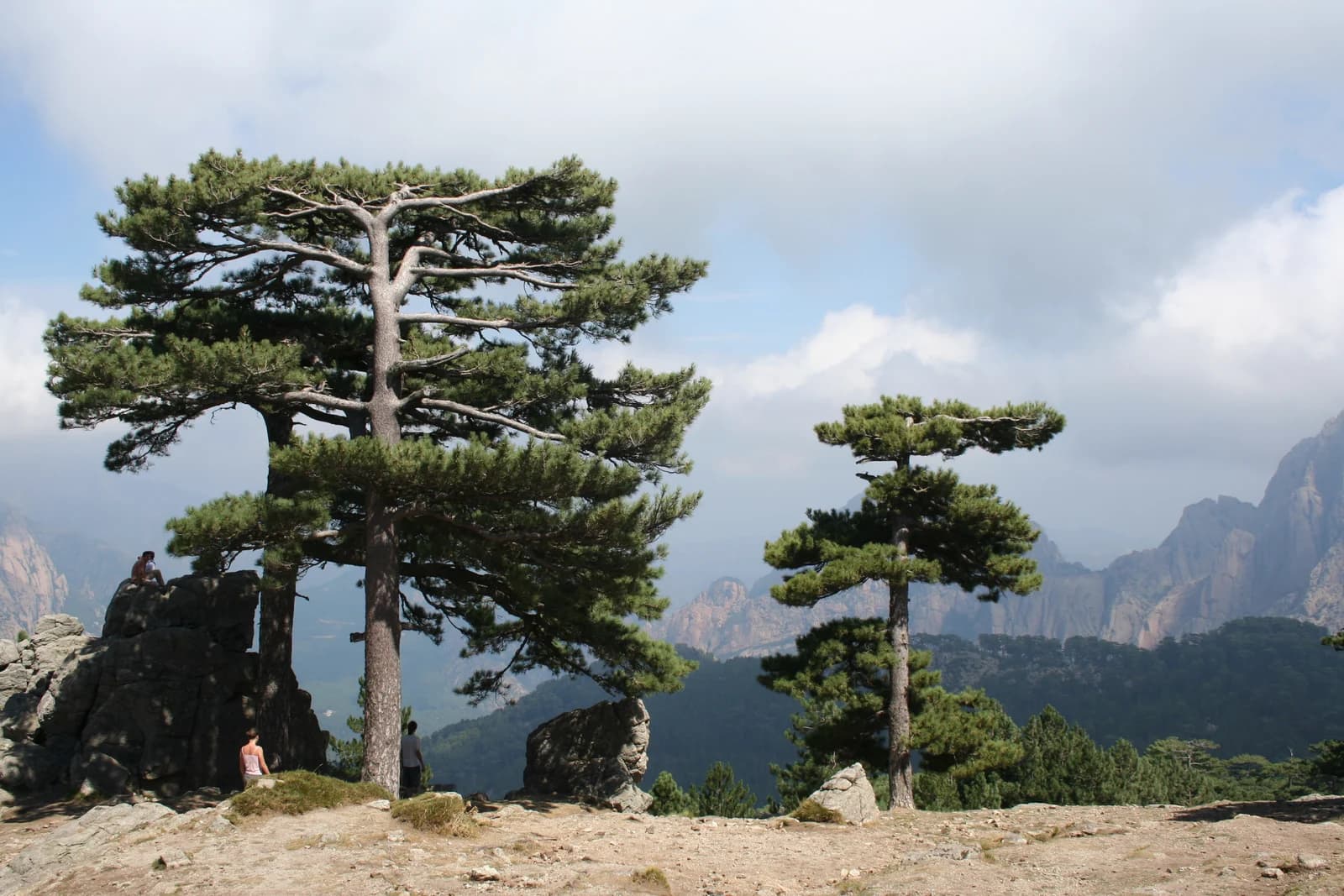
The pass beneath the granite needles of the Aiguilles de Bavella, linking the east coast to the Alta Rocca - pine forests, pools and serious mountain scenery.
Corte & the Restonica valley
Into the island's mountainous heart - the old capital's citadel, then a narrow dead-end valley road to trailheads for glacial lakes.
Car rental in Corsica: FAQ
The questions travelers ask most before renting a car here.
Car rental in other destinations
Continue Planning Your Trip
Things to Do
Ranked attractions, tips and how to book tickets
Where to Stay
The best area to stay in each city, by neighborhood
Airport Transfers
Getting from the airport to your hotel, by price and time
All-Inclusive Guides
What all-inclusive really means, by destination
Best Time to Visit
Month-by-month weather, crowds and prices
Route Finder
Find the cheapest way to get there
Hotel Finder
Book the right hotel for your destination
AI Trip Planner
Build a day-by-day itinerary