In Brief
What are the best things to do in Marrakech?
The best things to do in Marrakech are watching Jemaa el-Fnaa square come alive at dusk, visiting the Jardin Majorelle and the Bahia Palace, getting lost in the souks of the medina, taking a traditional hammam, and day-tripping to the Atlas Mountains or the Agafay desert. Most sights cluster inside the walkable medina; book Majorelle tickets and any day trips ahead, and go to the big sights early or late to dodge the heat and the crowds.
Key takeaways
- Book Jardin Majorelle tickets online ahead - the queue at the gate regularly passes an hour in season.
- Jemaa el-Fnaa is at its best from about an hour before sunset, when the food stalls and musicians take over.
- Haggling in the souks is expected - start well below the first price, keep it friendly, and walk away if unsure.
- The Atlas Mountains, Ourika Valley and Agafay desert are all under 90 minutes away - the best-value day trips in Morocco.
15 best things to do in Marrakech
Ranked best-first, with an insider tip and how to book each. Prices and hours change - check before you go.
Icons
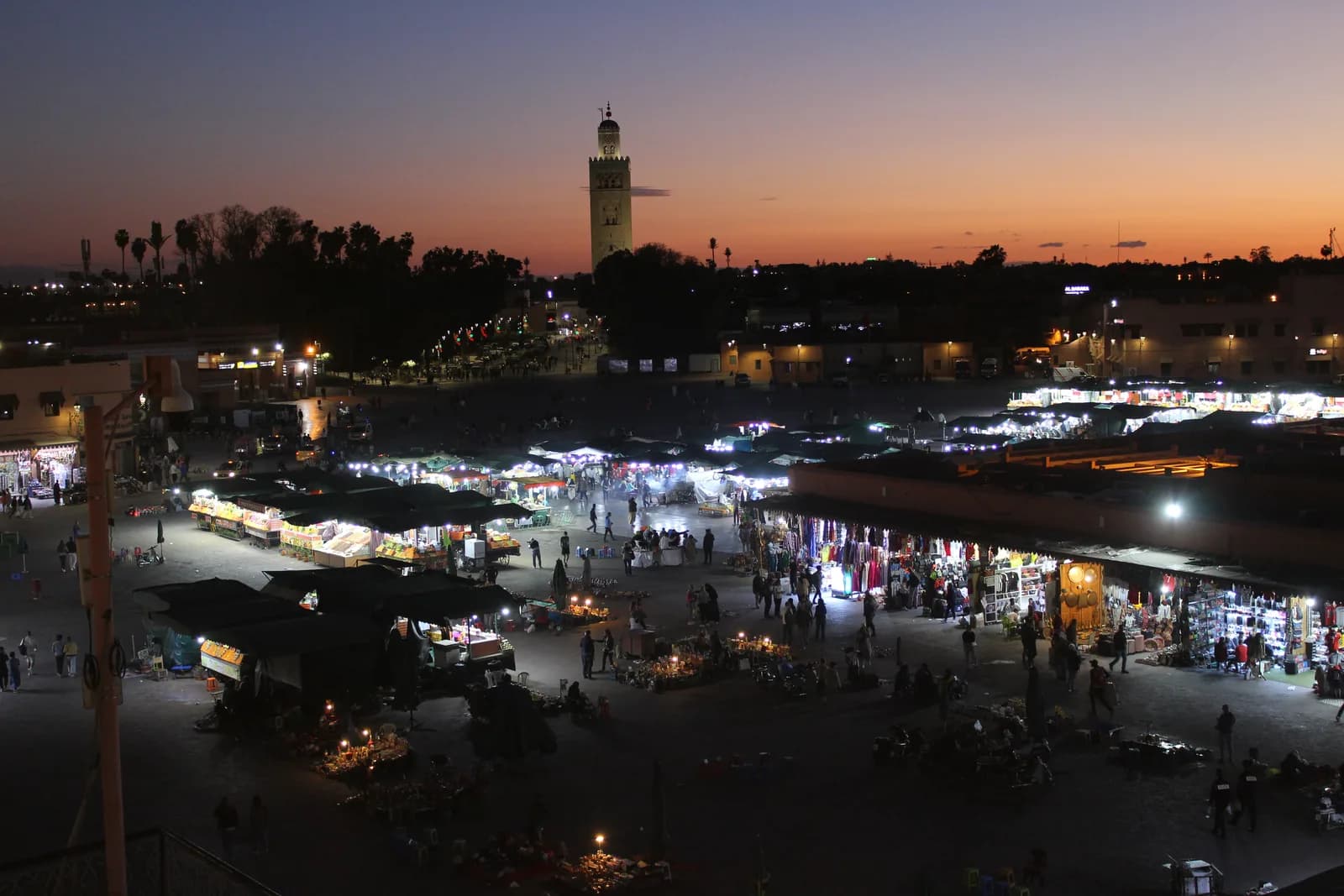
Jemaa el-Fnaa at dusk
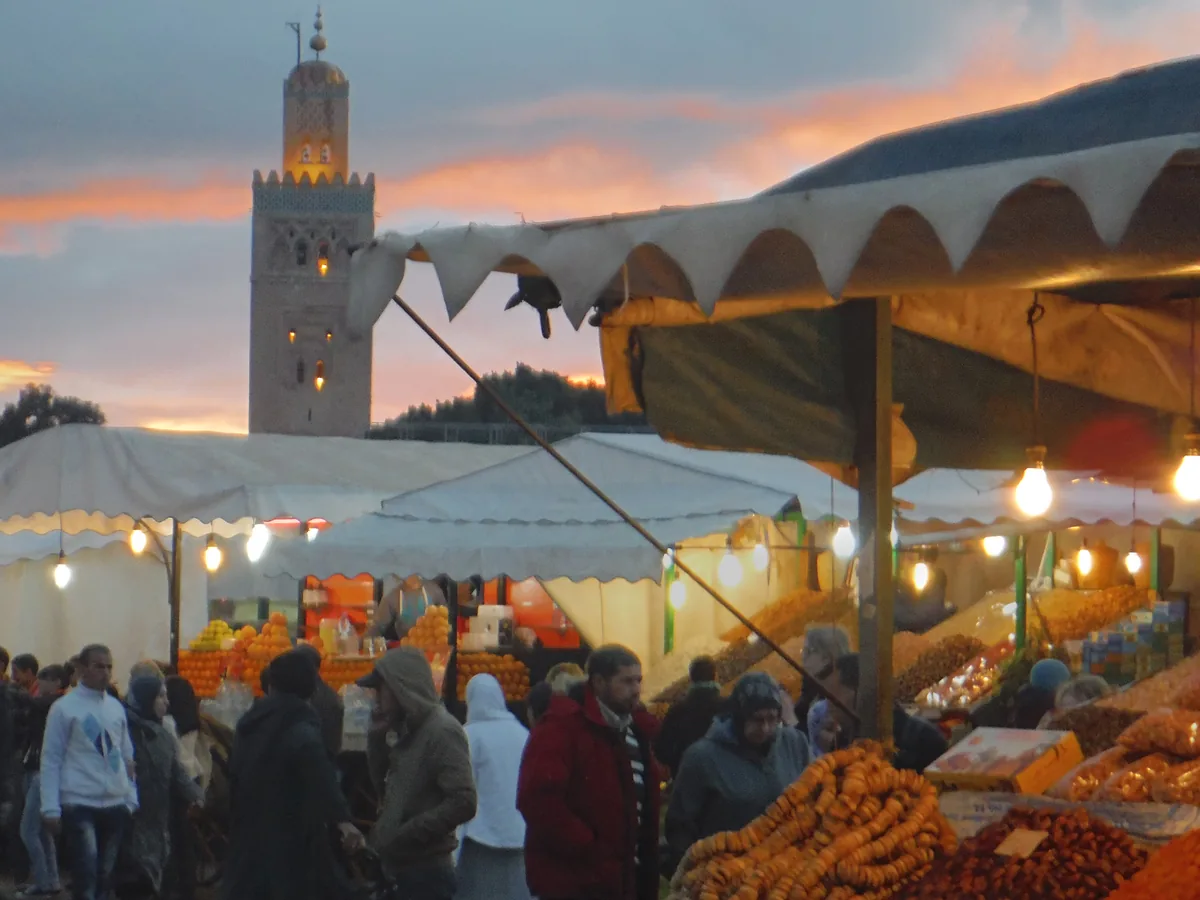
The great square of Marrakech has been the city's stage for roughly a thousand years, and UNESCO recognises the nightly spectacle itself as world heritage. By day it's orange-juice carts and snake charmers; from late afternoon it transforms - dozens of smoking food stalls, gnawa musicians, storytellers and acrobats, all under the floodlit Koutoubia minaret. No monument in Morocco beats simply standing in the middle of it.
- Insider tip
- Insider tip: Come about an hour before sunset, watch the transformation from a rooftop cafe terrace on the square's edge, then go down and eat at the stalls. Keep small change, agree prices first, and know that anything you photograph up close - snakes, monkeys, henna - will be charged for.
Gardens & museums
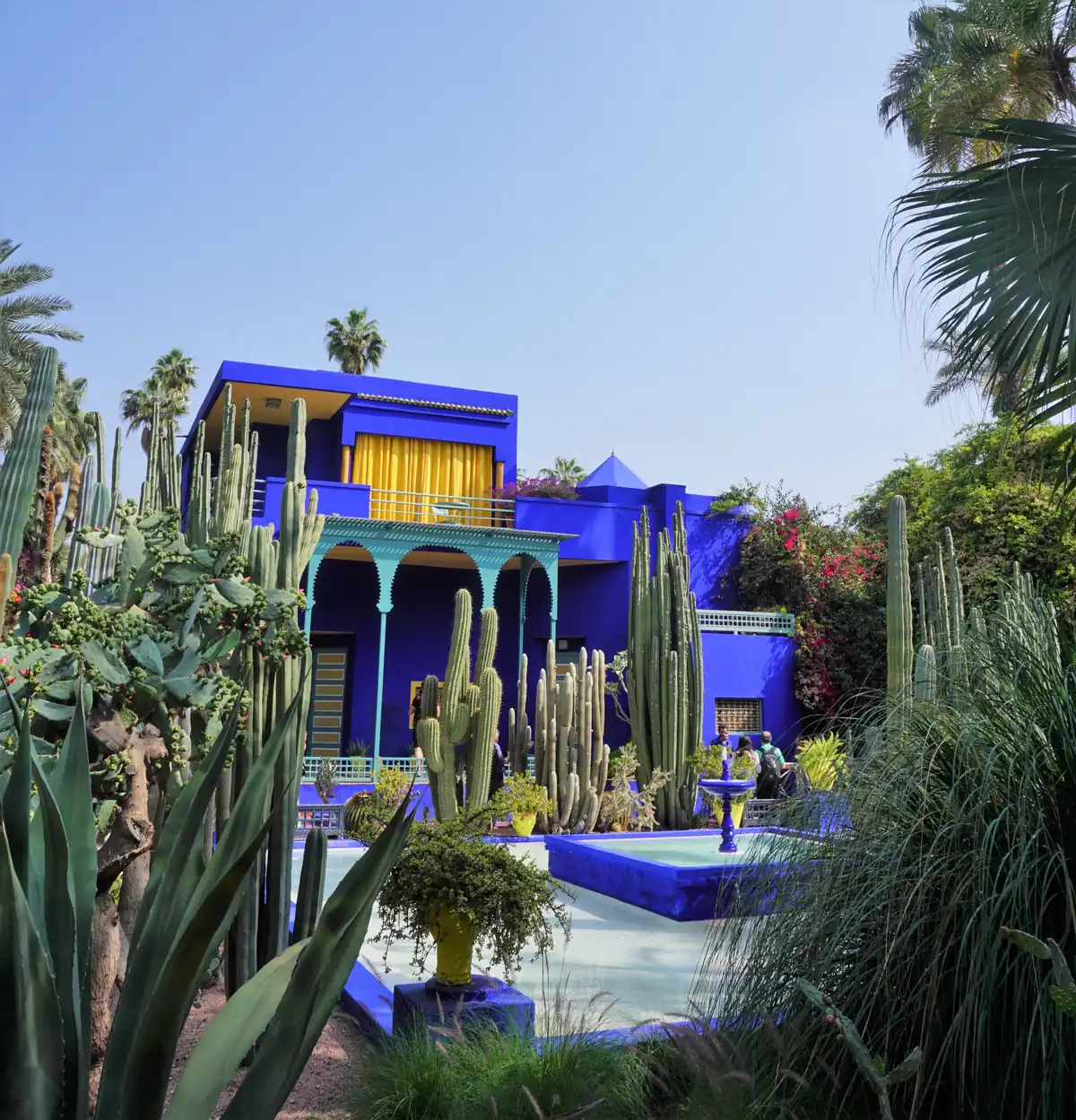
Jardin Majorelle & the YSL Museum
Rated 4.4 out of 5 on Google Maps from 61,082 reviews, as of October 2026The cobalt-blue villa and cactus garden created by painter Jacques Majorelle, later rescued and restored by Yves Saint Laurent and Pierre Berge, is Marrakech's most famous single sight. The garden packs bamboo groves, lily ponds and that unforgettable Majorelle blue into a compact, photogenic space, with the excellent Berber Museum inside and the Musee Yves Saint Laurent next door.
- Insider tip
- Insider tip: Book a timed ticket online before you travel - the walk-up queue is regularly over an hour and sells out in spring. Go at opening or in the last two hours; the combined garden + Berber Museum + YSL Museum ticket is worth it if you're staying two hours or more.
Palaces & history
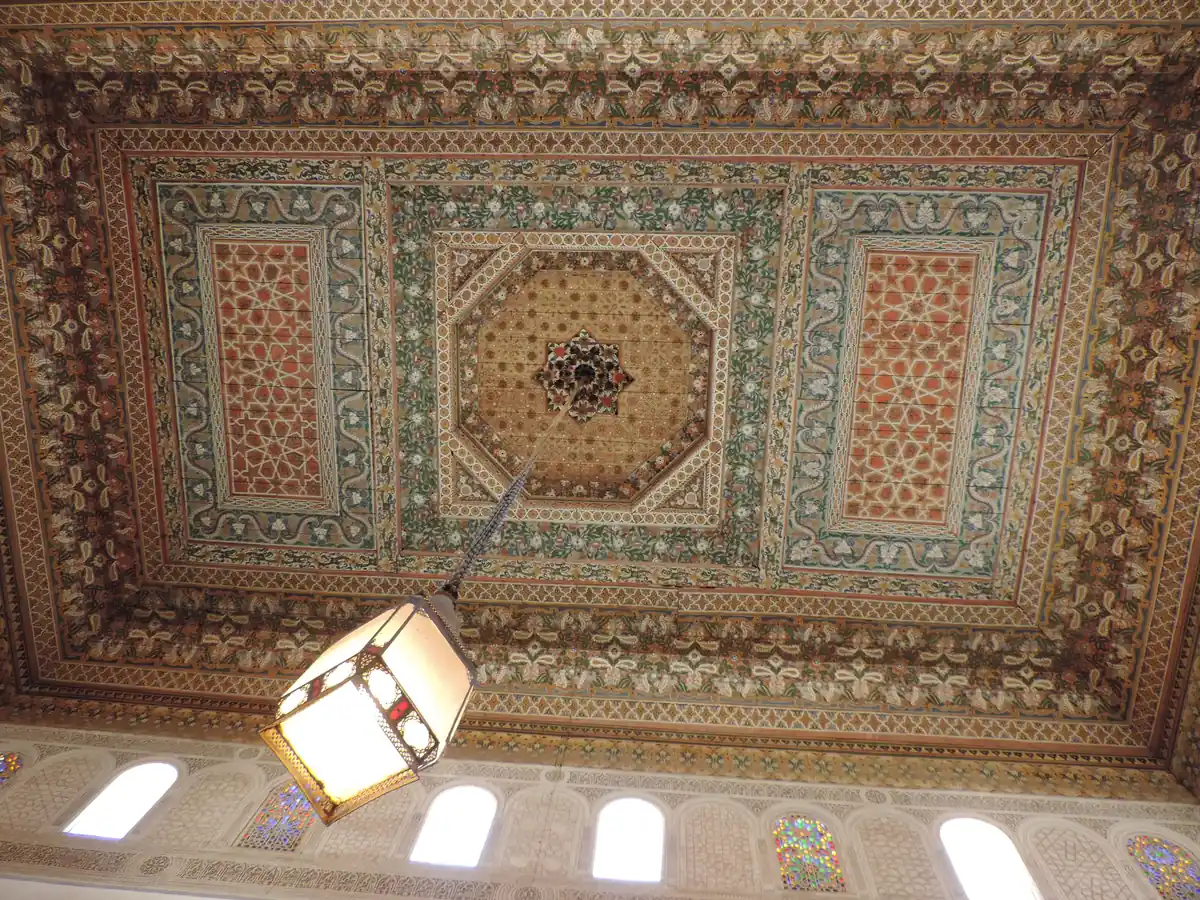
Bahia Palace
Built in the late 19th century for a grand vizier, the Bahia is the palace that shows what Moroccan craft can do: eight hectares of painted cedar ceilings, carved stucco, zellige tilework and orange-tree courtyards, room after room. It's the best-preserved and most rewarding of the medina's palaces, and the marble Grand Courtyard is one of the city's great spaces.
- Insider tip
- Insider tip: It's the most popular paid sight in the medina, so be at the gate at opening or come in the last 90 minutes. Tour groups swamp it mid-morning. A guide (or a good audio guide) genuinely helps here - the rooms are unlabelled and the harem-quarters story is what brings them alive.
Shopping
The souks of the medina
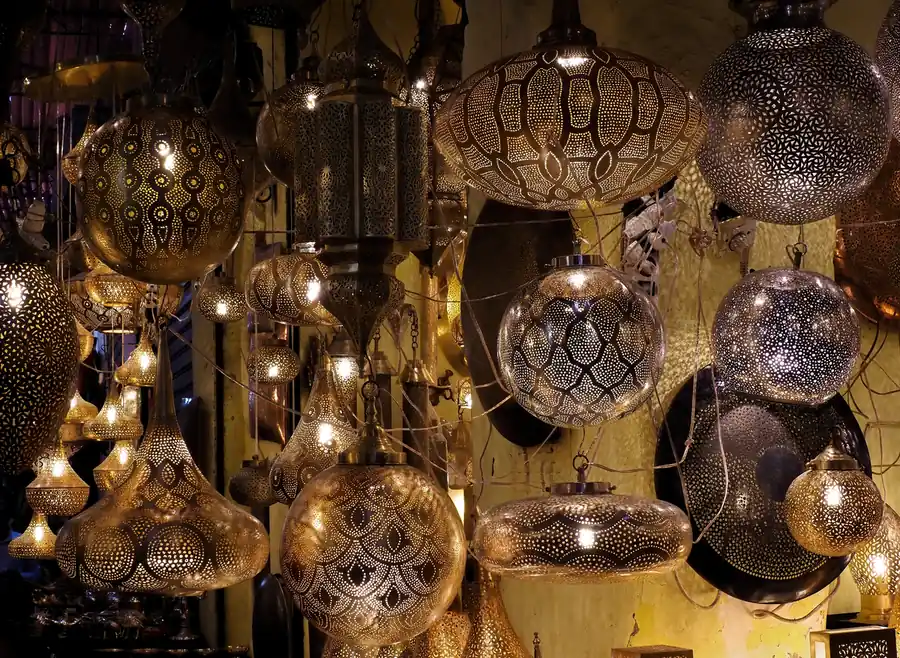
North of Jemaa el-Fnaa spreads one of the great market labyrinths of the world: whole lanes of lanterns, leather, carpets, spices, ceramics and cedar, still organised by trade as they were centuries ago. Getting a little lost is the point - the deeper you go, the more you pass workshops where things are actually made, not just sold.
- Insider tip
- Insider tip: Haggling is the culture: counter far below the first price and enjoy the theatre of it. If you'd rather learn the lanes with context, a guided souk-and-artisans walk on your first morning pays for itself - after that you'll navigate alone. Ignore 'the tannery is closed, come this way' - it's the classic detour hustle.
Palaces & history
Ben Youssef Madrasa
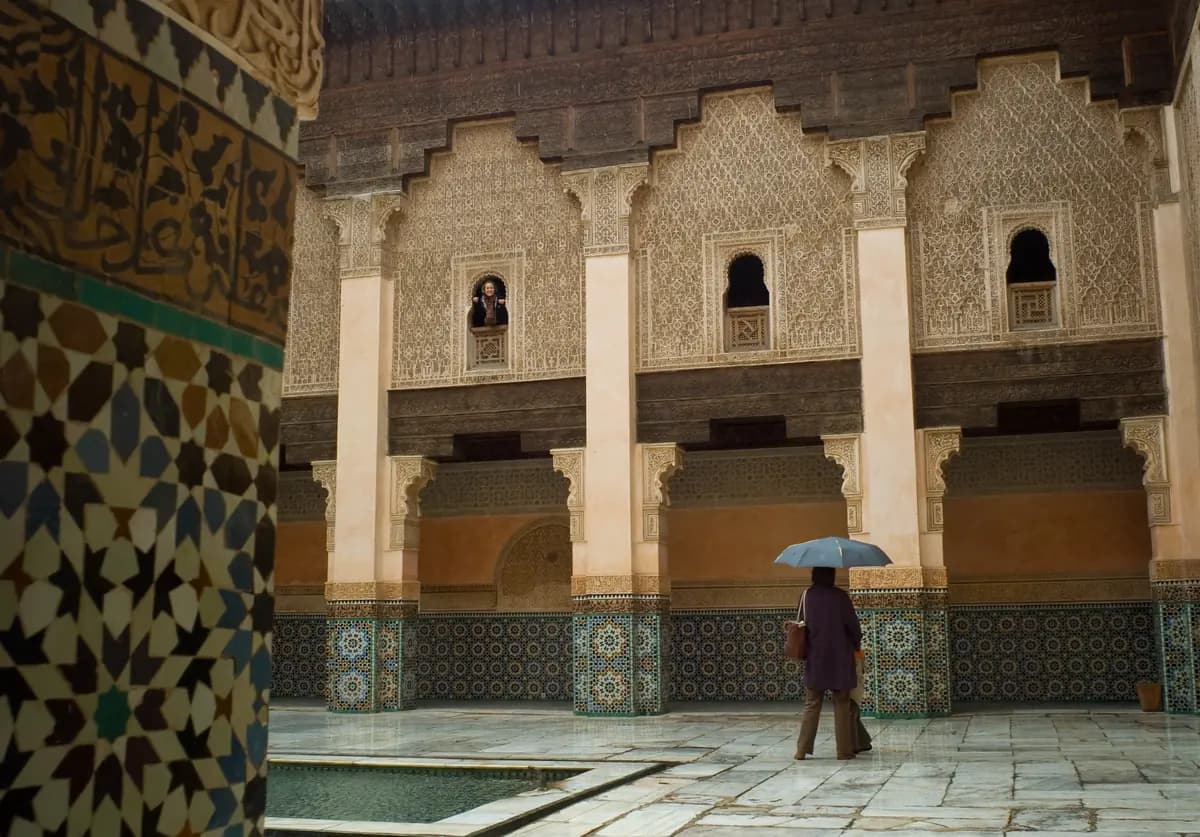
Rated 4.7 out of 5 on Google Maps from 13,461 reviews, as of October 2026For four centuries this was the largest koranic college in North Africa, and its central courtyard is arguably the most beautiful room in Marrakech - a perfect composition of zellige, carved stucco and cedar around a still reflecting pool. The tiny student cells upstairs, some overlooking the courtyard through wooden screens, make the scale human.
- Insider tip
- Insider tip: It reopened after a long restoration and now draws photo crowds - go right at opening for the courtyard nearly empty. It pairs naturally with the Marrakech Museum and the Almoravid Koubba next door, all in the same square.
Wellness
A traditional hammam
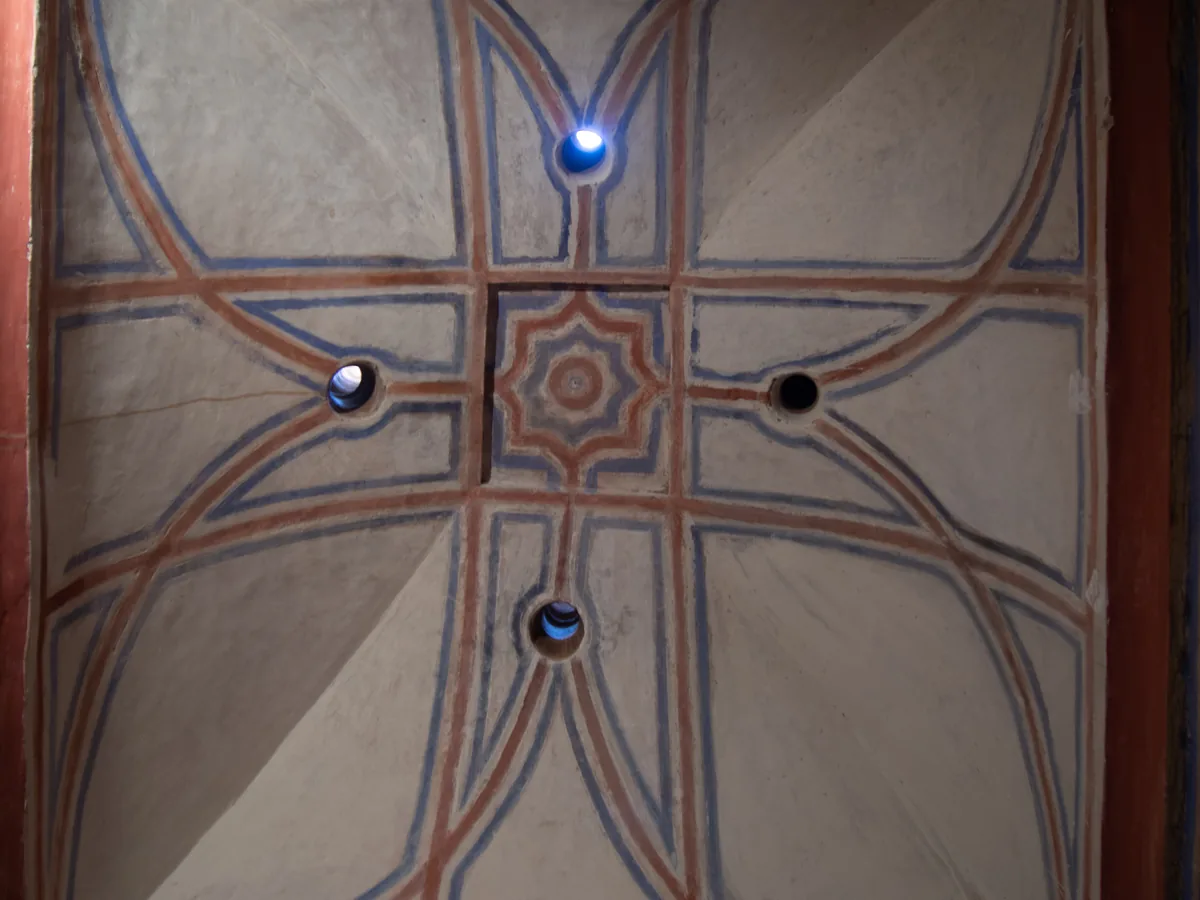
The hammam - steam, black olive soap, and a scrub-down with a kessa glove that removes skin you didn't know you had - is Morocco's centuries-old bath ritual and the best reset after souk days. You can do it authentically in a neighbourhood bathhouse for a few euros or in a candle-lit spa riad with rose petals and argan oil massage.
- Insider tip
- Insider tip: For a first hammam, a mid-range spa version gets you the real ritual with instructions in English. Book the scrub plus massage combo, go before dinner, and drink water after - you'll sleep like the dead. Public neighbourhood hammams are single-sex and cash-only; bring your own towel and spare underwear.
Palaces & history
Saadian Tombs
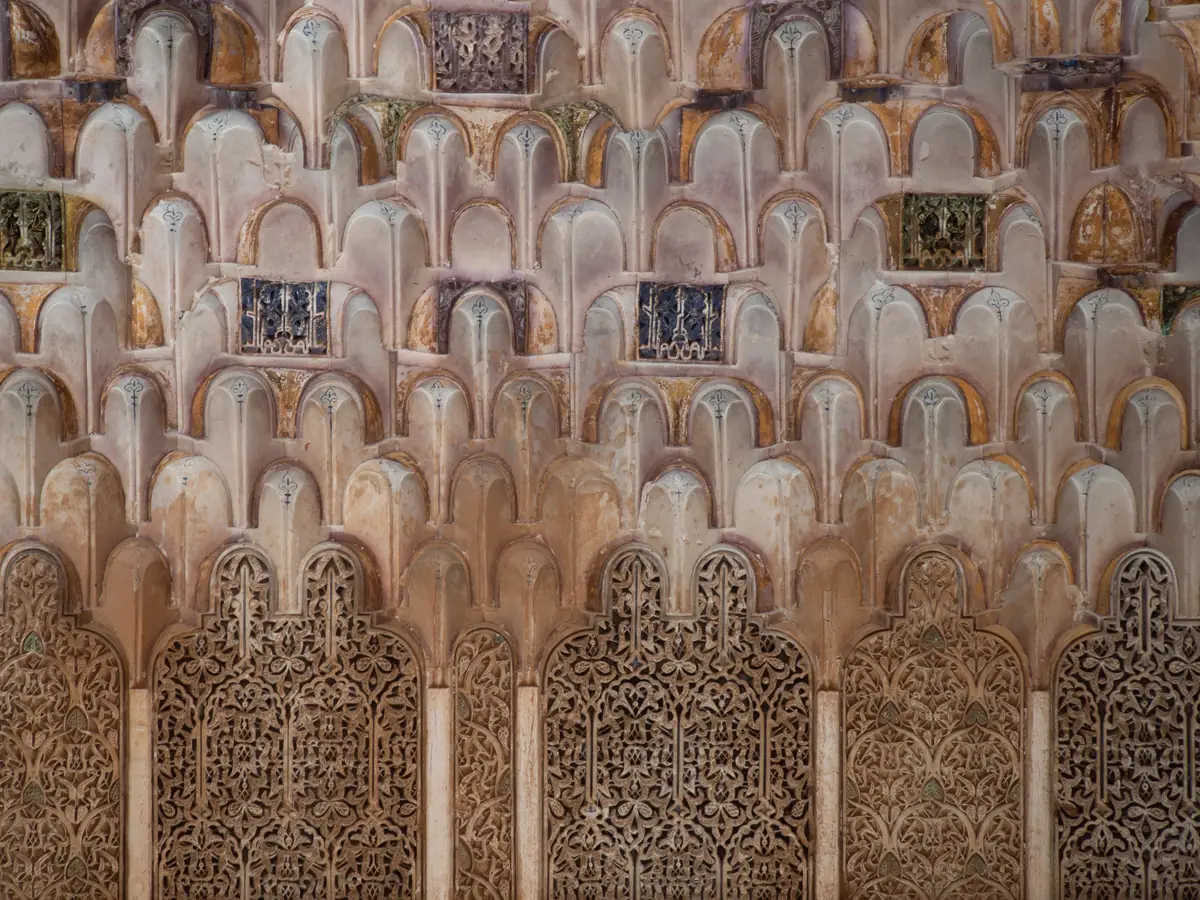
The necropolis of the Saadian dynasty was sealed up in the 17th century and only rediscovered in 1917, which is why its centrepiece - the Chamber of the Twelve Columns, in Carrara marble and gold-leafed cedar - survives intact. It's small, but the craftsmanship rivals anything in Morocco.
- Insider tip
- Insider tip: The famous chamber is viewed from a doorway, and the queue for that doorway is the whole visit - arrive at opening or expect 45 minutes in the sun. It's two minutes from the Kasbah Mosque; combine it with El Badi Palace and the Mellah for a half-day of the southern medina.
Palaces & history
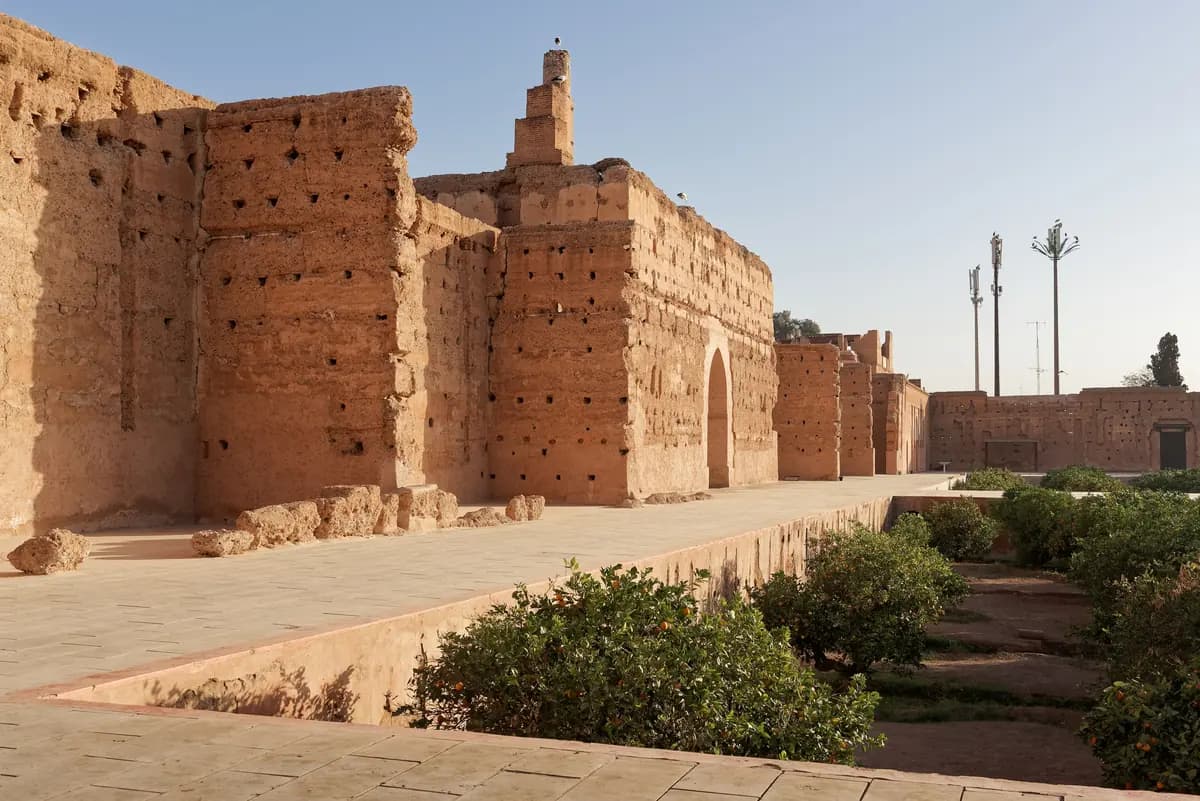
El Badi Palace
Rated 4.2 out of 5 on Google Maps from 11,241 reviews, as of October 2026The 'Incomparable Palace' of sultan Ahmad al-Mansur was once plated in gold and Italian marble; a later ruler stripped it bare, leaving vast honey-coloured ruins where storks now nest along the ramparts. The sunken orange gardens, the enormous central pool and the rampart views over the medina make it the atmospheric counterpoint to the Bahia's perfection.
- Insider tip
- Insider tip: Climb to the rampart terrace for the stork nests and Atlas views - late afternoon light is best. The original 12th-century Koutoubia minbar, one of Islamic art's masterpieces, is displayed in a side hall and easy to miss.
Icons
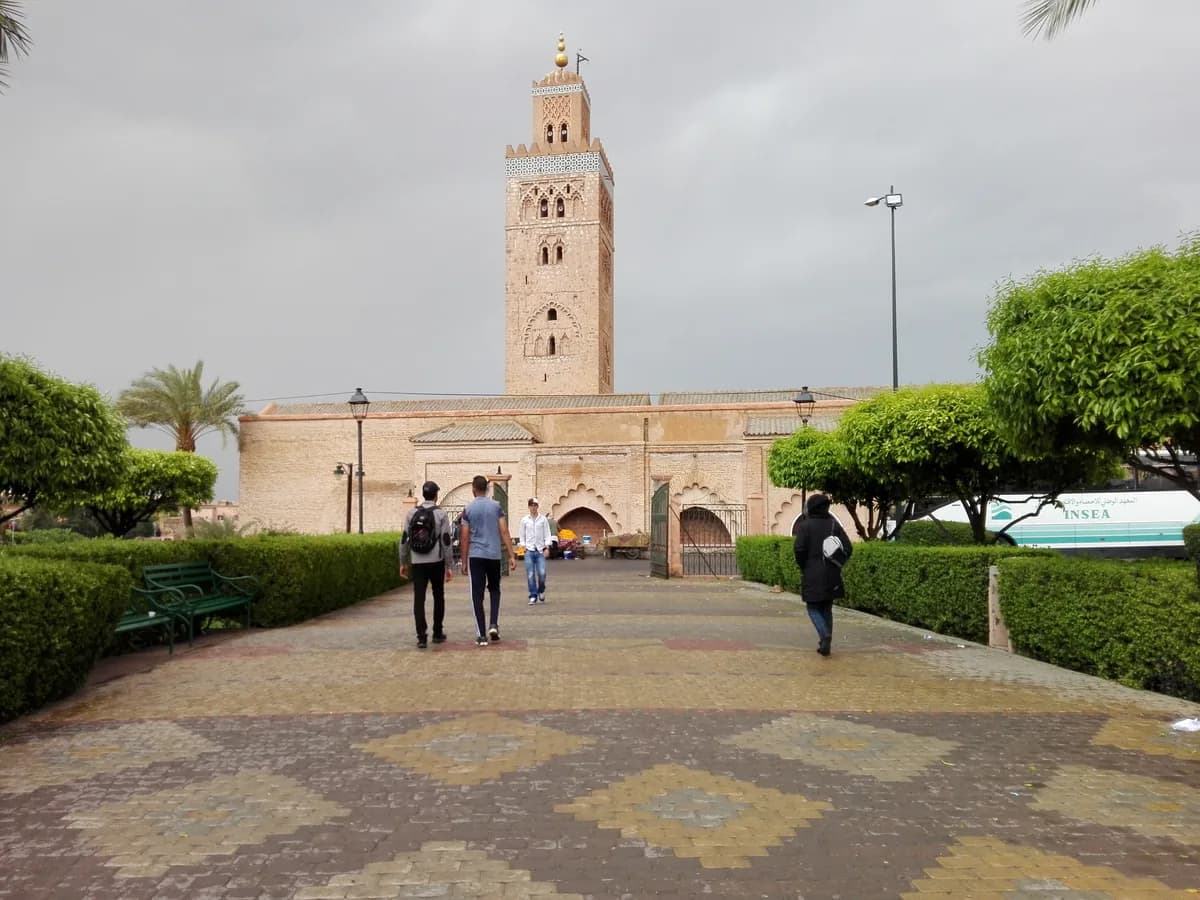
Koutoubia Mosque & gardens
FreeThe 77-metre minaret of the Koutoubia has been Marrakech's landmark since the 12th century - the sightline laws still forbid any medina building to rise above it - and its proportions set the template for towers from Seville to Rabat. Non-Muslims can't enter the mosque, but the minaret is best admired anyway from the rose gardens beside it, especially floodlit at night.
- Insider tip
- Insider tip: Walk the gardens at golden hour, then let the minaret guide you home whenever you're lost - it's visible from most of the city. The evening call to prayer heard from the gardens, with the square roaring behind you, is a moment.
Gardens & museums
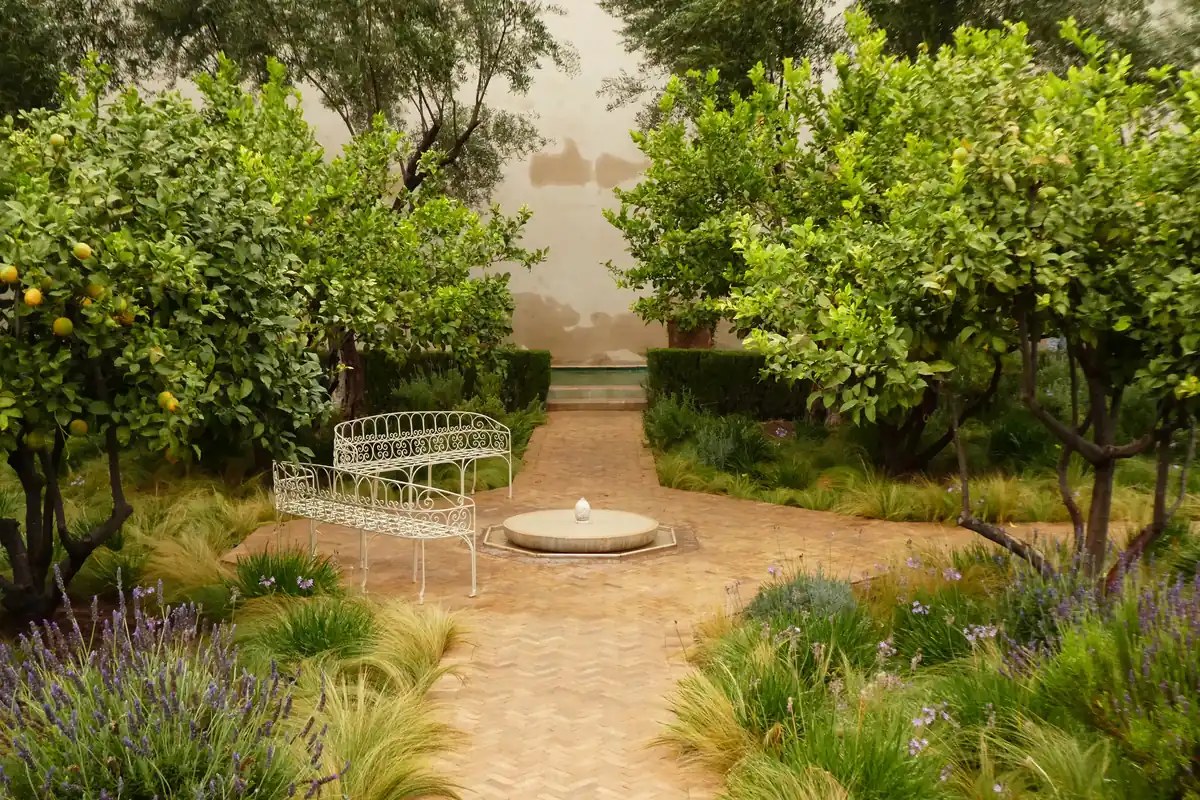
Le Jardin Secret
A restored riad-palace complex in the middle of the souks hiding two courtyard gardens - one exotic, one a formal Islamic garden laid out on the original khettara irrigation channels that once watered the city. It's the calmest place inside the medina, and the tower climb gives you a rooftop panorama over the lanes you've been navigating blind.
- Insider tip
- Insider tip: It sits right on the Mouassine souk route, making it the perfect mid-shopping decompression stop. Pay the small tower supplement - it's the best viewpoint in the central medina - and the garden cafe is a legitimately pleasant lunch.
Day trips
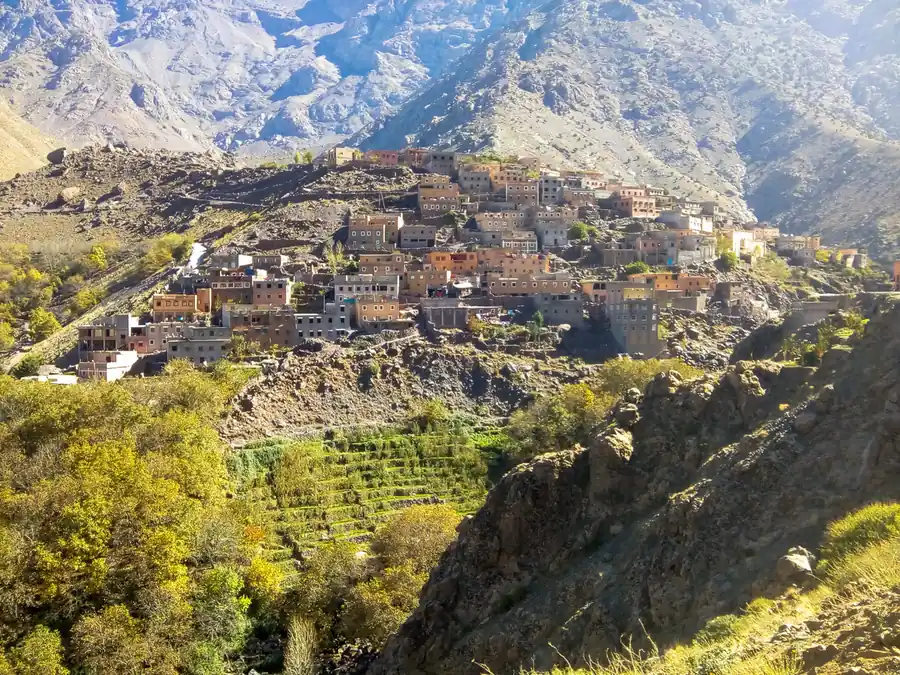
Atlas Mountains day trip (Imlil or Ourika)
Under 90 minutes from the city, the High Atlas is another world: Berber villages stacked on terraced slopes, walnut groves, waterfalls, and North Africa's highest peak (Jbel Toubkal, 4,167 m) above the trailhead town of Imlil. Ourika Valley is the easy riverside version; Imlil is the proper mountain one, with mule tracks, village lunches and real hiking.
- Insider tip
- Insider tip: A small-group tour with a village lunch is the simplest way to do it; hiking types should ask for Imlil with a local mountain guide rather than the Ourika coach circuit. Take layers year-round - it can be 15°C cooler than Marrakech - and cash for the roadside argan and pottery stops.
Day trips
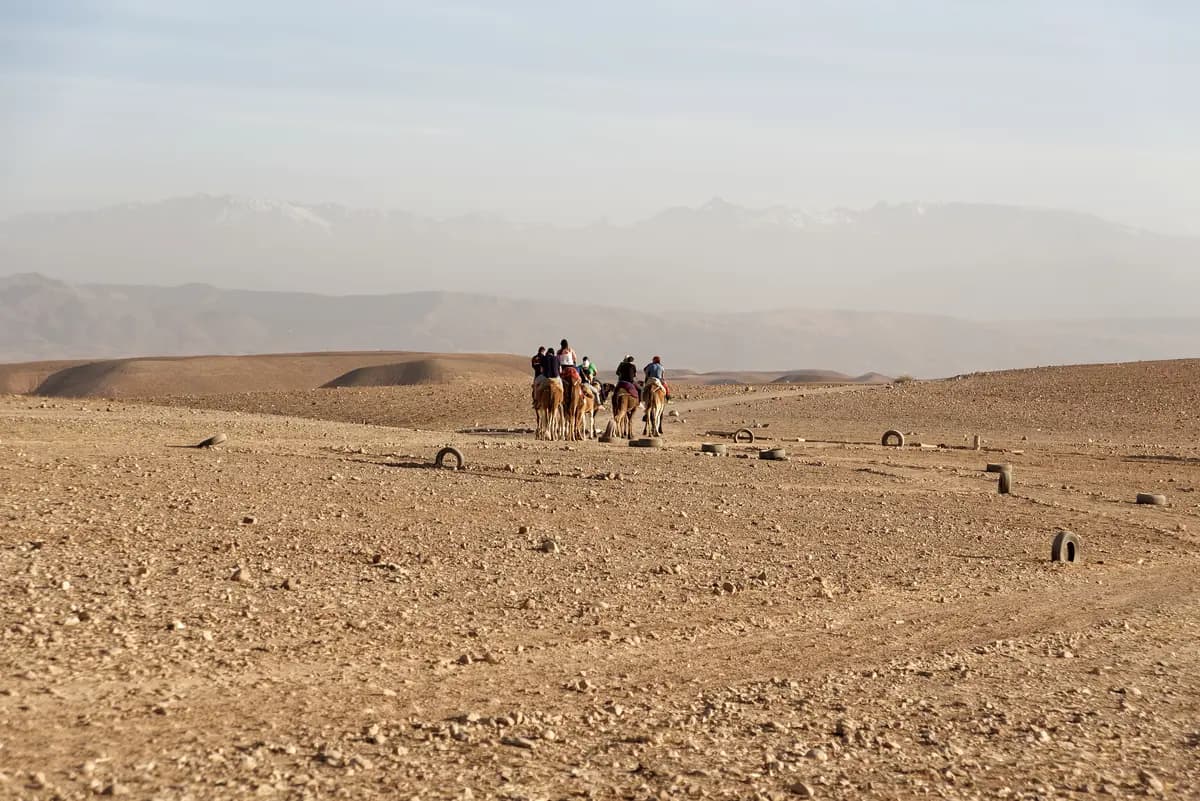
Agafay desert sunset
You can't reach the Sahara and back in a day from Marrakech - but the Agafay, a moonscape of stone desert 40 minutes from town, delivers the desert evening anyway: camel rides, quad biking, and luxury camps serving dinner under the dunes-and-Atlas skyline as the light goes gold. It has become the classic Marrakech sunset trip.
- Insider tip
- Insider tip: Book a sunset dinner package at one of the camps rather than a daytime visit - the Agafay is bleak at noon and magic at dusk. If you want real Saharan dunes, that's Merzouga or Zagora, a separate 2-3 day trip; don't let a tout sell you 'Sahara in a day.'
Day trips
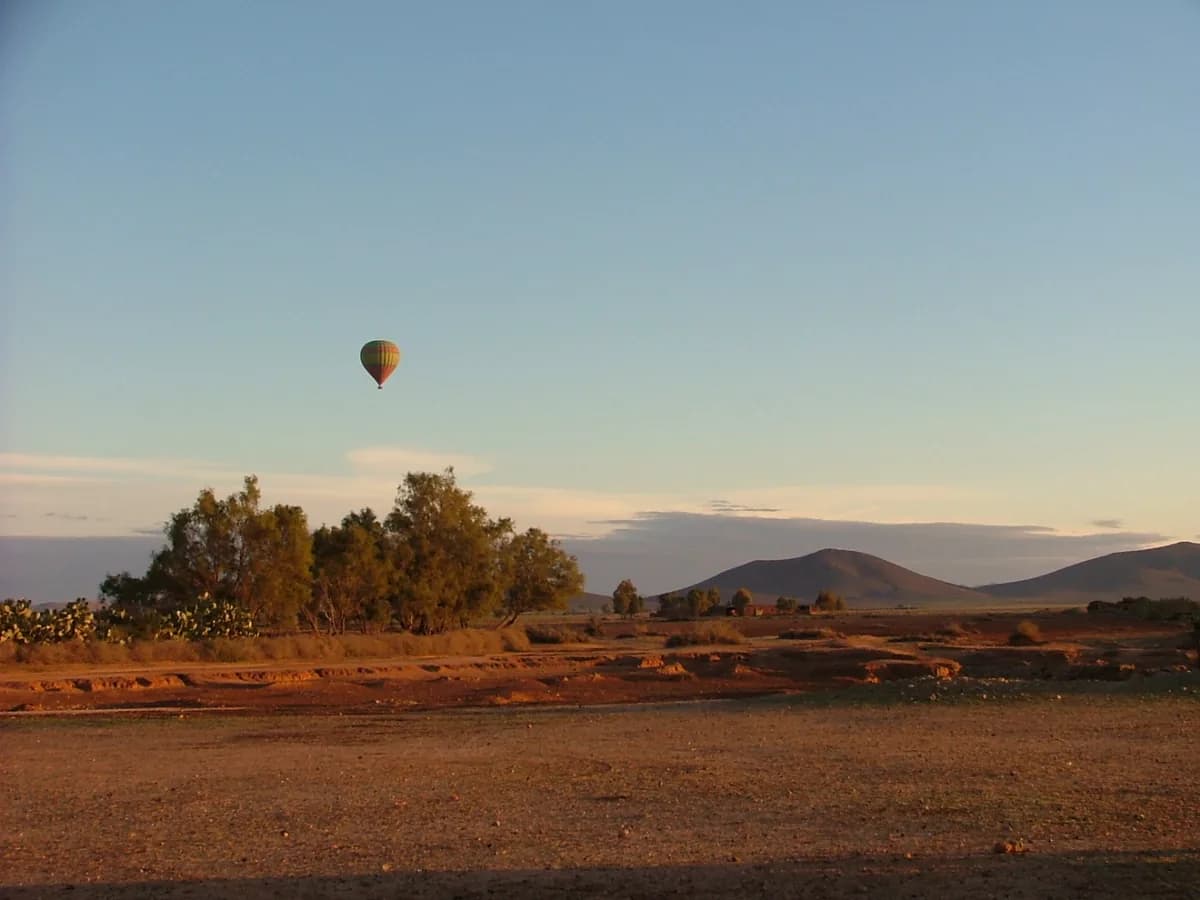
Hot-air balloon at dawn
Ballooning here is among the cheapest anywhere in the world for what you get: lift-off in the pre-dawn cool, an hour drifting over palm groves and Berber villages, and the snow-capped Atlas turning pink on the horizon. Flights end with a traditional breakfast in a tent before you're back in town by mid-morning.
- Insider tip
- Insider tip: Book for early in your stay so a windy cancellation can be rebooked. Winter and spring mornings give the clearest Atlas views; wear closed shoes and layers - the launch field is cold, the flight itself calm and warm.
Food & drink
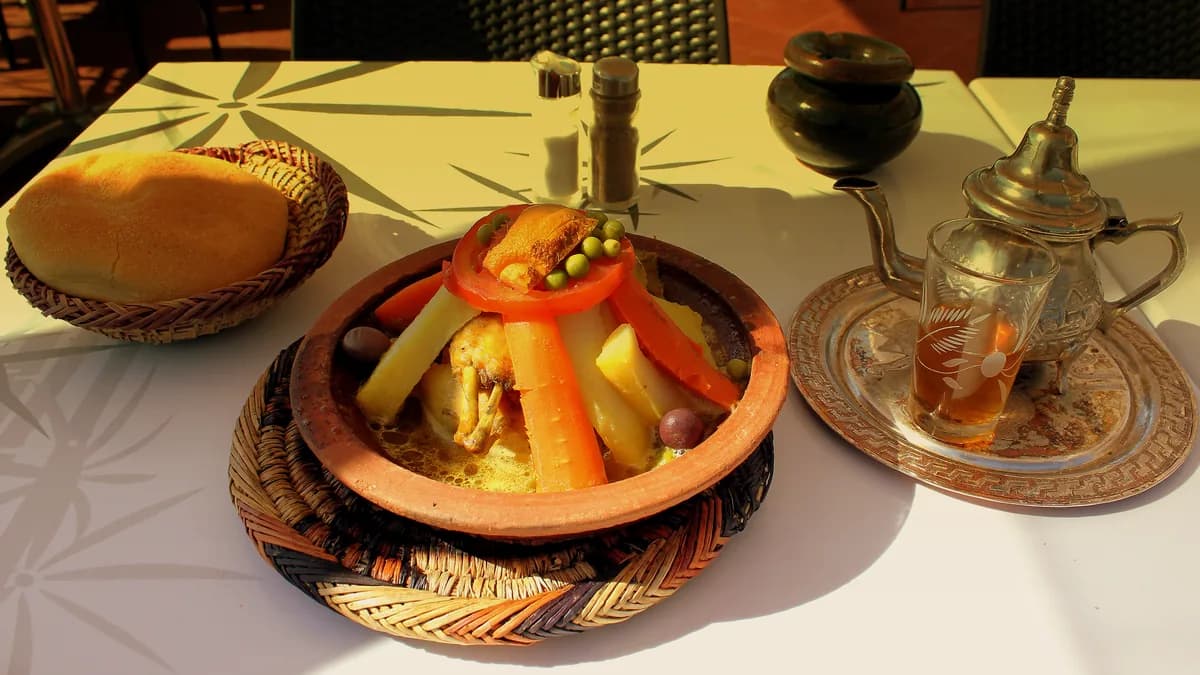
Moroccan cooking class
Tagine, couscous and pastilla all make more sense once you've made them - most classes start with a guided shop in a produce souk, then cook in a riad or garden kitchen before eating your own work for lunch. It's consistently one of the highest-rated things visitors do here, and the recipes actually work at home.
- Insider tip
- Insider tip: Morning classes that include the market visit are the full experience - book one for early in the trip and the souk food stalls will make sense for the rest of it. Vegetarians are handled well everywhere; say so when booking.
Neighbourhoods
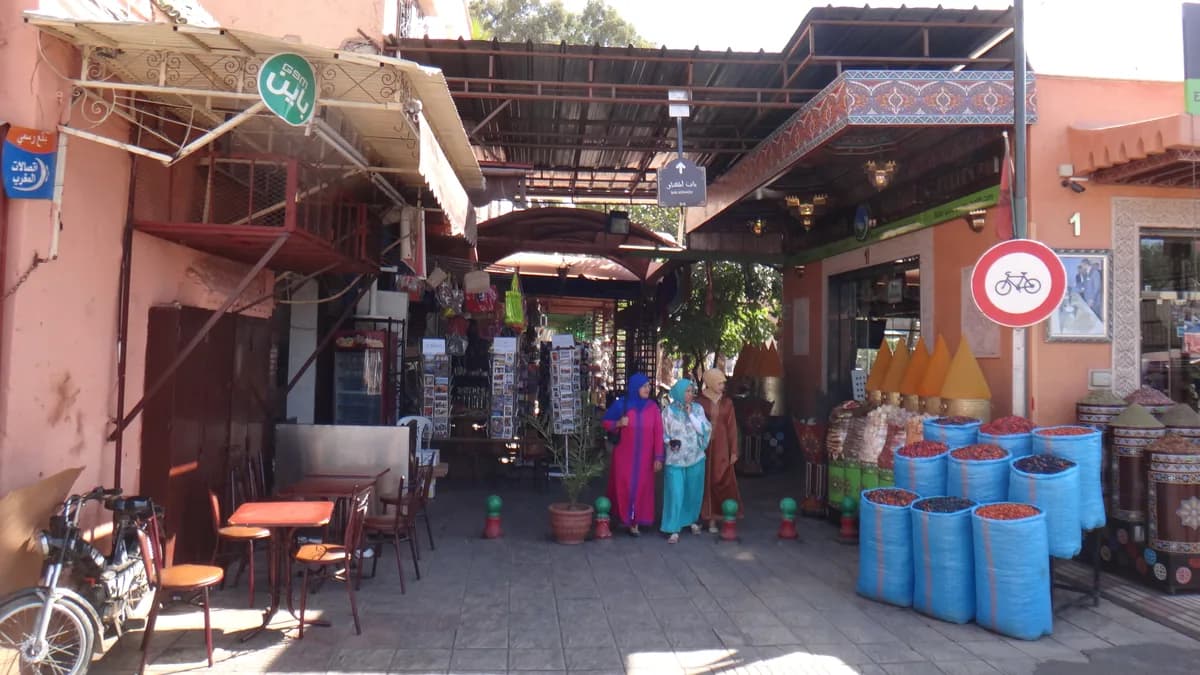
The Mellah & the spice market
FreeThe old Jewish quarter beside the Kasbah keeps a different rhythm from the souks: the restored Slat al-Azama synagogue around a blue-and-white courtyard, the vast Miara cemetery, and the Mellah spice market where the pyramids of cumin, saffron and ras el hanout are aimed at cooks rather than cameras. History here is quieter and, for many visitors, more affecting.
- Insider tip
- Insider tip: Spice prices in the Mellah market are noticeably fairer than on the main souk drags - buy saffron and ras el hanout here. The synagogue is minutes from the Bahia Palace, so fold this into your southern-medina day.
Where to stay in Marrakech
The best areas to base yourself, and who each suits.
The Medina (in a riad)
First-timers and romantics - staying in a courtyard riad inside the old walls is the Marrakech experience, steps from the souks and squares.
Gueliz (new town)
Modern comfort - wide streets, cafes, boutiques and hotels with easy taxi access; a 20-minute walk or short cab to the medina.
Hivernage
Luxury and nightlife - big five-star hotels, casinos and clubs just outside the walls near the Menara gardens.
The Kasbah & Mellah
A quieter medina base - near the Saadian Tombs and Bahia Palace, less hectic than the souk lanes but still historic.
Planning your Marrakech trip
Best time to visit
March to May and September to November are ideal - warm days, cool nights, and none of midsummer's brutal heat. July and August regularly pass 38°C in the medina, so plan mornings, pools and late evenings if you come then. Winter is mild and sunny by day but genuinely cold at night; riads are stone buildings, so check yours has heating.
Getting around
Menara Airport (RAK) is only about 15-20 minutes from the medina - agree a taxi fare before you get in, or have your riad arrange a pickup, which is worth it because drivers can't reach most medina doorsteps. Inside the walls you walk: the medina is a maze of pedestrian lanes where a riad's location matters more than its star count. For Gueliz, the gardens and the Palmeraie, flag the beige petit taxis and insist on the meter, or use the ride-hailing apps that work here.
Things to do in Marrakech: FAQ
The questions travelers ask most when planning a trip here.
Where to base yourself in Marrakech
Everything on this list is easier from the right side of town, and the area you book decides how much of the day you spend getting to it. These go into the detail:
- Free cancellation on most rooms
- No booking fee
- Prices on Trip.com
More things-to-do guides
Continue Planning Your Trip
Where to Stay
The best area to stay in each city, by neighborhood
Car Rental
Real prices, driving tips and the best routes by destination
Airport Transfers
Getting from the airport to your hotel, by price and time
All-Inclusive Guides
What all-inclusive really means, by destination
Best Time to Visit
Month-by-month weather, crowds and prices
Route Finder
Find the cheapest way to get there
Hotel Finder
Book the right hotel for your destination
AI Trip Planner
Build a day-by-day itinerary
Photo credits (15)
Photos via Wikimedia Commons, used under their respective licences.
- Jemaa el-Fnaa at dusk: Elgaard - CC BY-SA 4.0 · source
- Jardin Majorelle & the YSL Museum: FriedrichFrisch - CC BY-SA 4.0 · source
- Bahia Palace: Vassia Atanassova - Spiritia - CC BY-SA 4.0 · source
- The souks of the medina: Petar Milošević - CC BY-SA 4.0 · source
- Ben Youssef Madrasa: Lars Plougmann from United States - CC BY-SA 2.0 · source
- A traditional hammam: C messier - CC BY-SA 4.0 · source
- Saadian Tombs: C messier - CC BY-SA 4.0 · source
- El Badi Palace: Jakub Hałun - CC BY 4.0 · source
- Koutoubia Mosque & gardens: Najibelfatimi - CC BY-SA 4.0 · source
- Le Jardin Secret: muffinn from Worcester, UK - CC BY 2.0 · source
- Atlas Mountains day trip (Imlil or Ourika): Mounir Neddi - CC BY-SA 4.0 · source
- Agafay desert sunset: Jakub Hałun - CC BY 4.0 · source
- Hot-air balloon at dawn: Imaneb82 - Public domain · source
- Moroccan cooking class: calflier001 - CC BY-SA 2.0 · source
- The Mellah & the spice market: karel291 - CC BY 3.0 · source