In Brief
How do you get to Pompeii from Rome?
Take a Frecciarossa or Italo from Roma Termini to Napoli Centrale, which Trenitalia puts at just over an hour with more than 100 connections a day, then transfer downstairs to Napoli Piazza Garibaldi for the Circumvesuviana toward Sorrento and get off at Pompei Scavi-Villa dei Misteri, about 36 minutes. Allow roughly 2 hours 15 to 2 hours 30 each way once the transfer and the walk to the gate are counted. Book the Pompeii ticket before you leave Rome: the park caps entry at 20,000 people a day and tickets are issued in your name.
Key takeaways
- Three stations are called Pompei and they are not interchangeable. Pompei Scavi-Villa dei Misteri, on the Circumvesuviana Naples-Sorrento line, is the one for Porta Marina and Piazza Esedra.
- The Trenitalia station simply called Pompei is a different place: from there the Pompei Link bus covers the last stretch to the park in about 15 minutes for EUR 1.50.
- On Sundays Trenitalia has run a direct Frecciarossa, FR 9693, leaving Roma Termini at 08:53 and reaching Pompei at 10:40, returning at 18:40. Check your specific date, because it has been a seasonal service.
- Leave Rome by about 08:00 and you are at the gate around 10:30, which is 5 to 6 hours on site against summer closing at 19:00.
- Nine more trips follow, from Ostia Antica at 30 minutes on a city ticket to Orvieto and Tivoli.
The 10 best day trips, ranked
Ordered by how well they repay a full day - factoring travel time, what you can actually see, and how easy they are without a car.
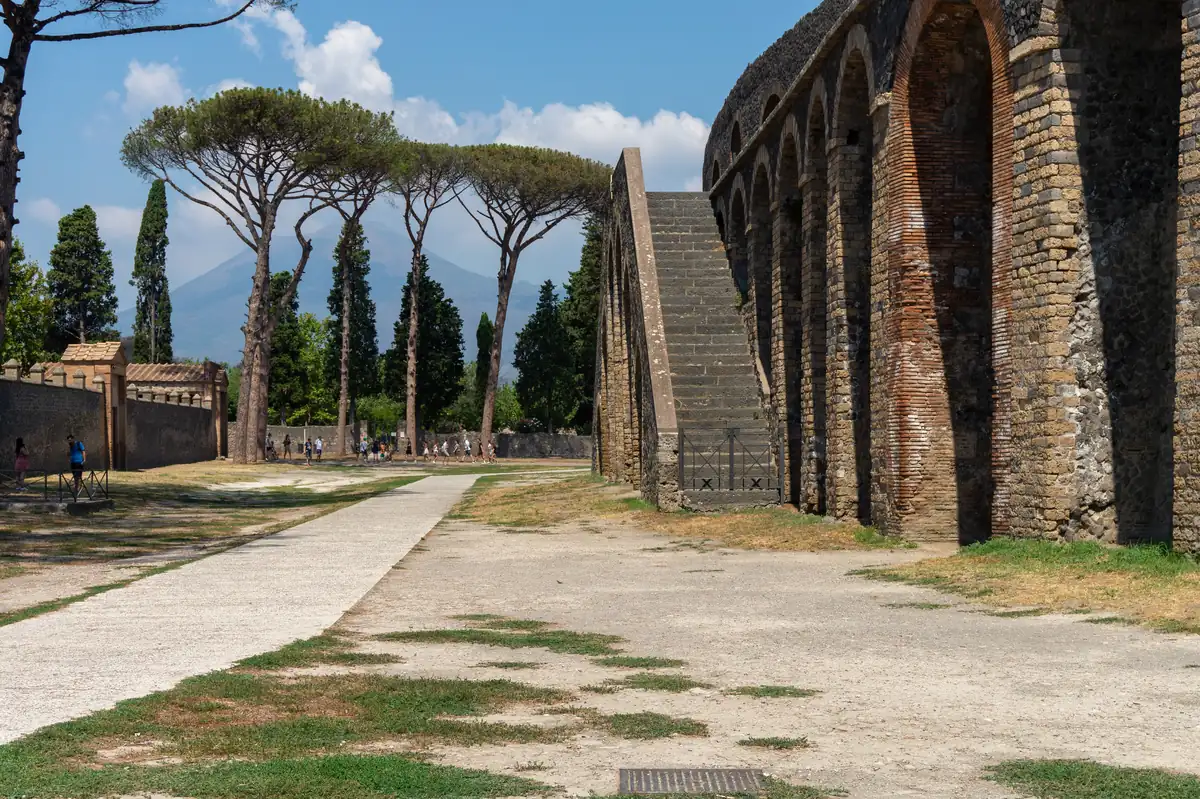
240 km southeast · ~2h15-2h30 each way
Pompeii
Ancient Rome at full scale
A complete Roman city frozen by Vesuvius in 79 AD - streets, bakeries, brothels, amphitheatre and the plaster casts of the victims. It's huge: even four hours only covers the highlights, so buy a timed entry online and follow a route rather than wandering. See the spotlight section below for the exact timing that makes this work as a day trip.
- Getting there
- Getting there: High-speed Frecciarossa or Italo from Roma Termini to Napoli Centrale, which Trenitalia puts at just over an hour, then the Circumvesuviana from Napoli Piazza Garibaldi directly below to Pompei Scavi-Villa dei Misteri, about 36 minutes and roughly every half hour. Get the station name exactly right: Pompei Scavi-Villa dei Misteri serves the Porta Marina and Piazza Esedra gates, Pompei Santuario serves Piazza Anfiteatro at the far end of the site, and the Trenitalia station called simply Pompei needs the Pompei Link bus. The seasonal Campania Express runs the same route with guaranteed seats.
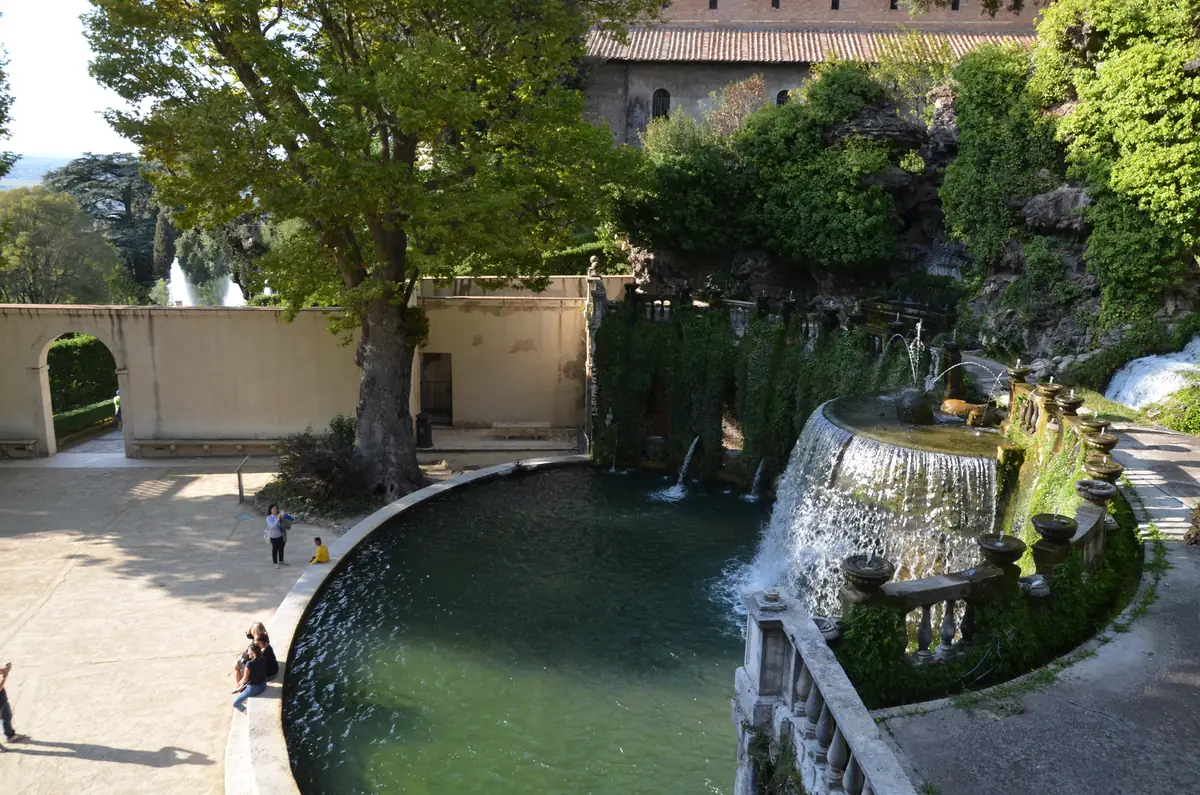
30 km east · ~36-60 min by train
Tivoli (Villa d'Este & Hadrian's Villa)
Gardens & imperial ruinsTwo UNESCO sites in one small town: Villa d'Este is the Renaissance water garden - hundreds of fountains running entirely on gravity - and Hadrian's Villa is the vast country palace the emperor built as his private Rome, with the Canopus pool its signature image. Doing both in a day is tight but doable; start with Hadrian's Villa in the morning while your legs are fresh.
- Getting there
- Getting there: FL2 regional trains from Roma Tiburtina to Tivoli, averaging about 44 minutes with the fastest near 36, and roughly 25 to 28 departures a day, most direct. Lazio regional fares are fixed at around EUR 3 whenever you buy. The Cotral bus from Ponte Mammolo on Metro B is the alternative. Villa d'Este is in the town centre at Piazza Trento; Hadrian's Villa is not in Tivoli at all and needs CAT bus 4 or 4X from the station, with the stop about 300 metres from the entrance.
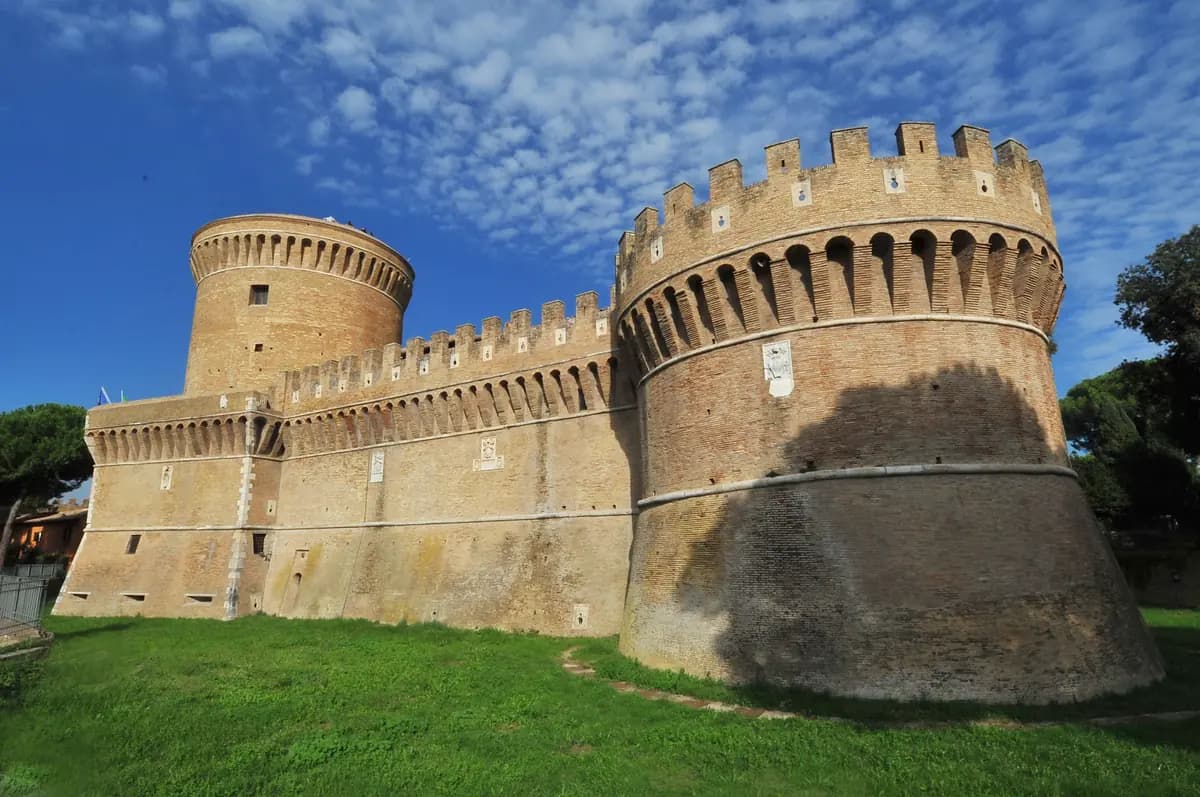
25 km southwest · ~30 min by local train
Ostia Antica
Roman ruins without crowds
Rome's ancient port city, and the day trip most visitors miss: mosaics still in the floors of the baths, a theatre you can sit in, an ancient bar with its marble counter intact - and a fraction of Pompeii's crowds. You can climb around freely in a way Pompeii no longer allows. Half a day covers it; bring water, there's little shade.
- Getting there
- Getting there: The Metromare line, the old Roma-Lido and run by Cotral rather than ATAC since 2022, from Porta San Paolo station next to Piramide on Metro B. Ostia Antica is inside Rome's Zone A, so a standard city transport ticket covers it, and the excavations are a walk of under ten minutes from the station. Site entry is separate at EUR 18.00 full, EUR 2.00 reduced. Closed Mondays.
120 km north · ~1h20 by train
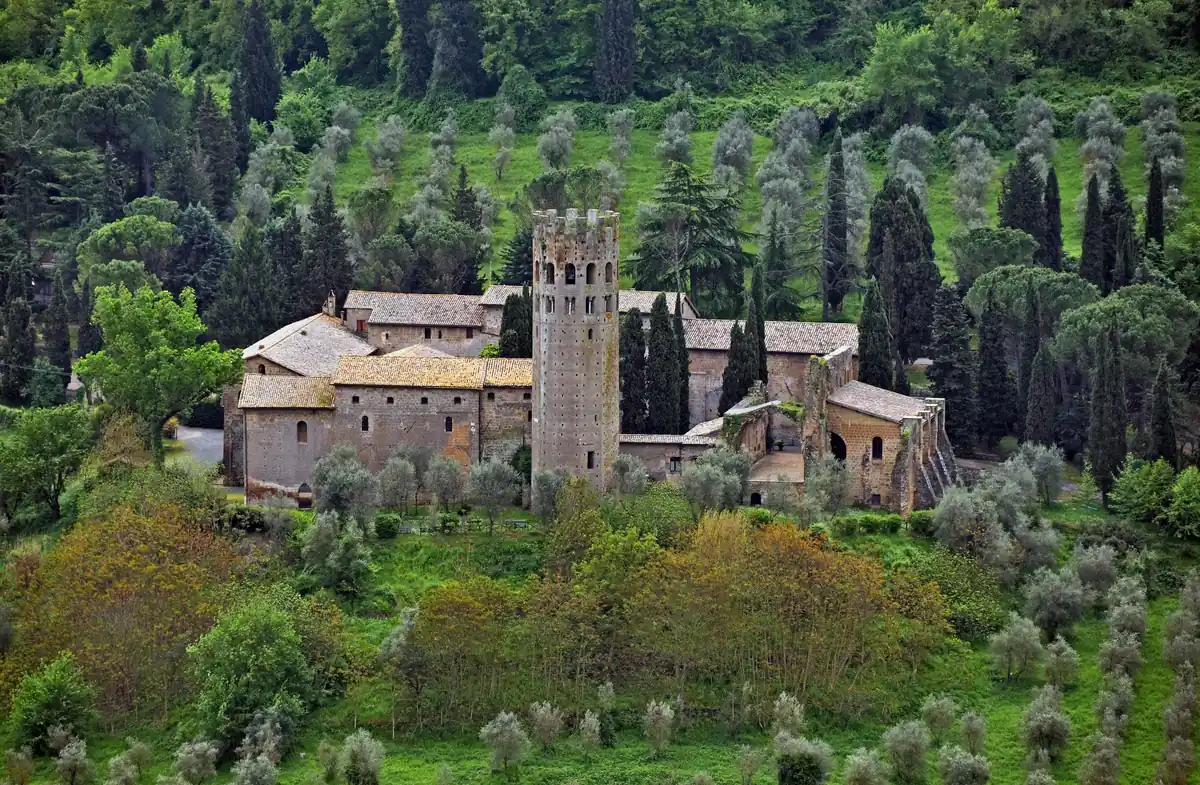
Orvieto
Hill towns & frescoesAn Umbrian hill town on a sheer volcanic plug: the striped Duomo has one of Italy's great fresco cycles - Luca Signorelli's Last Judgment in the San Brizio chapel, which Michelangelo studied - and you can descend the ~53 m double-helix St Patrick's Well or tour the Etruscan caves under the streets. Lunch with a glass of Orvieto Classico is half the point.
- Getting there
- Getting there: Direct regional and Intercity trains from Roma Termini to Orvieto, which FS Busitalia puts at about 1 hour 20, with fares from roughly EUR 10. From the square facing the station the funicular climbs to Piazza Cahen in two minutes; a single is EUR 1.30 valid 90 minutes, EUR 2.00 on board, and it covers the town buses too.
225 km southeast · ~70 min by high-speed train
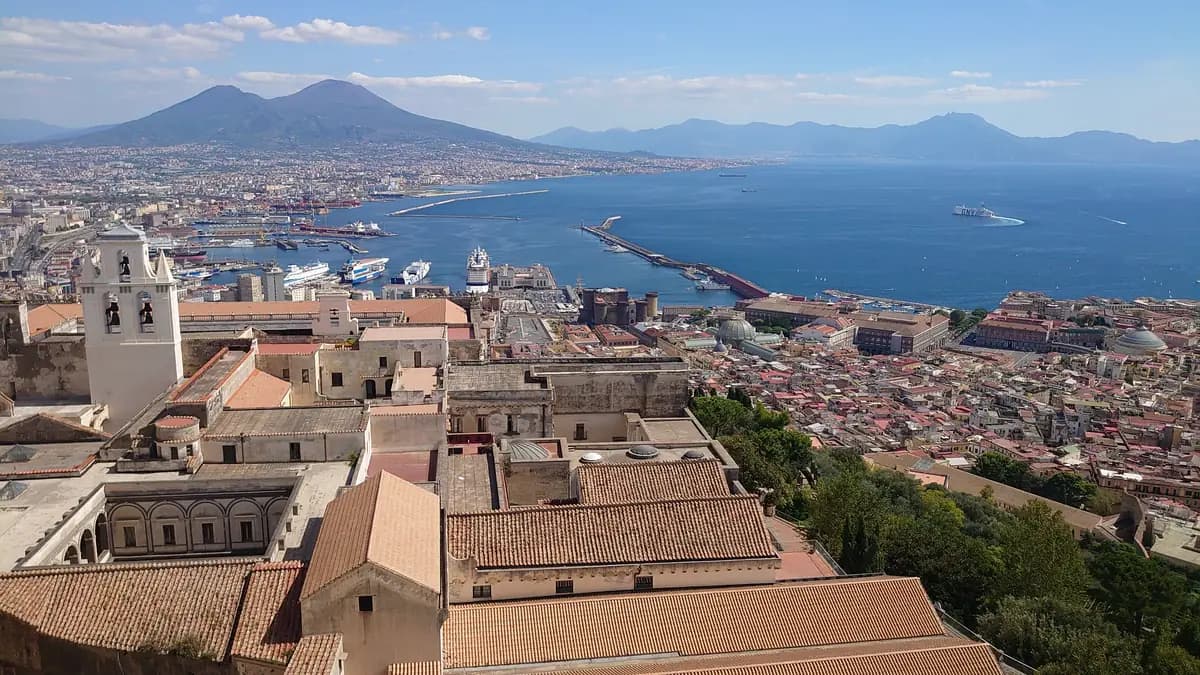
Naples
Museums, street life & pizza
The National Archaeological Museum holds the best of Pompeii and Herculaneum - the Alexander Mosaic, the frescoes, the Farnese sculptures - so it pairs naturally with a Pompeii trip or replaces one in bad weather (note it closes Tuesdays). Walk Spaccanapoli, eat pizza in its birthplace, and see the Veiled Christ at the Sansevero Chapel if you've booked ahead.
- Getting there
- Getting there: Frecciarossa and Italo high-speed trains from Roma Termini to Napoli Centrale take just over an hour, and Trenitalia advertises more than 100 connections a day, though it warns the pattern thins at weekends and in some seasons. Book ahead for the cheap fares. Everything worth seeing is walkable or a short metro ride from Centrale, which also sits directly above the Circumvesuviana at Piazza Garibaldi.
25 km southeast · ~45 min by train
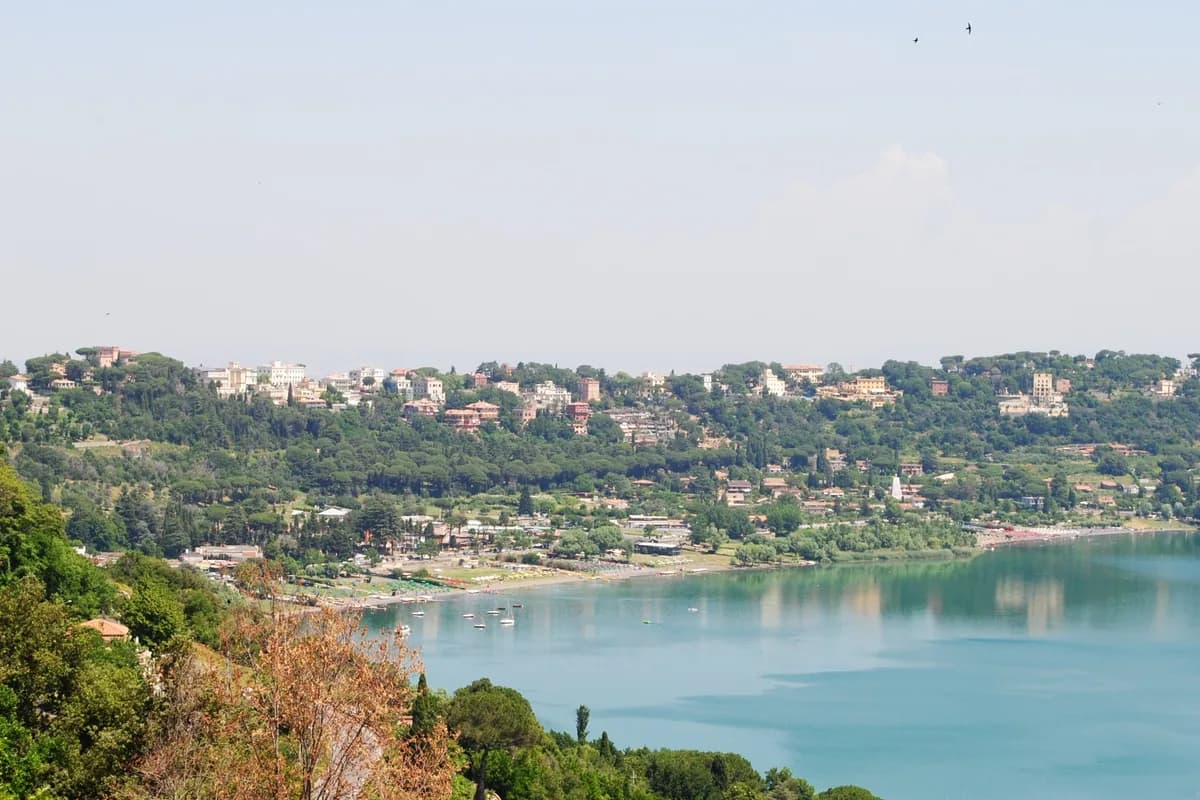
Castel Gandolfo
Lakes & papal historyThe popes' summer town above Lake Albano, a volcanic crater lake ringed with woods. The Apostolic Palace and the Barberini Gardens have been opened to visitors as part of the Vatican Museums - check days and book ahead - and you can swim or rent a kayak on the lake in summer. Combine the papal palace, a lakeside lunch and a crater-rim walk for a very easy day.
- Getting there
- Getting there: Direct regional trains from Roma Termini on the FL4 branch towards Albano Laziale, about 45 minutes, then a short steep walk up to the town. Trains run roughly hourly, thinning to about every two hours on holidays, and a cheap regional ticket covers it.
40 km northwest · ~55-70 min by train
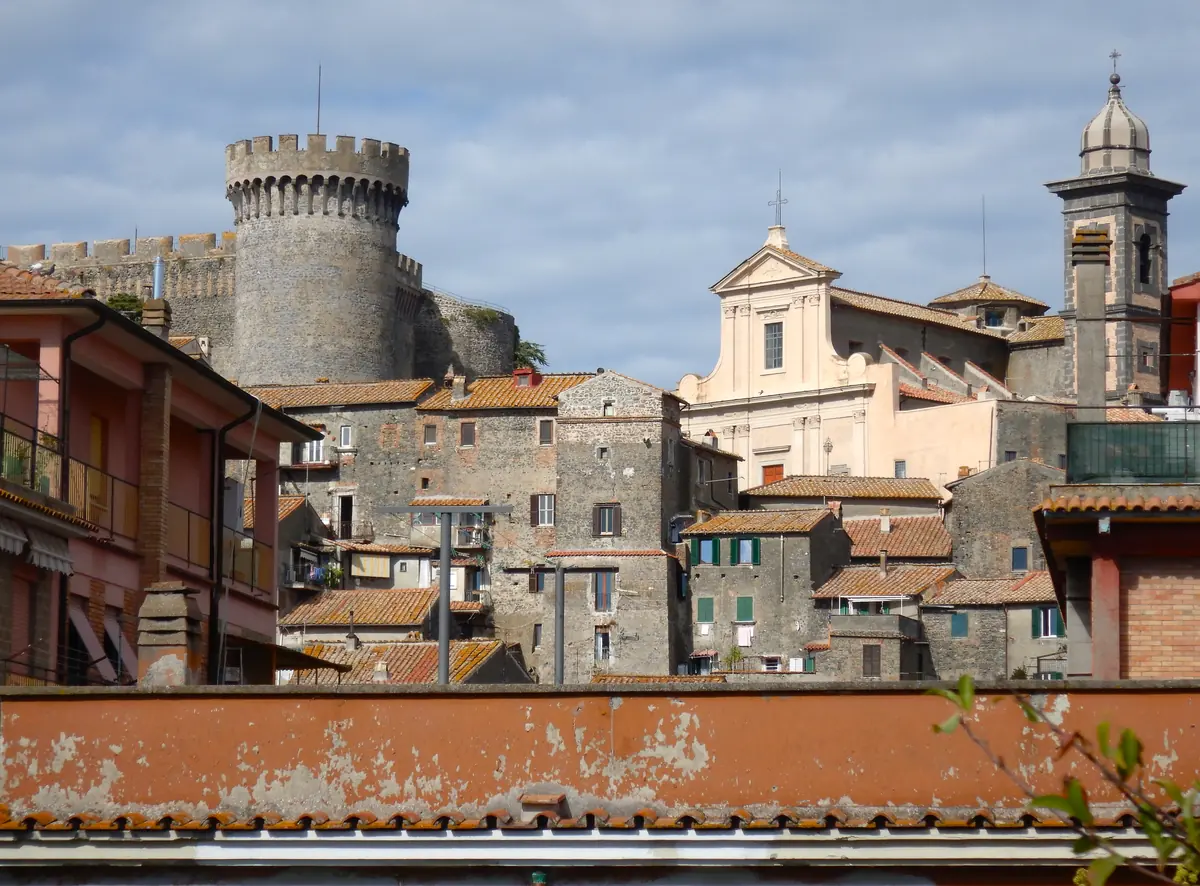
Bracciano
Castles & lake swimmingThe 15th-century Orsini-Odescalchi castle is one of the best-preserved in Lazio - fully furnished, with armour, frescoed halls and lake views from the ramparts. Lake Bracciano below supplies Rome's drinking water, so motorboats are banned and the water stays clean for swimming; the lakeside at Bracciano or neighbouring Anguillara makes an easy summer afternoon.
- Getting there
- Getting there: FL3 regional trains from Roma Ostiense, Trastevere or Valle Aurelia stations to Bracciano (~55-70 min), roughly every half hour on weekdays. The castle is a 10-minute walk uphill from the station.
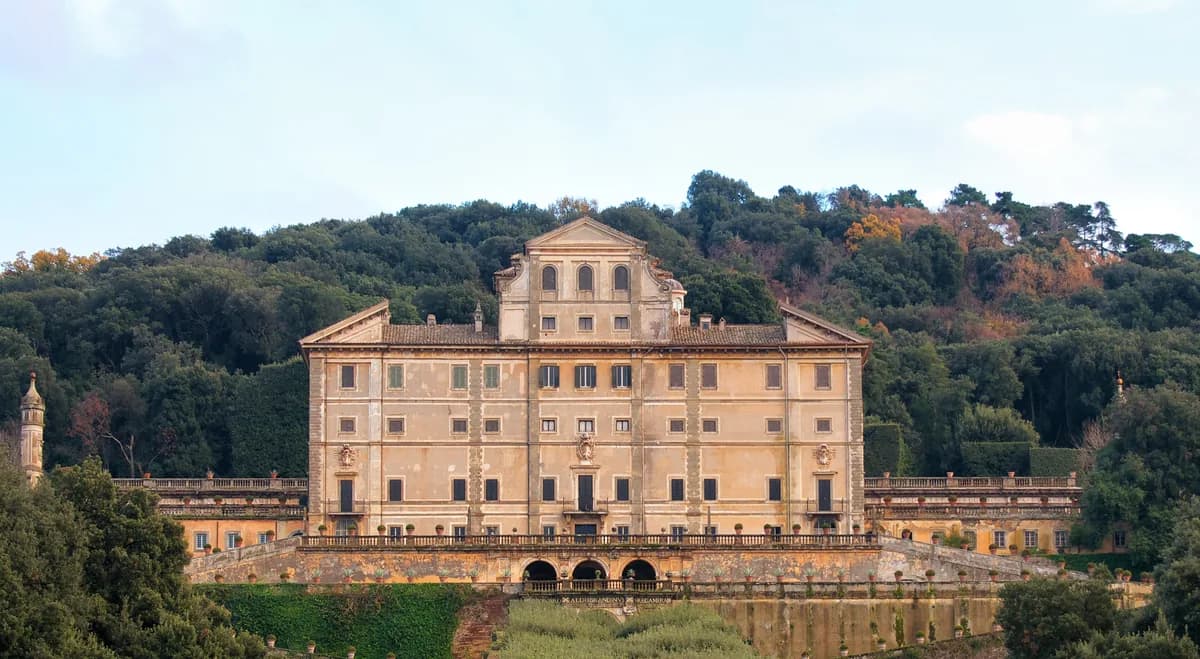
20 km southeast · ~30 min by train
Frascati & the Castelli Romani
Wine, porchetta & viewsThe classic Roman escape for lunch: Frascati's fraschette taverns serve local white wine by the jug with porchetta and cheese boards at wooden tables. The terraced gardens of Villa Aldobrandini rise straight above the main square, and the terrace by the station looks all the way back to Rome. Go on a Sunday like the Romans do, but book nothing - that's the point.
- Getting there
- Getting there: Direct regional trains from Roma Termini to Frascati on the FL4 line, which Trenitalia describes as just 30 minutes, roughly hourly and around EUR 2. The town centre is right by the station, and train-plus-bus links reach Grottaferrata, Monte Porzio Catone, Rocca di Papa and Nemi.
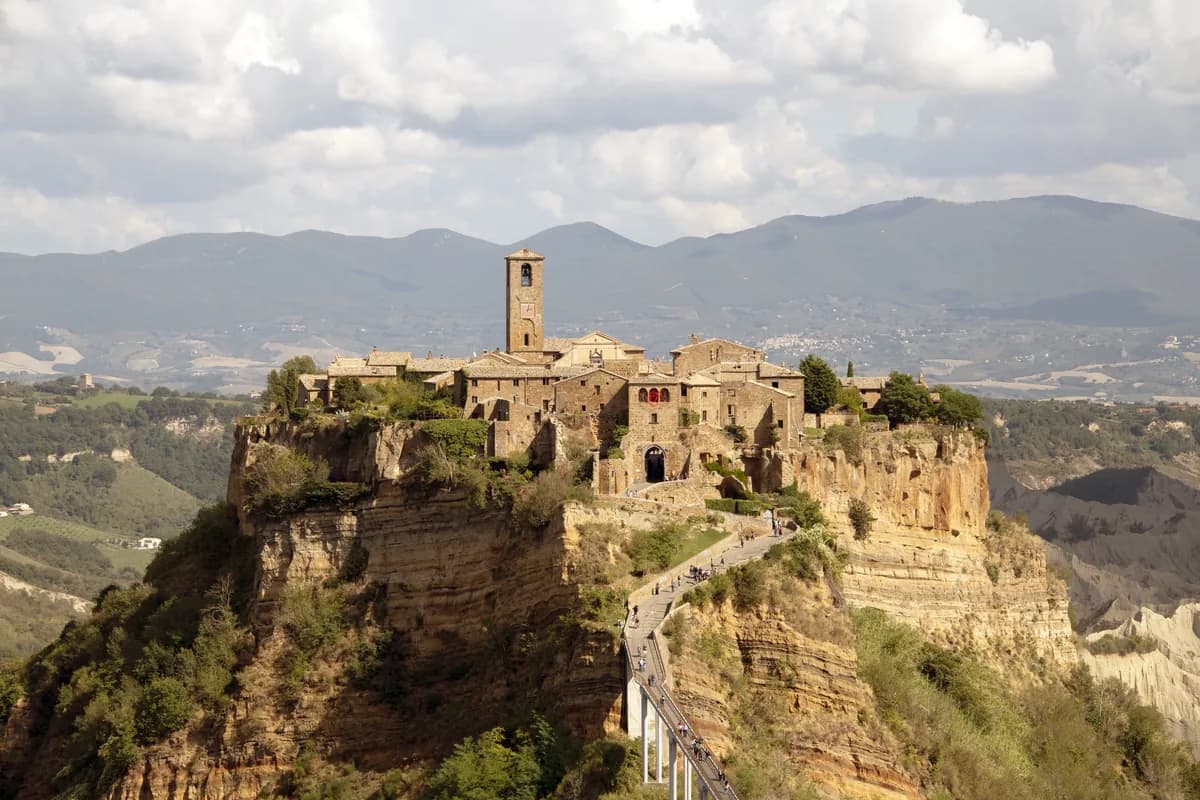
125 km north · ~2-2.5 h by train + bus
Civita di Bagnoregio
One-of-a-kind viewsA medieval village on an eroding pinnacle of volcanic tuff, reachable only by footbridge and famously nicknamed 'the dying town' - only a handful of people still live there year-round. It's tiny: an hour or two of lanes, viewpoints and a couple of trattorias. That's exactly why it pairs so well with Orvieto in the same day.
- Getting there
- Getting there: Train from Roma Termini to Orvieto (~1h15-1h30), then a Cotral bus to Bagnoregio (~30-45 min, sparse on Sundays), then the 300 m pedestrian footbridge - the only way in, with a small access fee. Many people do it as an organised tour combined with Orvieto, which removes the bus-timetable risk.
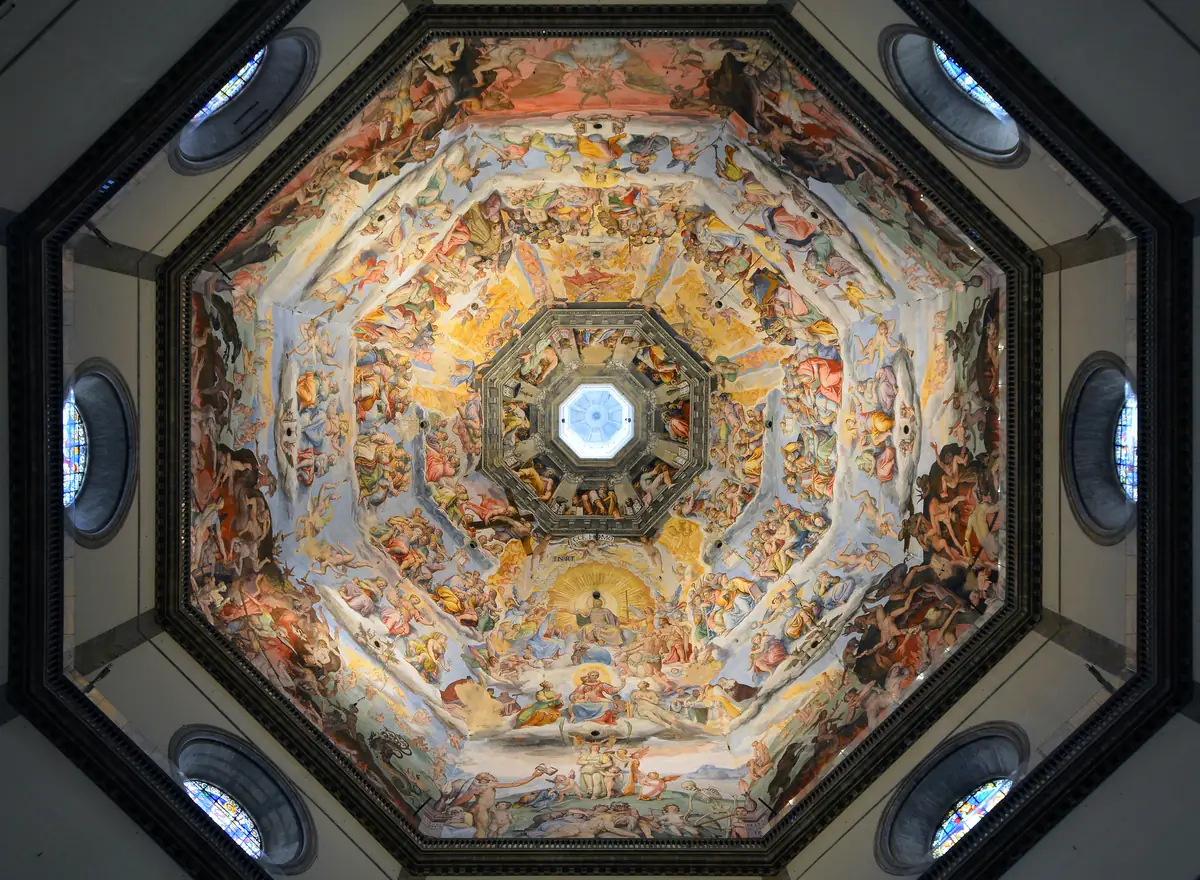
275 km north · ~1.5 h by high-speed train
Florence
Renaissance in a dayA genuine day trip thanks to the high-speed line: the Duomo and Brunelleschi's dome, the Uffizi, Michelangelo's David at the Accademia and Ponte Vecchio all sit within a 15-minute walk of each other. The catch is booking - reserve timed Uffizi and Accademia slots when you book the train, or you'll spend the day in lines. One museum plus the streets is a better day than two museums.
- Getting there
- Getting there: Frecciarossa and Italo trains from Roma Termini to Firenze Santa Maria Novella run nonstop in ~1h30, several times an hour. Book weeks ahead for the cheap fares. The station is a 10-minute walk from the Duomo.
How to get to Pompeii from Rome, step by step
Pompeii is 240 km from Rome and the high-speed line to Naples makes it a real day trip, but two things catch people out: three separate stations are called Pompei and they serve different entrances, and the park now caps entry and puts your name on the ticket. Here is the route, the timing that leaves you enough hours on site, and the version that goes wrong.
- Leg one: Roma Termini to Napoli Centrale on a Frecciarossa or Italo. Trenitalia describes the Rome-Naples run as just over an hour with more than 100 connections a day, departures from Rome running roughly 07:00 to 22:35, and it warns that the pattern thins at weekends and in some seasons. High-speed fares are dynamic rather than fixed, so the same seat can be around EUR 20 booked ahead and more than double that on the day.
- Leg two: at Napoli Centrale follow the signs down to Napoli Piazza Garibaldi, directly below, and take the Circumvesuviana toward Sorrento to Pompei Scavi-Villa dei Misteri. It runs about every 30 minutes and takes around 36, with no reservations, more like a metro than an intercity train. A one-way ticket is roughly EUR 3.30, though published figures differ by a few cents, so check the price at the window. It gets crowded and pickpocketing on this line has a reputation, so keep your bag in front of you.
- The station trap, which is the single most useful thing on this page. The Archaeological Park lists Circumvesuviana Napoli-Sorrento, stop Pompei Villa dei Misteri, for the Porta Marina and Piazza Esedra entrances; Circumvesuviana Napoli-Poggiomarino, stop Pompei Santuario, for the Piazza Anfiteatro entrance; and a separate Trenitalia Napoli-Salerno line with a stop called simply Pompei. Book blindly for the wrong Pompei and you arrive on the far side of a very large archaeological site.
- If you do land at the Trenitalia Pompei station, that is what Pompei Link is for. The park calls it the combined train and bus service that connects the station to the park in about 15 minutes. Trenitalia prices the bus leg at EUR 1.50 on top of the train fare, from the square in front of the station, with 15 departures towards the site between 08:45 and 17:40 and 15 back between 08:55 and 17:50. You cannot buy the bus separately: select Pompei Scavi as your destination and it is included.
- The Sunday shortcut. Trenitalia has published a direct Frecciarossa on Sundays, FR 9693, leaving Roma Termini 08:53 and reaching Pompei at 10:40 via Naples, returning as FR 9568 at 18:40 and back in Rome at 20:55. It removes the transfer entirely and the timings are close to ideal. One caveat: Trenitalia's page says every Sunday without naming a season, while Seat61 describes it as summer Sundays only, and it began life as a seasonal product. Check your actual date before you plan around it.
- Timing against the real opening hours. From 16 March to 14 October the park opens at 09:00, last entry is 17:30 and it closes at 19:00; from 15 October to 15 March it opens at 09:00, last entry is 15:30 and it closes at 17:00. Leaving Rome around 08:00 puts you at the gate by about 10:30, which is 5 to 6 hours in summer and closer to 4 in winter, when the early sunset matters more than the train timetable.
- Tickets, and the rule that ruins unbooked days. Pompeii alone is EUR 20.00 from 12 January 2026; EUR 25.00 adds the suburban villas and Boscoreale, and Pompeii Plus at EUR 30.00 covers three days across several sites. Reduced entry is EUR 2.00 and the first Sunday of each month is free, which also means it is the busiest. The park caps entry at 20,000 visitors a day and tickets are nominative, issued in the visitor's name, so turning up on spec is a genuine risk rather than a theoretical one.
- Adding Vesuvius. Buses run from Pompeii up to the crater car park, then it is about a 30-minute walk to the rim on loose gravel. Crater entry uses timed slots and needs prebooking. Doing the ruins and the volcano in one day from Rome makes a 12-hour day at minimum, so take the first trains or split it over a night in Naples.
- Tour or do it yourself. The train is faster and cheaper than a coach day tour and you keep your own pace, which matters on a site this size. A guided tour earns its price if you want the ruins explained, if you are adding Vesuvius and do not want to solve the logistics, or if you would rather not think about which Pompei station you are standing in.
- Practical: wear shoes you can walk on uneven basalt in, carry water, and remember that even four hours only covers the highlights of a full Roman city. In high summer do the open streets early and save the covered villas for the middle of the day.
Day trips from Rome: FAQ
The questions travelers ask most when planning day trips from here.
Every trip on this page starts in Rome
Each of these is a day out and back, so the thing that decides the whole trip is where you sleep between them and how far that is from the station. These go into the detail:
- Hotels near Rome cruise port
- Rome hotels with a pool
- Rome family rooms
- Where to Stay in Rome With Family
- Where to stay in Rome
- Rome with kids
- Free cancellation on most rooms
- No booking fee
- Prices on Trip.com
Day trips from other cities
Continue Planning Your Trip
Things to Do
Ranked attractions, tips and how to book tickets
Where to Stay
The best area to stay in each city, by neighborhood
Car Rental
Real prices, driving tips and the best routes by destination
Airport Transfers
Getting from the airport to your hotel, by price and time
All-Inclusive Guides
What all-inclusive really means, by destination
Best Time to Visit
Month-by-month weather, crowds and prices
Route Finder
Find the cheapest way to get there
Hotel Finder
Book the right hotel for your destination
AI Trip Planner
Build a day-by-day itinerary
Photo credits (10)
Photos via Wikimedia Commons, used under their respective licences.
- Pompeii: Marco Ober - CC BY-SA 4.0 · source
- Tivoli (Villa d'Este & Hadrian's Villa): Carole Raddato from FRANKFURT, Germany - CC BY-SA 2.0 · source
- Ostia Antica: Giuseppe Rampolla - CC BY-SA 4.0 · source
- Orvieto: Ввласенко - CC BY-SA 3.0 · source
- Naples: Richard Nevell - CC BY-SA 4.0 · source
- Castel Gandolfo: Marek Mróz - CC BY 4.0 · source
- Bracciano: Albarubescens - CC BY-SA 4.0 · source
- Frascati & the Castelli Romani: RobMan69 - CC BY-SA 4.0 · source
- Civita di Bagnoregio: Orlando Paride - CC BY-SA 4.0 · source
- Florence: Livioandronico2013 - CC BY-SA 4.0 · source