In Brief
How do you do the Girona day trip from Barcelona?
Take a high-speed AVE or Avant train from Barcelona Sants, which covers it in 38 to 57 minutes with roughly eight or more departures a day, or the R11 regional in about an hour and a half from around 8 to 10 euro. Girona's old town is a ten-minute walk from the station and entirely walkable once you are in it. The same station serves Sitges, Tarragona, Montserrat's connections and the rest of this list, and none of the eleven trips here needs a car.
Key takeaways
- Closest big hitter: Montserrat - hourly R5 trains from Plaça Espanya, then a rack railway or cable car up the mountain.
- Best all-round town: Girona - as little as 38 minutes by high-speed train from Sants, and the whole old town is walkable.
- Cheapest days out: Sitges, the Penedès and the Maresme beaches - all on cheap Rodalies commuter lines, no booking needed.
- The Costa Brava villages (Tossa de Mar, Cadaqués) have no train - go by direct bus from Barcelona Nord or join a tour.
The 11 best day trips, ranked
Ordered by how well they repay a full day - factoring travel time, what you can actually see, and how easy they are without a car.
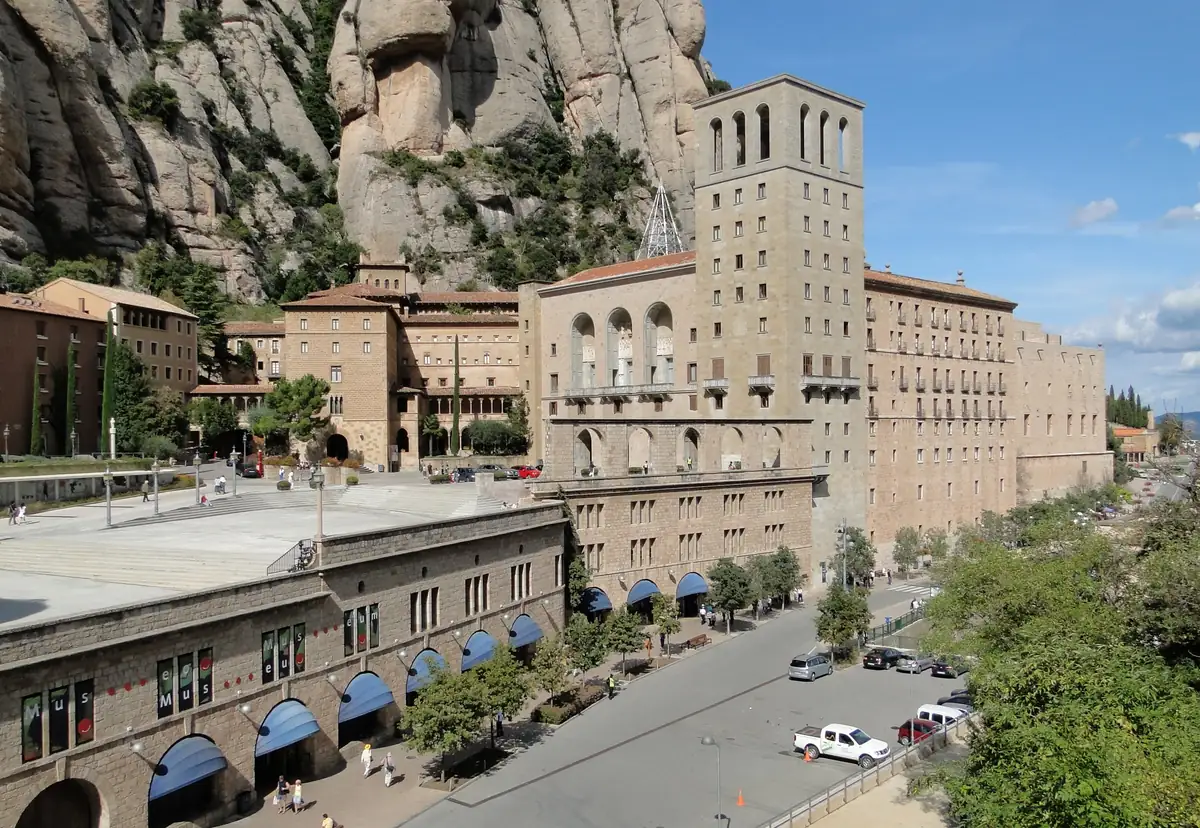
50 km northwest · ~60-90 min door to door
Montserrat
Mountains & monasteryA Benedictine monastery wedged into a serrated rock massif, home to La Moreneta, the black Madonna that is Catalonia's patron saint. Ride the Sant Joan funicular from the monastery for ridge walks with views back over the abbey. Go early on a weekday - the queue to see the Madonna builds by mid-morning, and the boys' choir sings on most days (check the schedule before you commit).
- Getting there
- Getting there: FGC R5 trains from Plaça Espanya toward Manresa run roughly hourly. Get off at Aeri de Montserrat for the cable car up, or one stop later at Monistrol de Montserrat for the Cremallera rack railway. Combined tickets sold at Plaça Espanya bundle the train, mountain ascent and the funiculars on top.
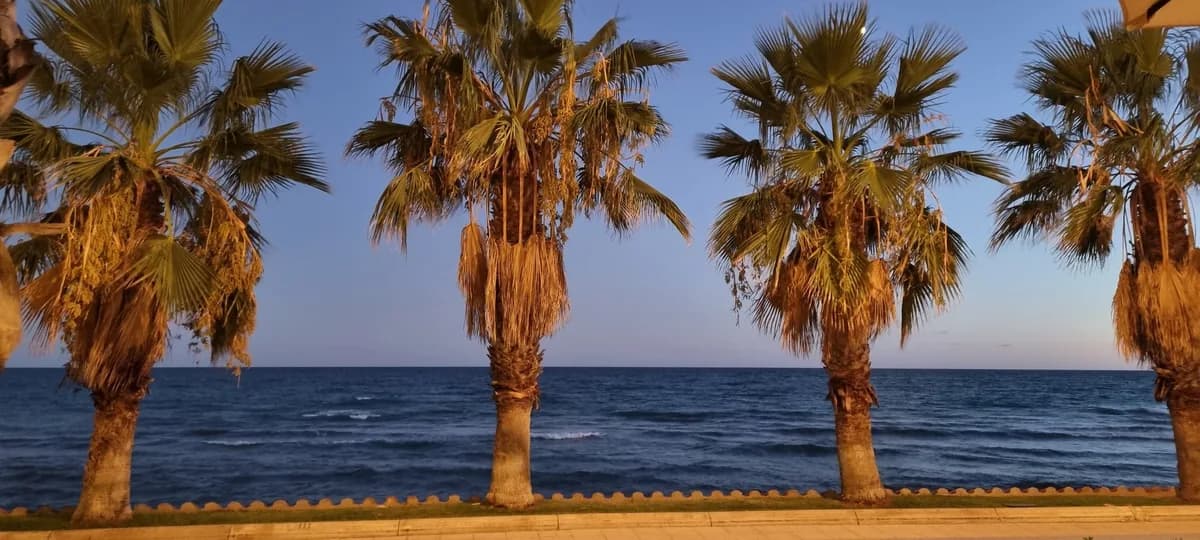
35 km southwest · ~35-45 min by train
Sitges
Beaches & old townA string of sandy beaches along a palm-lined promenade, crowned by the church of Sant Bartomeu i Santa Tecla on its headland - the classic Sitges photo. The old town packs in the Cau Ferrat museum (painter Santiago Rusiñol's house) and a lively bar scene; the town also hosts one of Spain's biggest Carnivals in February and a famous film festival in October.
- Getting there
- Getting there: Rodalies R2 Sud trains from Passeig de Gracia and Barcelona Sants run to Sitges in about 41 minutes from Sants, several times an hour, on an ordinary commuter ticket with no booking. The beach is minutes from the station.
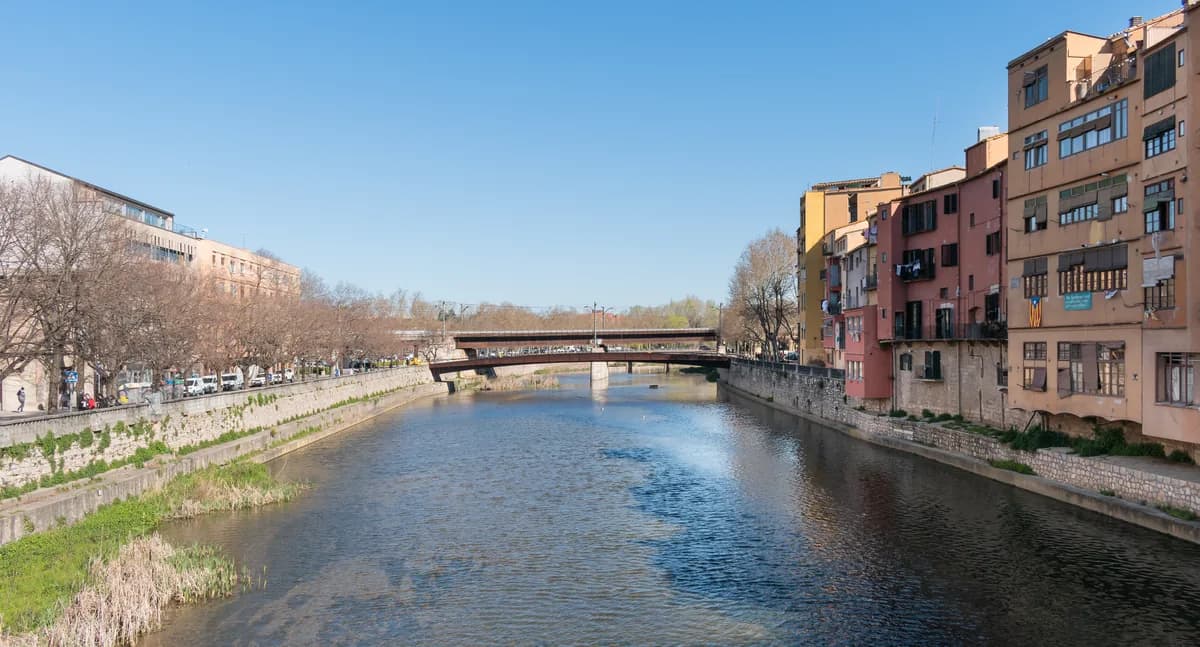
100 km northeast · ~38 min by high-speed, ~80-100 min by regional
Girona
Medieval streets & foodThe cathedral has the widest Gothic nave in the world, the Call is one of Europe's best-preserved medieval Jewish quarters, and you can walk a long stretch of the old city walls for free. Finish at the Onyar river for the famous painted houses. Game of Thrones fans will recognise half the old town as Braavos.
- Getting there
- Getting there: High-speed AVE and Avant trains from Barcelona Sants reach Girona in 38 to 57 minutes, with roughly eight or more high-speed departures a day plus the hourly R11 regional at about an hour and a half for around 8 to 10 euro. Book the high-speed ahead for the cheap seats; the regional needs no reservation. From Girona station the old town is a ten-minute walk.
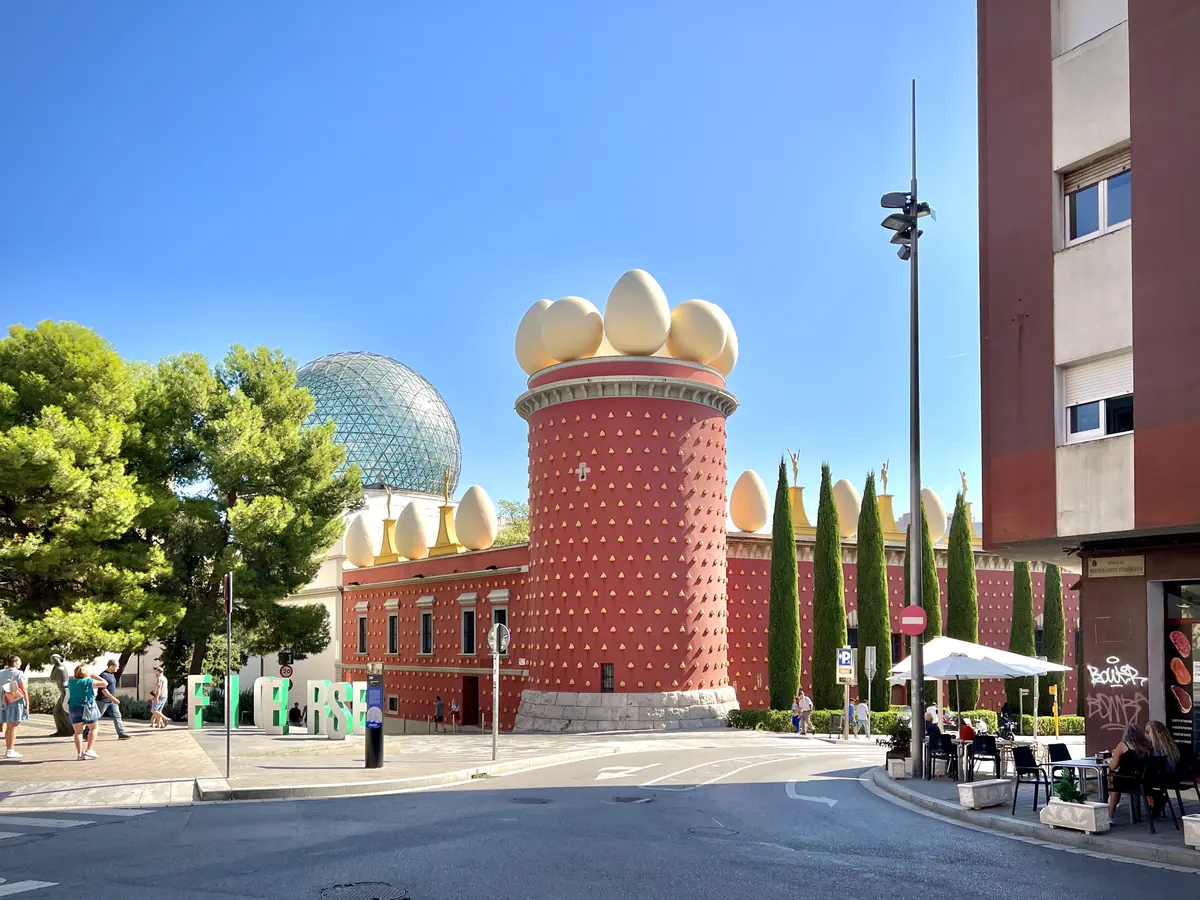
140 km northeast · ~55 min by high-speed, ~2 h by regional
Figueres (Dalí Theatre-Museum)
Art & DalíThe Dalí Theatre-Museum is the largest surrealist object in the world - Dalí designed it himself inside the town's burned-out theatre, filled it with the Mae West room and the rainy Cadillac, and is buried in its crypt. The Dalí·Joies jewel collection next door is included and often skipped; don't skip it.
- Getting there
- Getting there: High-speed trains from Sants to Figueres-Vilafant (~55 min), then a 15-20 minute walk or short bus into the centre. The slower R11 regional runs to Figueres' own station (~1 h 45 min-2 h), which is closer to the museum. Book the museum's timed entry online before you travel.
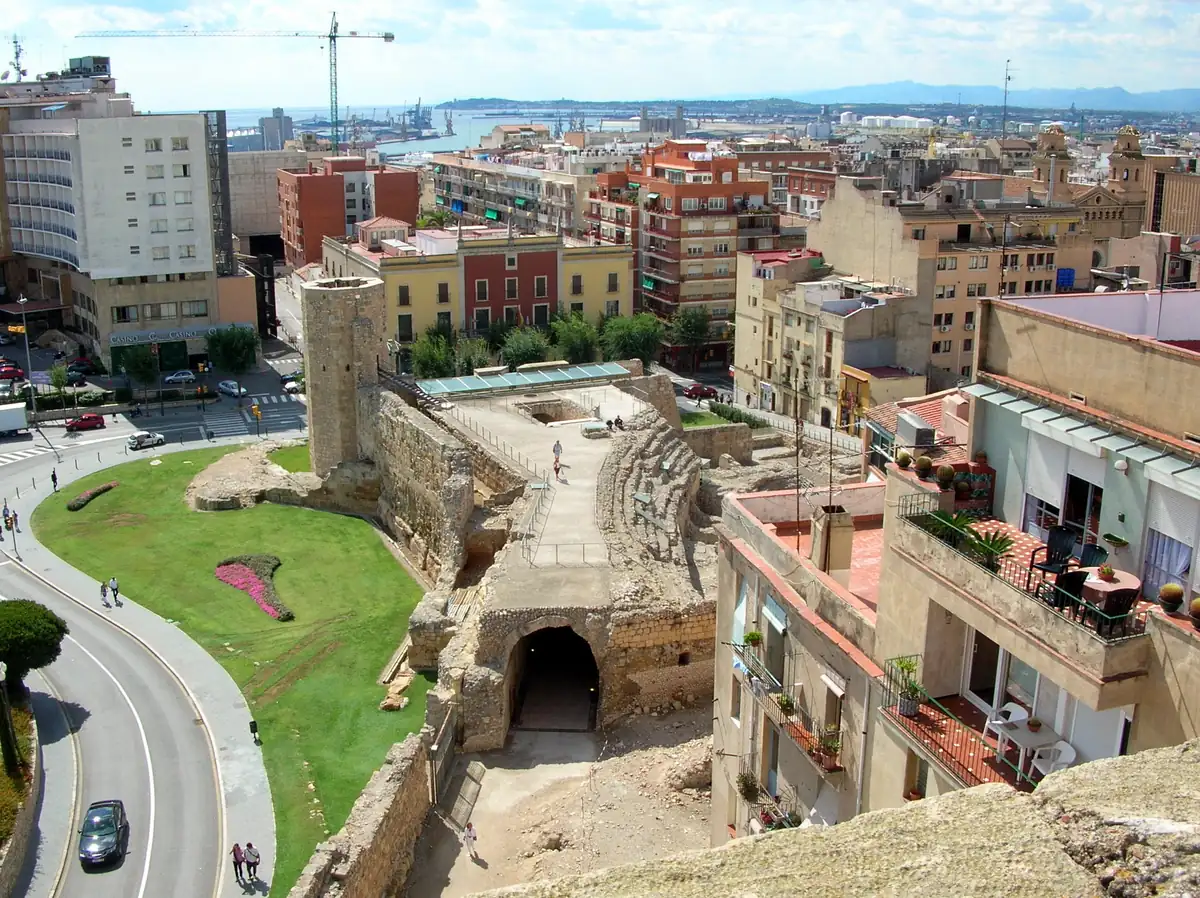
100 km southwest · ~1 h 10 min-1 h 25 min by train
Tarragona
Roman ruins & seafoodRoman Tàrraco was the capital of half of Roman Spain, and it shows: an amphitheatre set right above the beach, the vaults of the Roman circus under the old town, and the Pont del Diable aqueduct just outside it. Add the medieval cathedral, the Balcó del Mediterrani viewpoint and a seafood lunch in the Serrallo fishing quarter.
- Getting there
- Getting there: Two routes, and they end in different places. Regional R14, R15 and R16 trains from Barcelona Sants run to Tarragona's own central station, close to the Roman sites, in around 1h15 to 1h30. The high-speed AVE is faster on paper at about 33 minutes, but it arrives at Camp de Tarragona, roughly 11 km outside the city, with an hourly Empresa Plana bus taking about 20 more minutes into town. For a day trip the regional to the central station usually wins.
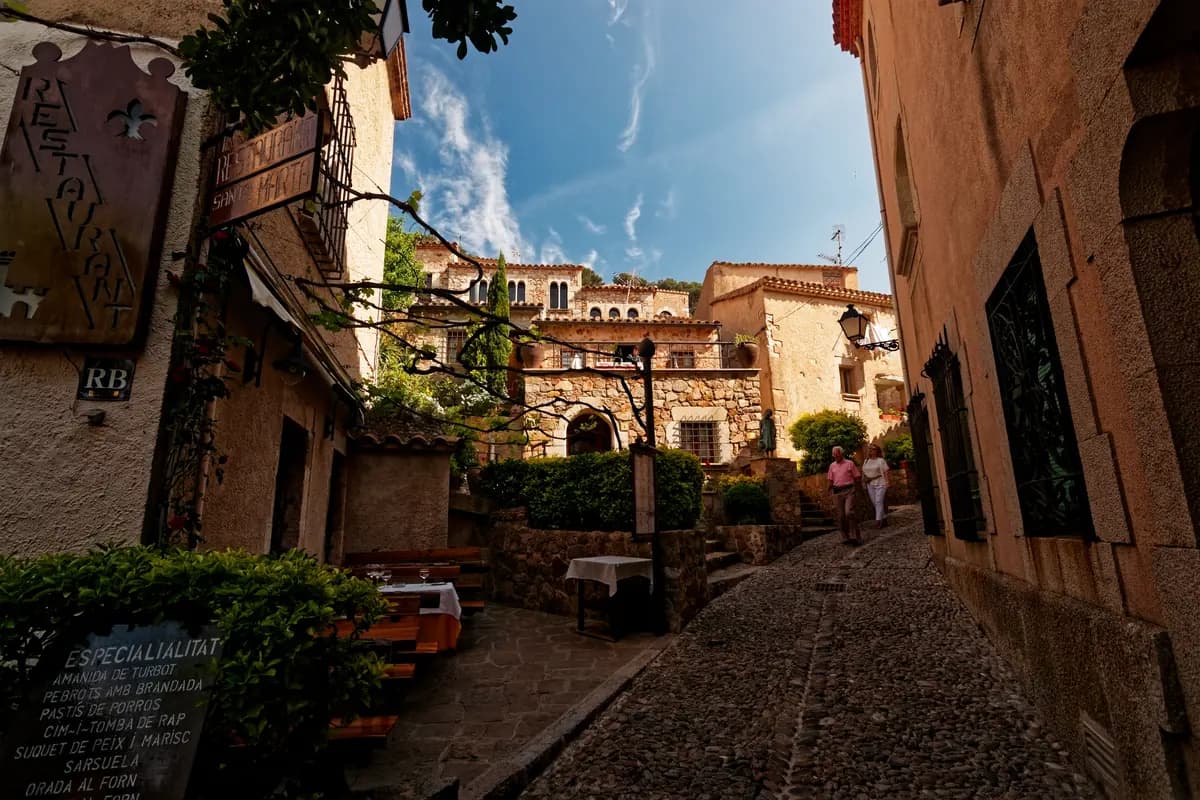
100 km northeast · ~1 h 20 min-1 h 40 min by bus
Tossa de Mar (Costa Brava)
Beaches & castle wallsThe Vila Vella is the last surviving fortified medieval old town on the Catalan coast, its walls and towers rising straight from the main beach. Marc Chagall painted here and called Tossa his 'blue paradise'. Walk the walls, swim below them, then follow the coastal path to quieter coves or take a summer glass-bottom boat.
- Getting there
- Getting there: No train. Direct Moventis Sarfa coaches run from Barcelona Nord bus station - frequent in summer, thinner off-season, so check the return times before you go. Tours combining Tossa with a coastal boat ride are a common alternative.
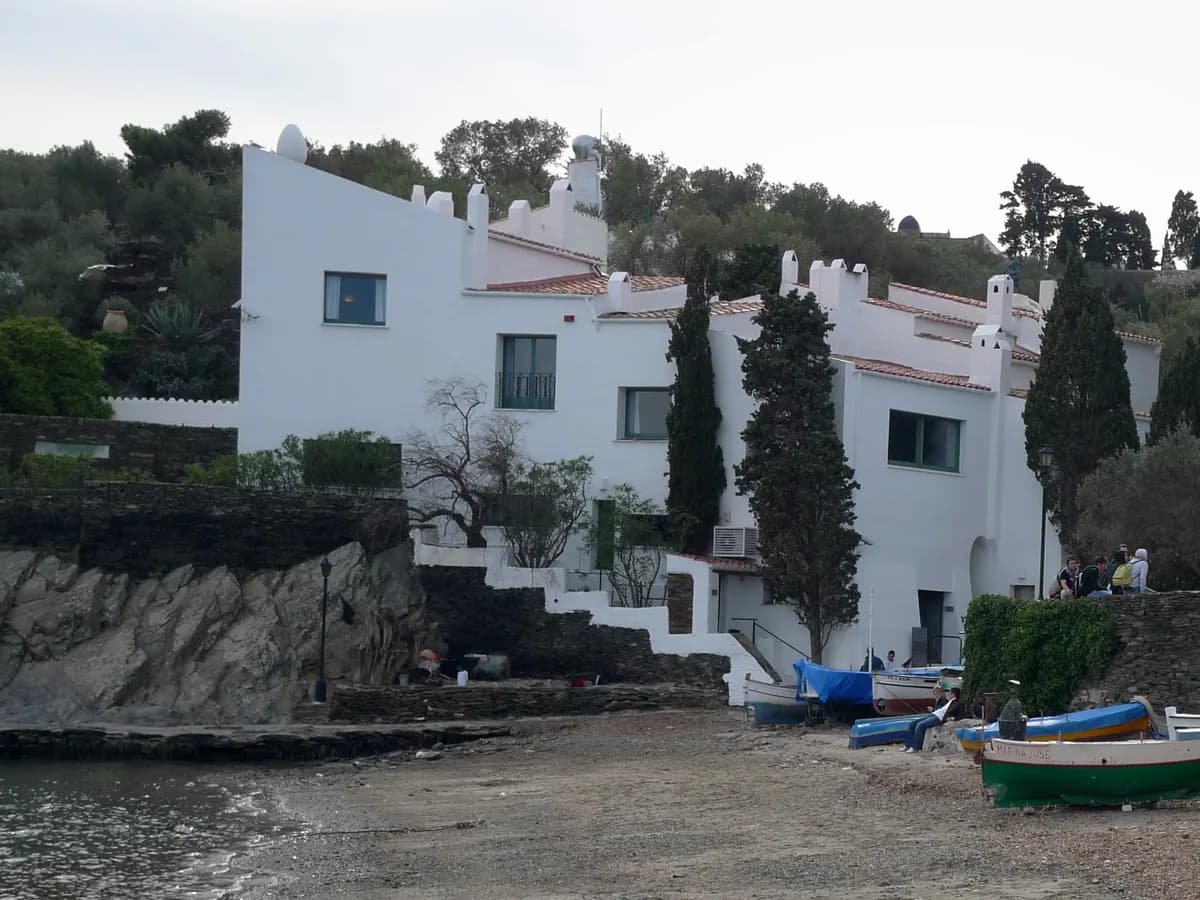
170 km northeast · ~2 h 45 min-3 h by bus
Cadaqués & Portlligat
Coastal villages & DalíA whitewashed fishing village on the Cap de Creus peninsula that stayed hard to reach and therefore unspoiled. Dalí lived and worked next door at Portlligat - his house-museum admits only small timed groups, so book well ahead. Walk out to the Cap de Creus lighthouse at mainland Spain's easternmost point if you have the legs.
- Getting there
- Getting there: The longest trip here: direct Moventis Sarfa coaches from Barcelona Nord run a few times daily, or take a high-speed train to Figueres and connect by bus (~1 h). Start early and check the last bus back - or stay overnight if you can.
45 km southwest · ~45-55 min by train
Penedès wine country (Sant Sadurní & Vilafranca)
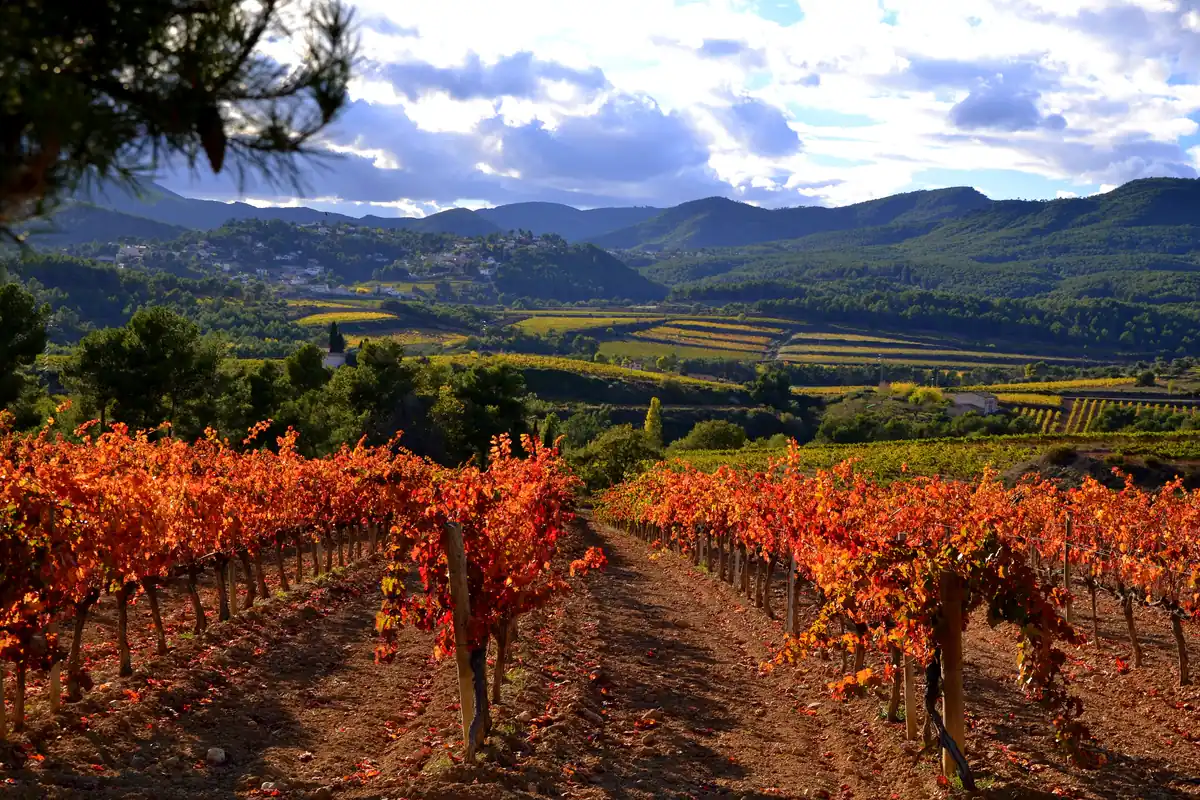
Wine & cavaThis is where nearly all cava comes from. Tour the cellar caves at Codorníu or Freixenet in Sant Sadurní (book tastings ahead, especially weekends), then hop one stop to Vilafranca for the Vinseum wine museum and a proper Catalan lunch. A rare wine-region day trip that works entirely by commuter train.
- Getting there
- Getting there: Rodalies R4 trains from Plaça Catalunya and Sants toward Sant Vicenç de Calders stop at both Sant Sadurní d'Anoia and Vilafranca del Penedès. In Sant Sadurní, Freixenet's cellars are directly opposite the station; Codorníu's Modernista winery is a 20-minute walk.
70 km north · ~1 h 15 min-1 h 30 min by train
Vic
Markets & medieval squares
Vic's huge arcaded Plaça Major hosts one of Catalonia's oldest markets on Tuesdays and Saturdays - time your visit for one of those. There's a 2nd-century Roman temple that was only rediscovered in the 1880s hiding inside a demolished castle, the Episcopal Museum's Romanesque art collection, and the town's famous llonganissa cured sausage to take home.
- Getting there
- Getting there: Rodalies R3 trains from Barcelona Sants and Plaça Catalunya toward Vic/Puigcerdà run roughly every 30-60 minutes. Vic station is a 10-minute walk from the Plaça Major.
20 km southwest · ~25-35 min by train
Colònia Güell
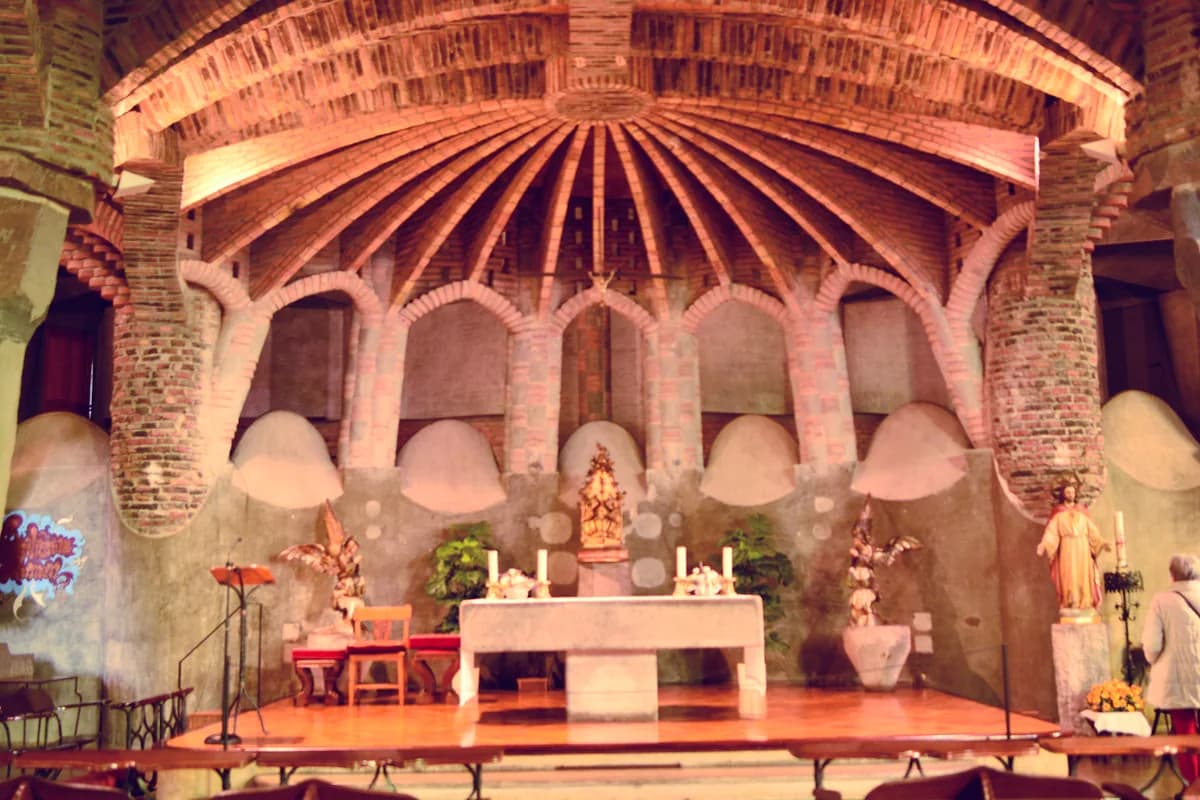
Gaudí without the crowdsGaudí's crypt here is where he tested the leaning columns and catenary vaults he later scaled up for the Sagrada Família - it's UNESCO-listed and you can usually study it almost alone. The surrounding Modernista textile-workers' village is a piece of industrial history in its own right. Half a day is enough; you'll be back in Barcelona for lunch.
- Getting there
- Getting there: FGC suburban trains from Plaça Espanya (S3, S4, S8 or S9) stop at Colònia Güell station in about 20 minutes; the crypt is a signposted 10-minute walk through the village.
45 km northeast · ~60-75 min by train
Sant Pol de Mar & the Maresme coast
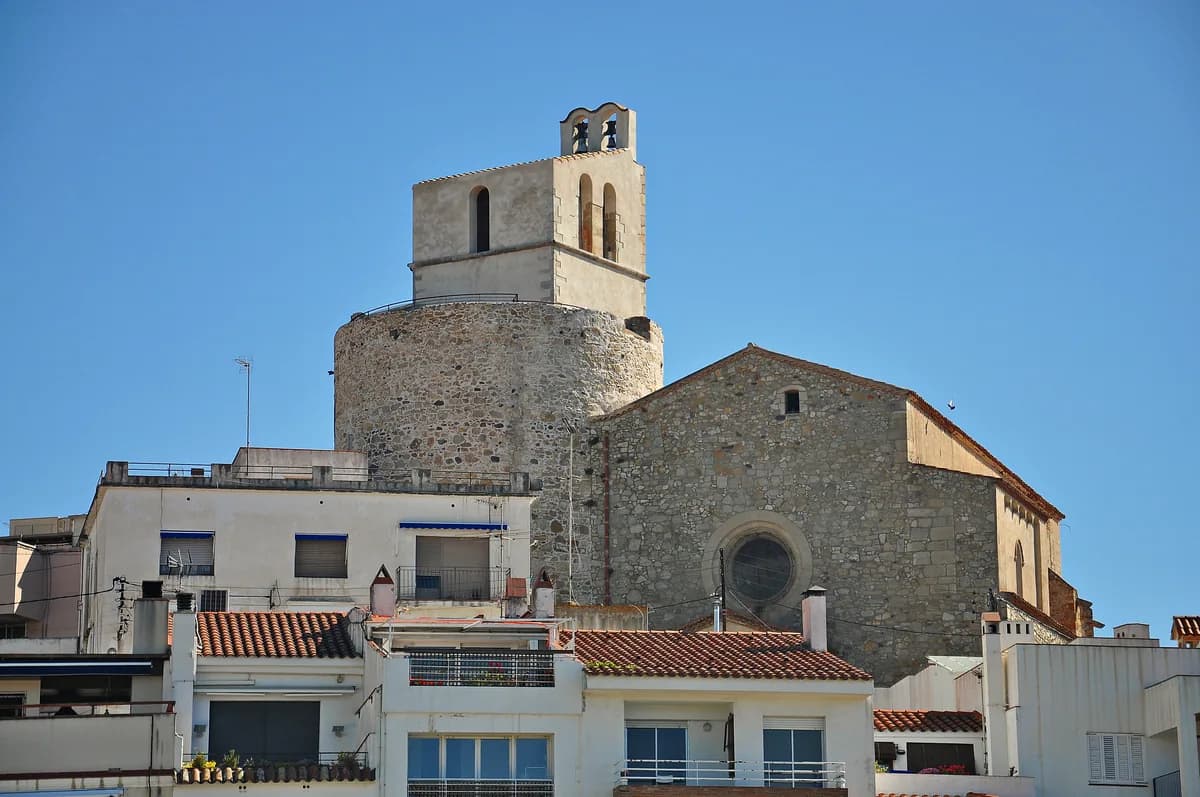
Easy beach daysThe R1 is Barcelona's beach train: the ride itself is half the pleasure. Sant Pol keeps a whitewashed fishing-village core with small coves either side of the station; Calella adds a long sandy beach and a lighthouse walk. Far calmer and cleaner than fighting for towel space at Barceloneta.
- Getting there
- Getting there: Rodalies R1 trains from Plaça Catalunya (also calling at Arc de Triomf and El Clot) run up the coast several times an hour - the line hugs the shoreline and stations like Sant Pol de Mar and Calella are steps from the sand.
Girona from Barcelona: the day trip that runs like clockwork
Girona is the best-organised day trip in Catalonia: one fast train, a ten-minute walk, and a medieval city you can cover entirely on foot. Here is the version that works, with the times from the operators rather than from optimism.
- The train first. High-speed AVE and Avant services from Barcelona Sants cover Barcelona to Girona in 38 to 57 minutes, with roughly eight or more high-speed departures a day. The R11 regional does it in about an hour and a half for around 8 to 10 euro with no reservation. Book the high-speed a few weeks out and the price difference over the regional shrinks to little.
- From Girona station, the old town is about a ten-minute walk: cross the Onyar and you are under the painted riverfront houses that carry every postcard of the city.
- The circuit that covers it: the cathedral with its single widest Gothic nave, the Jewish quarter's lanes, a stretch of the city walls with the Pyrenees on the horizon, and back down to the Rambla de la Llibertat for lunch. Game of Thrones borrowed the cathedral steps and the old-town lanes, which is why some corners look familiar.
- Count the climbing honestly: Girona is stairs and ramparts, and the wall walk is the best thing in the city precisely because it is up on the wall. Comfortable shoes beat ambitious itineraries.
- Eating: the city holds El Celler de Can Roca, twice named the best restaurant in the world, which books out months ahead and is a trip in itself rather than a lunch stop. The old town's ordinary menus are good enough that missing the famous table costs you nothing.
- Pairing: Figueres and the Dali Theatre-Museum sit another 15 to 20 minutes up the same line, and the two together make a long, excellent day. Doing Girona alone is the relaxed version; adding Figueres means booking the Dali entry and watching the last trains.
- When to go: any season works, because the day does not depend on a beach. Spring and autumn give the walls their best light; on the flower festival days in May the old town fills, which is either the best or the worst week depending on your tolerance for crowds.
Day trips from Barcelona: FAQ
The questions travelers ask most when planning day trips from here.
Every trip on this page starts in Barcelona
Each of these is a day out and back, so the thing that decides the whole trip is where you sleep between them and how far that is from the station. These go into the detail:
- Barcelona family hotels
- Barcelona rooftop pool hotels
- Barcelona family hotels
- Where to Stay in Barcelona With Family
- Where to stay in Barcelona
- Barcelona with kids
- Best time to visit Barcelona
- Free cancellation on most rooms
- No booking fee
- Prices on Trip.com
Day trips from other cities
Continue Planning Your Trip
Things to Do
Ranked attractions, tips and how to book tickets
Where to Stay
The best area to stay in each city, by neighborhood
Car Rental
Real prices, driving tips and the best routes by destination
Airport Transfers
Getting from the airport to your hotel, by price and time
All-Inclusive Guides
What all-inclusive really means, by destination
Best Time to Visit
Month-by-month weather, crowds and prices
Route Finder
Find the cheapest way to get there
Hotel Finder
Book the right hotel for your destination
AI Trip Planner
Build a day-by-day itinerary
Photo credits (10)
Photos via Wikimedia Commons, used under their respective licences.
- Montserrat: Bernard Gagnon - CC BY-SA 3.0 · source
- Sitges: EvelynMwangi - CC BY-SA 4.0 · source
- Girona: Krzysztof Golik - CC BY-SA 4.0 · source
- Figueres (Dalí Theatre-Museum): Sharon Hahn Darlin - CC BY 2.0 · source
- Tarragona: Bernard Gagnon - CC BY-SA 3.0 · source
- Tossa de Mar (Costa Brava): Txllxt TxllxT - CC BY-SA 4.0 · source
- Cadaqués & Portlligat: Gozitano - CC BY-SA 3.0 · source
- Penedès wine country (Sant Sadurní & Vilafranca): Angela Llop from Spain - CC BY-SA 2.0 · source
- Colònia Güell: Joe Mabel - CC BY-SA 4.0 · source
- Sant Pol de Mar & the Maresme coast: Alberto-g-rovi - CC BY-SA 4.0 · source